







Suddenly, breaking news circulated on TV channels regarding an attack launched by elements of the Public Security forces, in participation with Bedouin tribes, on the Sweida Governorate, and the outbreak of violent clashes between them and the Druze faction forces on July 13, 2025.
Only a few hours passed before the city and its surrounding countryside became heavy with the clamor of wailing for the dead, and corpses were strewn everywhere; cries for help rose from every direction. Massacres, looting, and burning of homes—it was as if everyone had fallen into the flames of Hell.
There was no refuge from the shells falling from above, and no escape on the ground from the muzzles of their weapons aimed at everyone; death was coming from all directions
In just a few hours, Sweida transformed into a city inhabited by a terrifying silence. The majority of civilians fled after the factions affiliated with the Public Security forces and the Bedouin tribes stormed the city.
Most of the villages were settled by a painful calm and the anticipation of the worst, after the Public Security factions established their military points at Tishreen Roundabout.
Massacres, looting of homes, and arson, as if everyone had fallen into the flames of Hell.
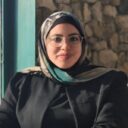
Majd Salam (30), an eyewitness from Sweida to the bloody events, monitors the details of what is happening from the cracks in his upstairs windows. Fate decreed that he should survive the attackers’ assault.
He speaks, his tears occasionally interrupting his words: ‘It saddens me that our Bedouin neighbors have become sleeper cells and aided the Chechens and Uyghurs in looting our homes and killing us. I saw their crimes with my own eyes. The Bedouins with whom we used to eat and drink together.
The regime exploited them and distorted the memories between us and distorted the spirit of brotherhood that united us.
Escape from the Abyss of Death
The electricity outage negatively impacted the circulation of news about the attack among the residents, and many of them were unable to escape the flames that surrounded them. Factions affiliated with the Transitional Government ordered civilians to remain in their homes and forced them to surrender their weapons.”
Maged explains: “Hundreds of civilians were forced to buy weapons and hand them over to the public security at exorbitant prices, as they did not possess them. This was done to protect their lives from the danger they faced. The civilians acquired these weapons through smuggling routes on the Lebanese border, facilitated by smugglers.”
Majd added with anguish, “Handing over the weapons didn’t prevent the tragic violations and crimes; they fell into the trap of their violence, a trap that ensnared dozens of civilians.
They fell into the snares of their deadly bullets and the snares of field executions like a blazing fire.
Religious sites were not spared from destruction.
Escape did not save the civilians from death, like those falling into an abyss of doom, one after another.
While horror painted its features as if the event was right before him, [he said]: ‘I saw an elder who was fleeing; they killed him with a bullet to his head.
And I saw a woman driving away in her car; they stopped her and killed her son right in front of her eyes. My God! How difficult that is! In that moment, the woman forgot her murdered son and began begging them not to kill her other children. I never imagined in my life that Sweida would be disfigured like this.
Our country is a country of love. What a shame! What a shame for everything!
The Failure of the Truce and the Forbidden Bread
The attacks on civilians did not cease, despite several truce and disengagement agreements between the Bedouin tribes, the factions affiliated with the Transitional Government, and the Druze factions, and the opening of humanitarian corridors between the Daraa and Sweida governorates to secure the exit of wounded civilians and the entry of aid. Instead, the governorate was choked by a severe siege in which the entry of flour was prohibited.
The Syrian government is denying bread to its own people, as if it were forbidden bread.
The religious shrines were not spared from destruction, and fleeing did not save civilians from death, like those falling into the abyss of destruction one after the other, or like those who unknowingly flee into the very corridors of death.
Majd continued his speech with an anguish that made his sentences intermittent: ‘They shot a young man fleeing with a BKC weapon, just because he was running away. They killed the American citizens Hussam Saraya and Karim Saraya and approximately eight members of their family.
They executed them in a field execution at Tishreen Roundabout. We are dying for no reason! Or because we are Druze. The sectarianism practiced by the Damascus government is worse than the sectarianism of the ousted Bashar al-Assad regime. Both are worse than the other. The shared result between them is that the victims remain the same.
Al-Karama Square: The Pulse of Love
Majd recounts with pain the memory of the demonstrations held in Al-Karama Square during the years of the ousted Bashar al-Assad regime, which condemned his rule. The slogans called for national unity among the Druze, Christians, Bedouins, and Sunnis—slogans that pulsed with one spirit against the injustice of dictatorship. He speaks sadly:
“The new government has torn a deep rift among our people.
We’ve grown afraid of the Bedouin who once stood beside us, now carrying arms against us and of the Sunni we were raised with as brothers.
The echo of extremism rings in our heads, and the stench of sectarian blood rises from the bodies left on our streets.
I spent days hiding in a church, watching the horrors unfold, dying a little each moment.
But a day will come when our hearts will beat as one again.”
Majd speaks, with pain drawing new lines on his face in every statement, saying that the greatest anguish is that some of the elements within the attacking factions are the very people who carried the slogans of brotherhood and peace in Al-Karama Square. They used those same slogans, but today they fought against them, as those ideals no longer suit their interests with the new government. He concludes his remarks: ‘I now wish I could die without suffering. What cuts into my heart is that those who are killing us are from our own governorates. These are the same people whose eyes I used to see sparkling with the brilliance of freedom and the brilliance of love.