








The roar of improvised explosives used for fishing is destroying marine ecosystems, decimating fish stocks, and poisoning the dinner plates of millions.
The Mediterranean Sea has long served as a sanctuary, an economic lifeline, and a veneer of timeless tranquility for the people of Lebanon, Syria, and Libya. Yet beneath its azure surface lies an unfolding ecological catastrophe. While political fragmentation, economic collapse, and armed conflict have weakened enforcement, the root drivers of blast fishing extend far beyond a simple breakdown of state oversight. This destructive practice is fueled by a complex convergence of factors: acute socioeconomic desperation in the grip of suffocating economic conditions, the easy accessibility of dual-use chemical precursors such as agricultural fertilizers, and deeply entrenched historical traditions. When these market pressures and local customs intersect with a lack of consistent regulatory monitoring, it solidifies a resilient culture of impunity.
"The root drivers of blast fishing extend far beyond a simple breakdown of state oversight."
The testimonies gathered from conflict-impacted Mediterranean countries are near-identical. From the historic ports of Tyre, Lebanon, to the degraded waters of Latakia, Syria, and across the sprawling 1,770-kilometer coastline of Libya, the testimonies appear almost completely identical.
In Jableh, Syria, Nouha* notes, “The sounds of the powerful explosions mimic heavy military bombardments; they shake our house, and my family wakes to them every time. They happen mostly at night to evade detection.”
In southern Lebanon, Ali Badreddine laments: “Under the guise of war, surveillance has evaporated completely. There are no more patrols, no more law enforcement. Before the conflict, we had almost reached a zero percent rate of dynamite fishing inside the reserve. Today, the mindset of impunity has returned, and a lifetime of conservation efforts has been reduced to nothing.”
A Tripoli-based fisherman in Libya, identified as “A.A.,” reveals: “The period immediately following 2011 saw the complete evaporation of coastal security. Between 2012 and 2013, it was an open, uninhibited ‘explosives party’ within the maritime community of Tripoli, where entire bays were hollowed out in broad daylight.”
Our regional investigation reveals the following:
- In Libya: The security vacuum has left the coast vulnerable to rogue operators utilizing primitive, high-impact improvised gelatinous explosives known locally as “Jalatinah,” alongside salvaged military-grade gelignite. The primary legal framework remains Law No. 5 of 1987, though its outdated penal penalties fail to match the scale of modern destruction. The most severely impacted coastal areas are concentrated in the shallow bays near Tripoli and across the researched marine shelf of Benghazi, Libya.
- In Syria: Blast fishing is an illegal but heavily concentrated enterprise along the coastal fringes. Operations utilize illegal military-grade components and dynamite alongside toxic poisons such as Lannate. The country possesses clear legislation under Law No. 48 of 1976, which explicitly criminalizes explosive fishing as a “mass genocide of marine life,” yet enforcement fails due to systemic corruption and a lack of monitoring. The most impacted areas are the outskirts of Latakia and the rural fringes surrounding the city of Jableh, Syria.
- In Lebanon: Fishermen exploit the severe fragmentation of the state’s structure by using improvised charges packed with agricultural fertilizer, specifically ammonium nitrate. Lebanon operates under a legislative black hole: while Article 25 of a 1929 law explicitly bans explosives, it remains entirely silent on the air compressors used to harvest dead biomass from the seafloor. The most impacted coastal areas include the northern waters of Tripoli and the southern boundaries of the Tyre Coast Nature Reserve, Lebanon.
"Lebanon operates under a legislative black hole."
Part I: The Relics of Anarchy – Lebanon’s Chemical Scars and the Shadows of War
In Lebanon, the story of dynamite fishing is deeply intertwined with the historic erosion of the state and the scars of armed conflict. On a coastal terrace, Ziad* a sexagenarian fisherman whose hands are scarred by forty years of handling chemical substances, rolls a fine, ochre-tinted powder, malleable as clay, into a compact mass. Weighted down with a simple stone and fitted with a precision-tied fuse, the improvised device -terrifying in its simplicity- is loaded with ammonium nitrate: an agricultural fertilizer infamous in Lebanon for its catastrophic explosive potential, capable of wiping out entire schools of fish in the blink of an eye.
The Acceleration of Blast Fishing on the Lebanese Coast
- 1973 — Civil Collapse: Militia overlordship and forced dynamite bartering.
- Post-2020 Economic Crash: A surge in the price of chemical precursor bags (from $27 to $250+).
- Armed Conflict: Supply chains running through Beirut’s southern suburbs severed.
- Radar Evasion: Hurling explosives from rocky shores adjacent to residential homes.
Tracing the practice back to the dawn of the Lebanese Civil War, Ziad recalls: “It all started in 1973, at the beginning of the events. Chaos spread, security disappeared, the unions collapsed… Those were the days of utter anarchy.” To survive and keep going out to sea, the teenager he was back then had no choice but to place himself under the protection of local militias who controlled the shoreline—militias that turned a trade of patience into a race for violent yields by supplying him with explosives.
Ziad describes that era: “The militias controlled the shoreline. To get in or out of the water, you had to go through them. They would shoot in the air to scare us and steal our catch. Whether you were a cop or a civilian, they would take your dynamite and your fish at gunpoint.”
Though Ziad claims to have retired his fuses today, keeping only a small stash “as a souvenir,” harsh economic realities eventually caught up with the last of the “sea bombardiers.” The economic crisis that has gripped the country since the start of 2020 sent chemical prices spiraling: a 50-kilogram bag of chemical precursors, which sold for around $27 before the crisis, now goes for more than $250. Furthermore, the procurement routes that often ran through Beirut’s southern suburbs have been completely severed by military airstrikes, rendering these materials virtually impossible to acquire.
Yet, aboard his traditional felucca, Ziad explains the mechanics conceptually: “I spot the schools of fish where they gather. We light the fuse and throw the charge, and it sinks slowly underwater. When it detonates, the charge creates a massive shockwave: every living creature floats to the surface, instantly struck dead.”
The Legislative Black Hole and the Abandoned Sanctuaries
A few kilometers north, in Tripoli, Lebanon, Samer Fatfatt—a marine biology researcher and director of the Palm Islands Nature Reserve—contemplates the scale of the disaster. For him, the 2020 economic crisis marked a structural breaking point.
“Over the last five years, fish stocks have been depleted by more than half,” Fatfatt warns. He points directly to a glaring legislative hypocrisy: while Article 25 of a 1929 law strictly bans explosives, the law remains entirely silent on the air compressor. Originally designed to help divers stay underwater for prolonged periods, the tool is repurposed here for a darker end.
Fatfatt asserts, “Everyone knows that after throwing the dynamite, fishermen use these compressors to dive and collect the dead fish that have sunk to the bottom. By allowing this tool without strict control, we are indirectly encouraging the massacre.”
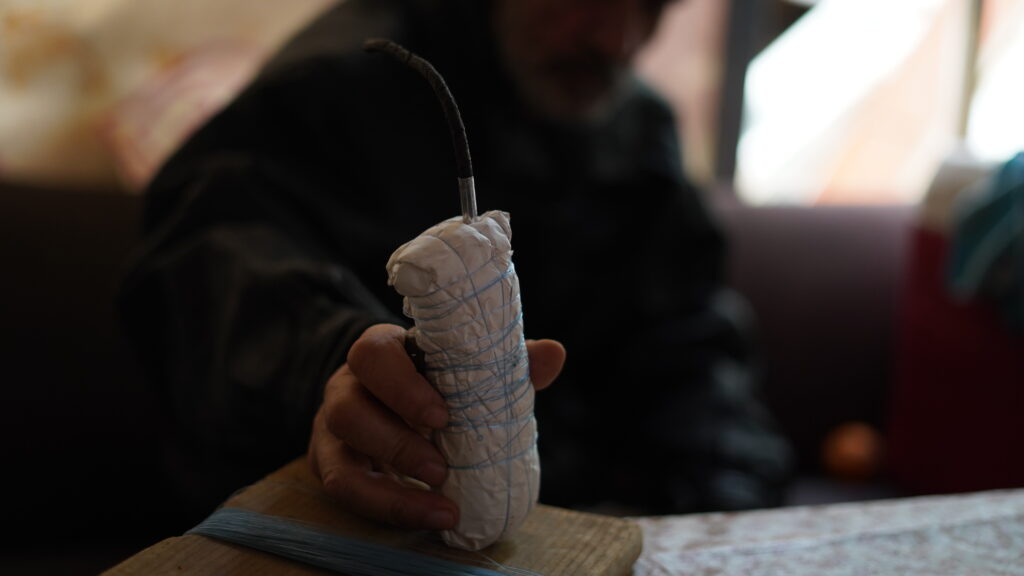
Further south, the situation grows even darker. The Tyre Coast Nature Reserve—Lebanon’s largest marine protected area, spanning 125 square kilometers—is facing an unprecedented wave of impunity after its director, Ali Badreddine, was forced to flee northwards due to heavy military bombardment.
Salam Jabbour, an engineer at the Ministry of Agriculture and head of the department for rural development and natural resources in the South, confirms that vital surveillance centers, particularly the one in Tyre, Lebanon, were completely evacuated due to airstrikes, while the border town of Naqoura sits under Israeli military occupation.
In response, rogue fishermen have developed new strategies to evade the Lebanese Army’s port monitoring and licensing checks: they now hurl their explosive charges directly from the rocky shores adjacent to residential homes, blending into the civilian surroundings to evade military radar.
The Underwater Desert
On his computer screen, Ali scrolls through shocking diving footage of what should be flourishing meadows of seagrass (Posidonia) and coral colonies. Instead, the scene shows nothing but barren grayish craters. “Look, the seabed looks like a desert,” he describes. “This ecosystem is a refuge for living creatures; it is where fish are born, feed, and grow. Restoring these areas is extremely difficult, certain habitats, like vermetid reefs or coralligenous assemblages, take decades to form, and dynamite destroys everything: the seagrass, the caves, and the rocky crevices.”
Samer Fatfatt completes this bleak picture by detailing the physical impact of the blast: “The shockwave doesn’t just kill the targeted fish; it annihilates the zooplankton, the phytoplankton, and all the microorganisms. Hermaphroditic organisms, juvenile fish… everything is utterly pulverized within the blast radius.”
Part II: Syria’s Underwater Desert, Operational Strangleholds, and the Path to Accountability
Crossing the border into Syria, the Mediterranean represents an economic refuge for citizens fleeing suffocating living conditions and a lack of job opportunities. However, the unchecked, illegal spread of dynamite fishing has transformed this shared public resource into an exclusive domain monopolized by those who wield explosives. The sea, which at first glance appears to be a still expanse immune to political upheavals, is undergoing a radical and dangerous biological shift that is wiping out fish stocks through human exploitation.
The Legal Framework vs. the Reality on the Ground
The Syrian legislator explicitly criminalizes this environmental scourge under Law No. 48 of 1976, which strictly prohibits fishing with explosive materials (such as dynamite), electric shocks, or poisons, classifying the act as a “mass genocide of marine life.” Offenders face severe penalties, including imprisonment, prosecution for the possession and manual manufacture of explosive materials, and referral to the criminal courts.
Yet these legal texts collide with practices and realities that prevent their effective enforcement on the ground. Dynamite fishing remains widespread and persistent, concentrated heavily, yet covertly and unannounced, along the fringes of coastal cities, exploiting the lack of monitoring and follow-up, administrative shortcomings, and the networks of corruption and nepotism that turn a blind eye to violators and allow them to escape punishment.
In the city of Jableh, Syria, Mohammad Al-Kanj, who heads the local Fishermen’s Association, confirms that monitoring and oversight are at an absolute minimum. “Dynamite fishing has never stopped along the Syrian coast, especially around the outskirts of Latakia, Syria,” he states, describing a devastated and degraded seabed where violent explosions pulverize the rocks and obliterate the caves that form the natural habitat and nursery for juvenile fish.
Al-Kanj adds: “There are no targeted species in this method of fishing; every living creature is marked for killing and eradication.” He points out that the explosives wipe out marine vegetation and microorganisms and poison the water, killing every kind of fish edible and inedible alike and threatening the very existence of entire local species, such as sardines, Balamida (Atlantic Bonito), Asfeiri (Picarel), Marmour (Sand Steenbras), Soltani (Red Mullet), and Karbal (Meagre).
Testimonies from the Coastal Reality
Coastal residents and honest laborers endure the weight of this catastrophe daily. Nouha M.,* who lives in the rural outskirts of Jableh, Syria, near the dynamite fishing sites, speaks of a bitter reality: “The sounds of the powerful explosions mimic heavy military bombardments; the house shakes, and my family wakes to them every time, and it happens mostly at night to evade detection. And we cannot report or complain for fear of the revenge and threats that might come after us.”
"The sounds of the powerful explosions mimic heavy military bombardments."
Traditional fishermen, meanwhile, face suffocating economic hardships. Abbas Murad,* a veteran fisherman at the Port of Latakia, Syria, recounts his suffering: “Fishing as a livelihood grows tighter day after day, and the state of the sea declines steadily over time after the destruction of the vital habitat driving fish to migrate away, thinning their density, and making many species scarce. There are days when I cannot catch a single fish, because the blasting never stops, not even during the critical spawning and breeding seasons. Reporting it is difficult, too, given the absence of any real solution or safety.”
The fisherman A.M. adds that the hardship of fishermen at the port is not limited to the absence of fish; it is compounded by harsh, arbitrary regulations and a lack of organization in the work and administration, which deepens despair and reduces output.
In a rare account, the fisherman A.S. (a pseudonym), one of those who resort to blast fishing—exposes the crushing financial pressures behind the phenomenon: “Low yields, the absence of job opportunities, and pressing financial need are what pushed me to risk blast fishing in order to secure the largest possible quantity of fish. I know full well that it is an immense gamble whether through physical harm and the high likelihood of amputation or disfigurement or through criminalization and legal punishment. I am aware of the scale of the environmental damage I am causing to the future of fish stocks, but there is no other way for me to live and cover my family’s expenses. If I were given the chance to buy a boat and legal fishing gear, and if the work were organized and fishing conditions improved, I would stop using dynamite instantly.”
Operational Strangleholds on Law-Abiding Fishermen
While blast fishermen move freely under the cover of darkness, law-abiding fishermen face severe operational restrictions along the Latakia shoreline in Syria. They are subjected to strict regulations dictating how, when, and where they may fish, preventing them from moving freely along the Syrian coast to follow the fishing seasons.
Fisherman Mohammad Sahyouni explains these logistical obstacles: “They control the timing of when we can pull our nets, and if we don’t pull them at night, we suffer devastating financial losses as the nets are torn and ruined by nearby dolphins and the invasive pufferfish (the silver-cheeked toadfish), which devours the catch. All of this comes alongside an insane rise in the price of the fuel the boat depends on and the soaring cost of fishing tackle, nets, and equipment that must be replaced periodically shrinking our profits to almost nothing.” Moreover, diving has been strictly banned, even though it is essential for inspecting fishing traps, and every fisherman is now required to obtain an official permit before each voyage.
"They control when we can pull our nets, and if we don't pull them at night, we suffer devastating financial losses."
Scientific Remedies and Institutional Restructuring
From a scientific and academic standpoint, Dr. Waseem G. of the Higher Institute of Marine Research at the University of Latakia, Syria, affirms that the fundamental solution begins with enforcing the law equally and firmly on everyone and cracking down on dynamite, electric shocks, and Lannate (chemical poisons).
Dr. Waseem G. explains, “We propose a plan that includes a complete, two-year freeze on fishing of all kinds, coupled with genuine and equitable financial compensation paid by the General Authority for Fisheries or the Ministry of Agriculture to every working fishing vessel. After this period, there must be strict adherence to the type of nets used, with a mesh size no smaller than 32 mm for two consecutive seasons to ensure that every fish lays its eggs at least twice before being caught and reaches a length of around 32 mm. This must be accompanied by an absolute ban on fishing during the breeding season, which runs from April to August. The sustainable result for the recovery of the marine environment becomes clearly visible after roughly three years.”
He adds that dynamite destroys the seabed and the entire water column along with the life it holds, striking at the food chain: it kills fish eggs, sexually immature fish, and breeding mothers alike, threatening stable, non-migratory species that never leave these areas, among them Karbal (Meagre), Braq (European Seabass), Merlan (Whiting), Al-Laqas (Grouper), Ashtrab Ramli (Sand Weaver), Ashtrab Sakhri (Rock Weaver), and Sultan Ibrahim (Threadfin Bream).
On the breakdown in law enforcement, an official in the Latakia Coast Guard in Syria explains that the shortfall lies in the logistical and administrative aspects following the recent political changes: “The gap in enforcement on the ground stems from limited capabilities. Personnel are few, expertise needs time to organize operations and communications, and training programs for the units responsible for monitoring are currently being developed.
And since institutions have begun restructuring themselves, we are working hard to build specialized skills to detect illegal fishing methods, alongside launching comprehensive awareness campaigns for fishermen and merchants to clarify what is permitted and what is forbidden and the harm caused by each method. Despite these difficulties, over the past year we have observed a marked decline in dynamite use, and the number of those arrested has begun to fall gradually.”
Part III: Libya’s Post-2011 Infrastructure Paralysis, the “Jalatinah” Crises, and Environmental Shifts
Further west along the North African coast, Libya possesses the longest and most strategically vital coastline in the region, stretching more than 1,770 kilometers. Because its economy depends primarily on the rentier oil sector, its rich biodiversity and fish wealth have suffered systematic neglect, as financial attention shifted entirely toward fossil fuel extraction. Since the political upheavals and armed conflicts of 2011, persistent governmental fragmentation and severe economic pressures have paralyzed the state’s capacity to manage and monitor its fish stocks, creating fertile ground for the spread of environmental crimes and corruption.
The Data Deficit and the Resumption of Infrastructure Work
According to comprehensive data from the Food and Agriculture Organization (FAO) for 2017, Libya’s annual fish catch was estimated at around 32,000 tonnes, a figure representing a sharp 50% decline compared to pre-2011 levels. This diminishing output was sustained by a fleet estimated at 4,534 vessels (the vast majority being small, traditional fishing boats under 24 meters in length, with primitive and limited capabilities), employing 50,603 people in marine fishing alongside 480 people in aquaculture.
Historically, Libya had recognized the strategic importance of this sector, launching an ambitious infrastructure plan in 2005 to develop and modernize several ports dedicated to marine fisheries. Although this construction progress halted entirely between 2011 and 2021 due to political instability and conflict, the field data available for 2025 indicates that technical work has recently resumed to maintain, modernize, and complete a number of these stalled ports—a positive institutional sign of a commitment to revitalizing the fisheries sector.
From the Heart of Tripoli: The Destructive “Jalatinah” Party
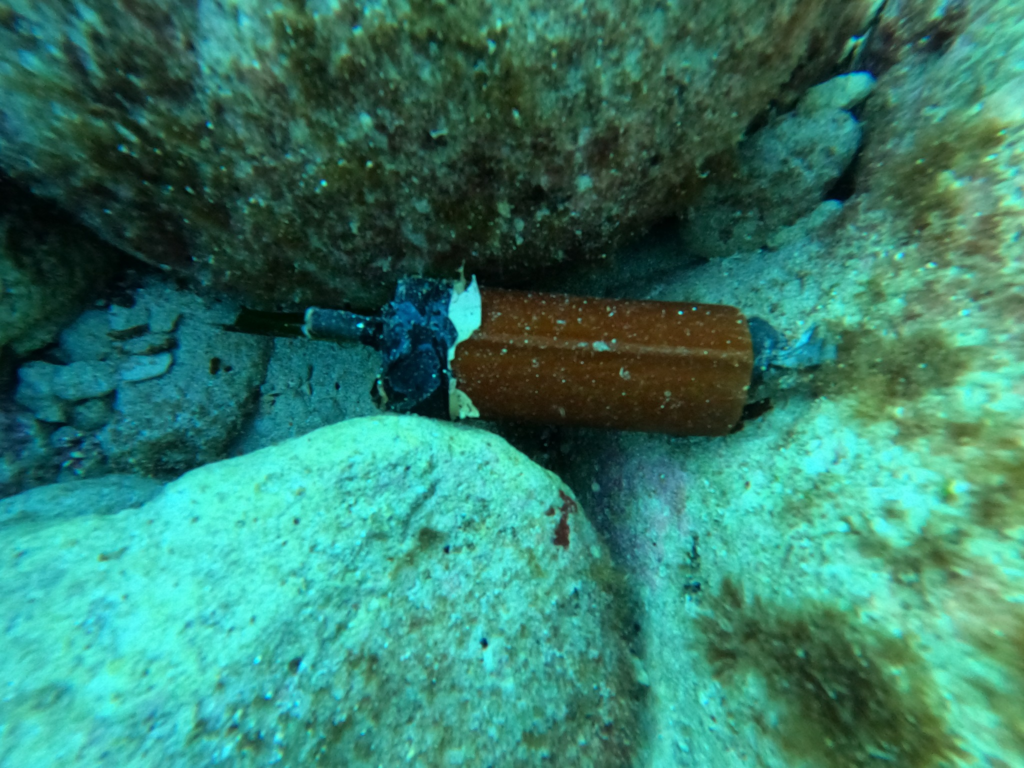
Despite these localized port developments, the daily reality for traditional fishermen remains fraught with grave dangers; the absence of security, oversight, and accountability has allowed illegal fishermen to exploit the situation by using highly destructive explosives known locally as “Jalatinah” (improvised gelatinous explosives) or military-grade TNT salvaged from the remnants of war.
A fisherman from Tripoli in his late thirties, identified as A.A.*, shares his firsthand testimony about the beginning of the collapse after 2011: “The country witnessed a widespread proliferation of explosives in fishing because of the absence of the rule of law; entire marine areas were ravaged in the blink of an eye. The years 2012 and 2013 were like an open explosives party within the fishing community of Tripoli, where entire bays were bombed.”
And although greater awareness among fishermen, improved communication between them in Tripoli, and local monitoring have recently helped curb the frequency of these blatant “parties,” the severe environmental damage has coincided with the climate-change crisis confronting the Libyan coast, manifested in rising water temperatures, frequent sandstorms, and drought leading to a gradual collapse of the entire marine ecosystem.
Captain Talal Osman of the Benghazi Diving and Rescue Center (an accredited international diving and rescue instructor with extensive participation and research in the marine field) notes that the impact of Jalatinah on the Libyan coast has left an unprecedentedly severe mark. Drawing on his field observations, he explains: “Overfishing with explosives has caused a mass flight and migration of fish away from their natural habitats and a frightening decline in stocks, which has had a direct, negative impact on citizens, through the exorbitant rise in market prices and the difficulty of obtaining many species of fish that were once considered an essential daily staple.”
The Triple Threat: Pollution, Habitat Loss, and Invasive Species
Today, the contemporary Libyan coast is suffocating under three interconnected environmental pressures that adversely affect the flow and health of the ecosystem:
- Exposed, untreated sewage: Vast quantities of untreated wastewater are pumped directly into the sea through open networks, causing a severe imbalance in the ecosystem, depleted dissolved-oxygen levels, and a negative impact on the growth of algae and plankton—as well as the degradation of the marine meadows that form the base of the food chain. This impact has driven fish to flee toward the deep abyss; whereas fishing was once practiced at depths not exceeding 35 meters, fishermen are now forced to sail and fish at depths reaching 200 meters, raising the cost of fuel and equipment. As one fisherman put it: “The situation gets worse year after year; fishing has become deeply frustrating and extremely expensive amid the soaring prices.”
- The total annihilation of the seabed’s structural components: The degradation is not limited to declining numbers but reflects a collapse of the structural components themselves; sea urchin populations have fallen markedly, coral reefs have degraded, and red coral—the primary indicator of marine health in the Mediterranean—has vanished entirely, alongside the disappearance of vast expanses of the large seagrass meadows that store carbon and provide natural habitats, such as Posidonia beds.
- The shifting of biological balances: As marine currents change and water temperatures rise, well-known local fish such as the “Manani” (Al-Laqas / Grouper) and certain mollusks have vanished, and the average size of the local “karb” (a sea bream) has shrunk. In their place, a wave of climate-linked invasive species arriving via the Suez Canal has swept the coast, such as the wahoo, the poisonous fish; the lionfish; the blue swimming crab; and the tiger francolin fish, completely altering the form of life beneath the surface.
Legislative and Security Recommendations for the Libyan Coast
To salvage what remains of the marine wealth, the interviews and professional opinions agree on the urgent need to amend Law No. 5 of 1987, which is dedicated to regulating marine fishing and criminalizing destructive fishing with explosives and Jalatinah. An important legislative amendment was introduced between 2023 and 2024 to address this crisis directly; nonetheless, experts stress that the broader legal framework must be modernized, given that the historic financial and criminal penalties have become outdated and fail to deter the current scale of destruction.
Reformers stress the need to impose strict penalties and intensify security efforts by deploying and patrolling joint units of naval forces and specialized agencies around the Jalatinah blast-fishing hotspots scattered across several parts of the Libyan coast to enforce the rule of law and protect the country’s national food security.
Part IV: The Poisoned Plate and the Path to Rescue and Recovery
The repercussions of this regional crisis do not stop at the destruction of the seabed; they have turned into a direct threat to public health. In Lebanon, laboratory analyses conducted by researcher Samer Fatfatt’s team revealed an invisible chemical danger lurking within the flesh of these fish, whose tissues absorb massive quantities of nitrates as a result of the blast.
Fatfatt warns, “The sample results showed that nitrate levels in some fish killed by dynamite were 5 to 10 times higher than the maximum permitted for human consumption. This amounts to a direct poison for the digestive system and the throat, and it carries a high risk of cancerous diseases over the long term.”
This violent death is reflected in the external appearance of the fish, as Ministry of Agriculture engineer Salam Jabbour explains to guide consumers in local markets: “Fish caught with dynamite often appear with a broken back (a shattered spine), bloodshot eyes, or internal organs that are torn and completely crushed. If the flesh is abnormally soft and the central bone is broken, you must refrain from buying it immediately; halting consumer demand and educating merchants is the strongest weapon to stamp out this trade.”

Crafting Sustainable Solutions
Despite the ongoing wars and economic challenges, marine scientists and environmental activists in the three countries refuse to surrender; they put forward a scientific framework based on activating “Marine Protected Areas” (MPAs) to achieve what is scientifically known as the “spillover effect” a vital component of regional strategies aligned with the global “30×30” ocean-protection goals to protect 30% of the world’s oceans by 2030.
By strictly enforcing fishing bans within safe sanctuary zones (often within 500 meters of the coast), fish are given the full opportunity to grow and reproduce in peace. As their density rises, large numbers of them naturally move beyond the reserve’s boundaries to repopulate the permitted fishing areas, creating a sustainable production cycle for fishermen.
The greatest challenge, however, rests on a single cornerstone: the human being—changing the mindset and distinguishing the “responsible fisherman,” who thinks of future generations and the sustainability of stocks, from the “predatory fisherman.” Ali Badreddine stresses the importance of bringing violators into the conversation: “The fisherman who uses dynamite may make a lot of money today, but tomorrow he will find nothing left to catch. We have to make them understand that they are the biggest losers in this catastrophe.”
In parallel, international programs have begun offering practical alternatives; the Lebanese Ministry of Agriculture, in cooperation with the United Nations Food and Agriculture Organization (FAO), has launched an equipment-exchange initiative under which fishermen surrender their illegal fine-meshed nets in exchange for legal, internationally compliant nets and gear that protect juvenile fish and ensure the sea’s longevity.
And to the rhythm of the cold April waves, Ziad grips the tiller of his felucca, leaving his history with explosives behind him to live out what remains of his life in peace with the sea: “When I am underwater, I forget who I am… Underwater, I forget myself, and I forget the whole world; I forget my enemies, I forget my memories, I forget everything.”
*Names have been changed or withheld for reasons related to the safety and security of the speakers.
*The investigation was produced in collaboration with “Med Mosaic Marine Journalism.”
References and Digital Source Directives:
- Food and Agriculture Organization (FAO) – Open Knowledge Repository: To review regional Mediterranean fisheries production data, employment statistics, and net-exchange program standards, you may consult the FAO Fisheries and Aquaculture Division Database.
- International Union for Conservation of Nature (IUCN) – Digital Portals: For the scientific and legislative context of marine biodiversity, the historic laws of 1929, and the spatial maps of marine protected areas, you may consult the IUCN Marine Conservation Briefings.
- National Center for Biotechnology Information (NCBI) – PMC Repository: To document the scientific evidence on the impact of wastewater on coastlines, the phenomenon of fish migration toward the deep abyss, and comparative studies on toxic chemical accumulation in marine life, you may consult the PMC Ecological Knowledge Archive.