







An ordinary day. The sun was shining, and the voice of Fairuz filled my car, stirring a deep longing for the North. From the radio came her song “The Sad Nights of the North,” and I found myself singing along: “Keep remembering me, remember me.” I drove calmly along the highway, reading the sign welcoming visitors to the city of El Mina, the first Tripoli district encountered on the new motorway: “Refresh Yourself in El Mina.” I crossed the bridge and continued toward the heart of the city. Then, suddenly, the clear atmosphere changed.
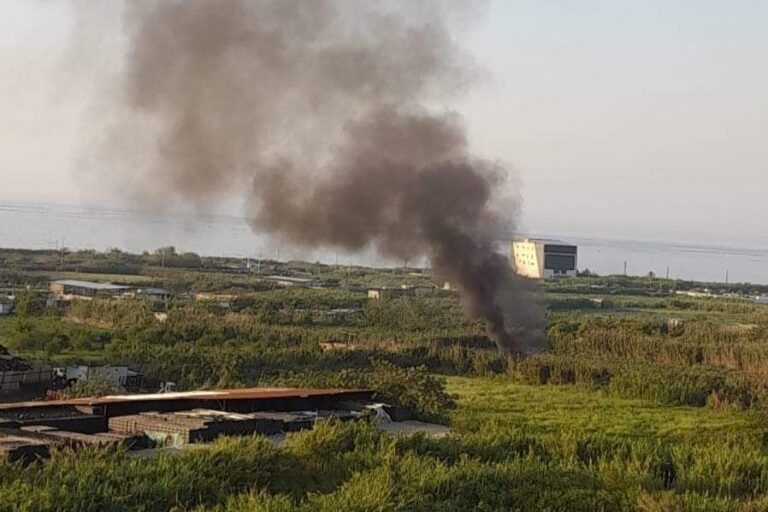
Black smoke was rising in the distance. The closer I got, the thicker it became. Soon, a massive dark cloud appeared before me, swallowing everything in sight. At first, I was alarmed. I immediately turned off the car’s air conditioning and stopped to observe the scene more closely. Once again, tires were being burned in broad daylight, in full view—and within breathing distance—of everyone. These truly are “the sad days of the North.”
Why Are Tires Burned?
The phenomenon of tire burning in Tripoli is not new. It has persisted for more than eight years. Since 2018, residents of Tripoli have gone to sleep and woken up under the same black cloud and the same toxic odors that spread poison through the city’s air and into their lungs.
The perpetrators are groups of young men of different nationalities—Lebanese, Syrian, and Palestinian—who engage in the practice under the justification of “earning a living.” They collect discarded tires from various parts of the city, transport them to informal dumping sites, and set them on fire to melt them down and extract the metal and copper inside for resale.
For burning and processing approximately 200 steel-belted tires, a burner earns only about $50. Meanwhile, Tripoli’s residents end up spending thousands of dollars on medical treatment for illnesses caused by inhaling the toxic smoke.
On the other hand, after finally deciding to confront the issue, Tripoli Municipality now spends approximately $150 to remove tire waste and dispose of it safely through recycling.
Where Are the Tires Burned?
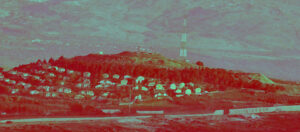
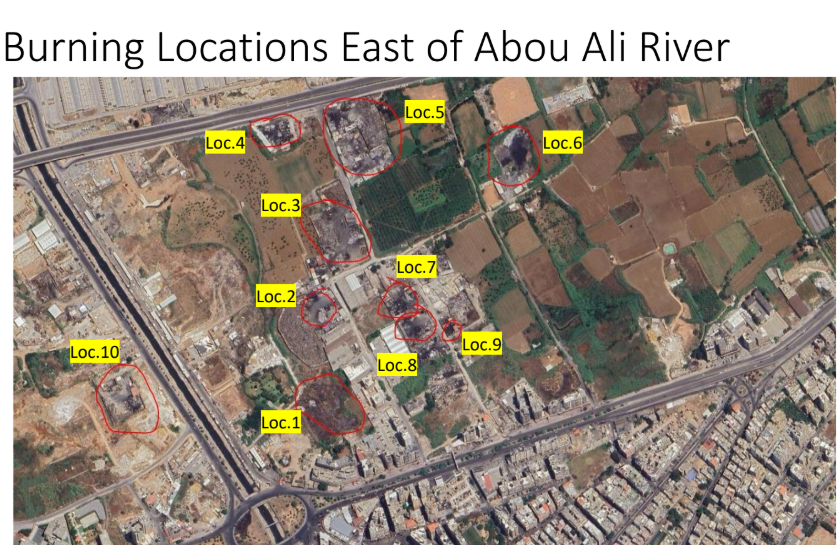
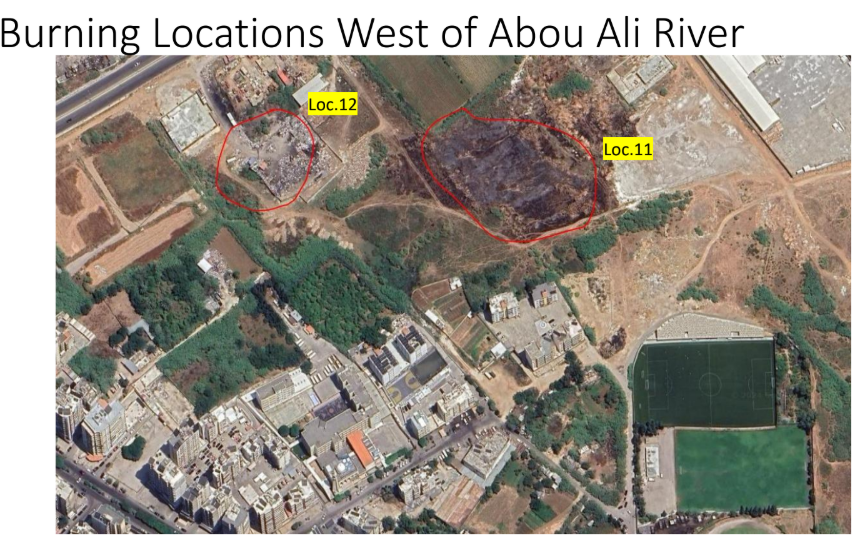
The tire-burning sites are spread across several hotspots in the northeastern part of the city, in an area known as Al-Saqi Al-Shamali, specifically near the former sanitary landfill close to the Port of Tripoli. This area extends from the northeastern edge of the city toward Beddawi.
It is primarily a residential zone, surrounded by apartment buildings and located near educational institutions such as Al-Azm School, as well as several hospitals.
The black clouds generated by these fires even reach the homes of prominent political figures in the city, including former Prime Minister Najib Mikati, Member of Parliament Ashraf Rifi, and former Interior Minister Bassam Mawlawi.
The irony is that throughout all these years, neither the security services nor the municipal police have managed to arrest any of those involved in the burning operations, despite the fact that some of them are known by name and face. This has led many residents to believe that certain individuals are protecting the perpetrators and preventing them from being held accountable.
Tripoli’s Residents: Victims of the Crime
Dareen Al-Helweh, a resident of the Al-Mi’atein neighborhood—where one of the recurring tire-burning hotspots is located—said:
“We informed the municipal police during the previous municipal administration as soon as we smelled the burning tires. Unfortunately, they arrived too late. By then, those responsible had already fled. The only thing the officers managed to do was extinguish the fire.”
Dareen is one of many city residents who have begun suffering from respiratory problems.
Speaking to Silat Wassel, she said:
“I would not be surprised if I were diagnosed with cancer one day. More than once, tires were burned while my apartment windows were open. Thick smoke filled my home, and I had no choice but either to hold my breath or inhale the toxins.”
She added:
“On top of that, ash and residue from the fires settled on our balconies. It took me more than a day to clean everything and remove the traces of the pollution.”
Since 2018, Tripoli’s residents have gone to sleep and woken up beneath the same black cloud and the same deadly odors.
The same sense of frustration is echoed by nearly everyone in the city. In the eyes of residents, one can see a mixture of sadness and resignation, as though suffering and neglect have become Tripoli’s fate.
Omar Diab, the caretaker of a residential building, said:
“A lot has happened to this city. I am nearly sixty years old. I lived through the worst days of the Tawhid Movement, the civil war, bombings, and the conflict between Jabal Mohsen and Bab al-Tabbaneh. Yet I can confidently say that the crime of tire burning is the filthiest thing Tripoli has ever witnessed.”
Tripoli residents insist on calling what is happening a crime, and Professor Charbel Afif, Technical Director of the Center for Analysis and Research at the Saint Joseph University, agrees.
“It truly is a crime,” he said. “Anyone who understands the scale of the toxins released during the burning process-and the harm inflicted first on the burner and then on everyone around them-will realize that it is a crime by every standard.”
He added:
“The black cloud visible in the sky is essentially a cloud of pollution containing microscopic particles that the human body cannot effectively eliminate because of their tiny size. These particles enter directly into the bloodstream and the lungs.”
He noted that:
“We already live in a polluted environment, but tire burning produces pollution levels ten times greater than everyday pollution and roughly three times higher than the limits recommended by the World Health Organization.”
He further emphasized that these pollutants significantly increase the risk of cancer, especially when exposure is repeated over time. They are also associated with vascular diseases, atherosclerosis, heart disease, and respiratory illnesses. He stressed that:
“Those who burn tires may think they are safe because they are not directly inhaling the smell of the fire, but that is not true. The closer a person is to the burning site, the greater the amount of toxic particles they inhale.”
The Perpetrators Remain Free…
Although the frequency of tire-burning incidents in the city has declined somewhat in recent months, the practice has not stopped entirely. Even as these lines were being written, tires were burned on Tuesday, May 5, when a group of young men took advantage of heavy rainfall in Tripoli and its surroundings to carry out their activity beneath a bridge near the Port of Tripoli.
During our visit to several of the known hotspots, we encountered one of them.
A thin man wearing dark sunglasses and a brown scarf wrapped around his face moved beneath the bridge searching for electrical wires.
“These are for burning,” he said.
When asked whether he feared being arrested, he replied:
“Honestly, I wish they would arrest me. At least I’d get free meals.”
For a brief moment, silence followed. Then, while continuing his search through the debris scattered on the ground, he added:
“Listen, sister. When your children tell you they’re hungry, you don’t just burn tires—you burn everything green and dry.”
Arresting those responsible for the burning operations falls under the responsibility of the security forces, yet the perpetrators often flee before either security personnel or municipal police arrive.
Wael Zmerli, President of the Union of Tripoli Municipalities, insists that:
“The responsibility for arresting those involved in tire burning lies with the security agencies. In most cases, the perpetrators escape before security officers or municipal police reach the scene.”
He noted that tire burning has decreased significantly compared to previous years and that the municipality has been making substantial efforts to prevent it.
“We began by collecting tires from known dumping sites and from tire shops throughout the city. Previously, we transported them by truck to the town of Joun in southern Lebanon for recycling. Each shipment cost us approximately $150. However, because of the war, the tire recycling and treatment facility in Joun was forced to close. We now transport the tires to another facility in the Hermel region, where they can be disposed of safely in order to protect the residents of the city.”
Hospitals Are Victims Too
Although the burning sites are located relatively far from the city center, the black cloud spreads its toxic pollutants everywhere, particularly when wind patterns shift and carry large amounts of contaminated dust toward the heart of the city.
The pollution often reaches hospitals, where patients—including those already suffering from respiratory diseases and cancer-are exposed to the harmful particles.
In this context, Dr. Samer Monkara of the Islamic Hospital in Tripoli told Silat Wassel:
“Cases of asthma and other respiratory illnesses are increasing in the city. While it is difficult to attribute all of these cases solely to tire burning, there are several contributing factors, including the high rates of smoking, especially among young people.”
He added:
“When residents are exposed to pollution from burning tires, we advise them first to tightly close all windows and doors. They should then place a damp cloth over their nose and mouth, which can help reduce the inhalation of toxic air and contaminated particles.”
“People who already suffer from respiratory conditions should take their prescribed medications immediately. If they experience any complications, they should seek medical attention without delay.”
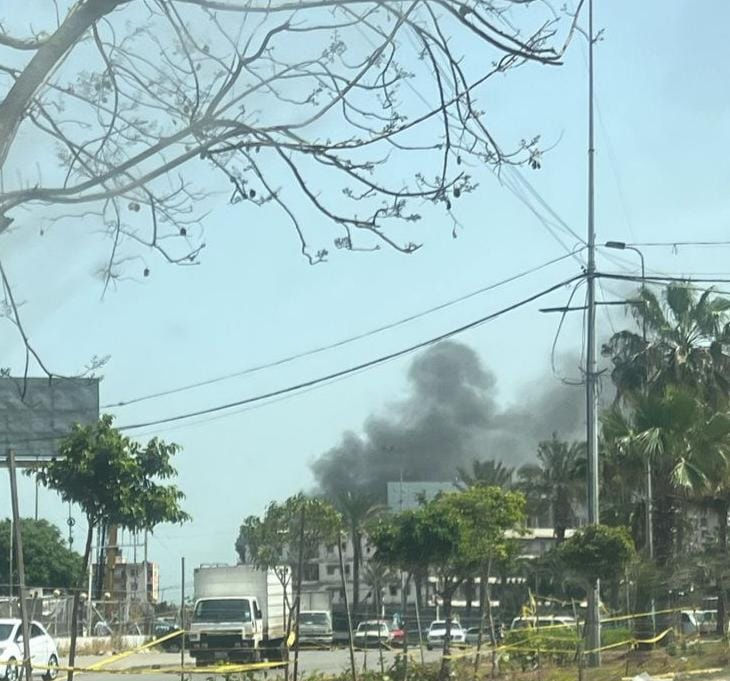
The tire-burning crisis in Tripoli is not an isolated incident. It is a recurring image of a city left alone to confront pollution, poverty, and neglect.
Here, people are not suffocating from smoke alone—they are suffocating under the weight of absent policies that treat public health as a secondary concern that can be ignored year after year.
As the sky turns into a toxic black cloud, one question continues to linger:
Why are the people of Tripoli always expected to pay for every crisis with their lungs and their lives?
In a country where a clean environment is supposed to be a right enjoyed by all, environmental justice often feels like a privilege that never reaches marginalized cities.
When working-class neighborhoods are left exposed to fires and pollution, and when deterrence, accountability, and meaningful solutions are absent, pollution becomes yet another form of social injustice.
What is happening in Tripoli today is not merely an environmental disaster. It is yet another indication of a state that treats certain regions as though they lie outside its most basic priorities for life itself.