









In war, it is not only the explosion that kills. Death may also come from the road an ambulance can no longer cross, the hospital that has gone out of service, the healthcare center forced to shut down, or the paramedic who has become a target himself. At this point, targeting the healthcare sector is no longer merely collateral damage of war; it becomes a mechanism that multiplies deaths. Victims are deprived not only of safety, but also of the chance to receive treatment and the time needed to survive.
explains Dr. Samar Al-Hajj, Founding Director of the Advanced Injury Research Program for the Middle East and North Africa at the American University of Beirut, explains that the figures related to injuries and deaths in Lebanon cannot be separated from the collapse of emergency care chains. In modern wars, surviving the initial strike is not enough. The injured person must also quickly reach a properly equipped ambulance, travel through a safe road, arrive at a functioning hospital, and be treated by a medical team that has not been exhausted or targeted. When this chain is attacked, a treatable injury can easily turn into a fatality.
From Injury to Death Before Arrival
Al-Hajj continues by referring to a national study on war-related injuries and deaths in Lebanon, published with her research team in partnership with the Ministry of Public Health. The study analyzed data from 149 hospitals between October 2023 and March 2025, covering 21,853 cases, including 17,581 injuries and 4,272 deaths. The findings showed that South Lebanon and Nabatieh recorded the highest rates of injuries and fatalities, while explosive injuries were identified as the primary mechanism of harm, followed by gunshot and shrapnel injuries. However, according to Al-Hajj, the most significant figure is that 81.46% of deaths were recorded as patients arriving at hospitals already deceased. This number does not simply indicate the severity of the injuries; it raises direct questions about what happened before victims reached the hospital. Did the ambulance arrive? Was the road accessible? Was the hospital still functioning?
The study links this high percentage of deaths upon arrival to several factors, including the severity of injuries, damage to infrastructure, the disruption of medical referral pathways, and the targeting of healthcare facilities and ambulance services. It also points out that wars produce not only immediate health consequences, but also long-term indirect effects, ranging from disrupted essential services to weakened maternal and child healthcare, as well as increased risks of mental illness, malnutrition, and infectious diseases, as documented in conflict health literature.
When the Hospital Loses Its Function
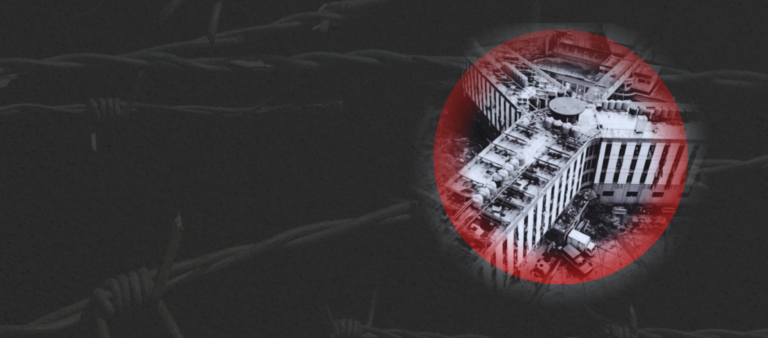
Al-Hajj adds that the Ministry of Public Health’s report on attacks against the healthcare sector between October 8, 2023, and January 27, 2025, places these findings into a clearer context. The report documents 68 attacks on hospitals affecting 38 medical facilities, resulting in 16 deaths, 74 injuries, and damage to 25 vehicles. Eight hospitals were forcibly shut down, while seven others operated only partially. Some of the damage extended far beyond broken windows and facades, targeting emergency departments, pediatric units, medical equipment, electricity and water networks, oxygen supplies, generators, and solar panels. In other words, the attacks targeted not only hospital buildings, but also their ability to function.
Attacks targeted 38 hospitals, resulting in 16 deaths, 74 injuries, and damage to 25 vehicles
The deeper impact becomes clear when looking at primary healthcare centers, which represent the closest link between healthcare systems and local communities in villages and neighborhoods. The report documents 63 attacks on these centers, including the forced closure of 58 facilities, the complete destruction of 10 centers, and partial damage to 50 others. These centers are not merely administrative details within the healthcare system; they are the places where chronic illnesses are monitored, vaccinations are administered, and the health of pregnant women, children, and the elderly is followed up. Their destruction therefore extends the effects of war beyond the moment of bombardment: medicine no longer arrives, vaccinations are delayed, and patients with diabetes or hypertension are left without care.
Al-Hajj continues by stressing that targeting ambulance services directly attacks survival time itself. The Ministry of Health report records 237 attacks on emergency and ambulance teams, resulting in 201 deaths and 253 injuries, along with damage to 177 ambulances, 59 firefighting vehicles, and 18 rescue vehicles. In this context, paramedics themselves become part of the danger zone, while ambulances shift from being rescue tools into potential targets. Under such circumstances, the key question is no longer how many people were injured, but rather how many could have been saved had the path to treatment not been attacked.
2026: The Continuation of the Same Pattern
In March 2026, the same pattern re-emerged even more clearly. The Ministry of Health’s summary covering the period from March 2 to April 26, 2026, recorded 10,264 casualties, including 7,755 injuries and 2,509 deaths, alongside 130 attacks on ambulance services, 100 deaths among healthcare workers, and 233 injuries among medical personnel. Additionally, 16 hospitals were reported damaged and 4 hospitals were forced to close. These figures do not appear disconnected from the trajectory of 2024; rather, they represent the continuation of a systematic pattern of targeting in which the damage accumulates instead of ending with each round of bombardment.
In this sense, targeting the healthcare sector cannot be understood merely as an attack on a service institution. It is an assault on people’s right to survive after injury. War does not end when the shell falls; it continues through ambulances that cannot arrive, doctors who are killed or displaced, healthcare centers that are forced to close, and hospitals transformed from final shelters into shattered buildings. Once the healthcare system itself is bombed, death becomes not only the result of the initial strike, but also of everything that follows: the disruption of rescue efforts, the obstruction of access to treatment, and the paralysis of life itself.
This report is supported by: