








How do wars turn into a cost-of-living crisis?
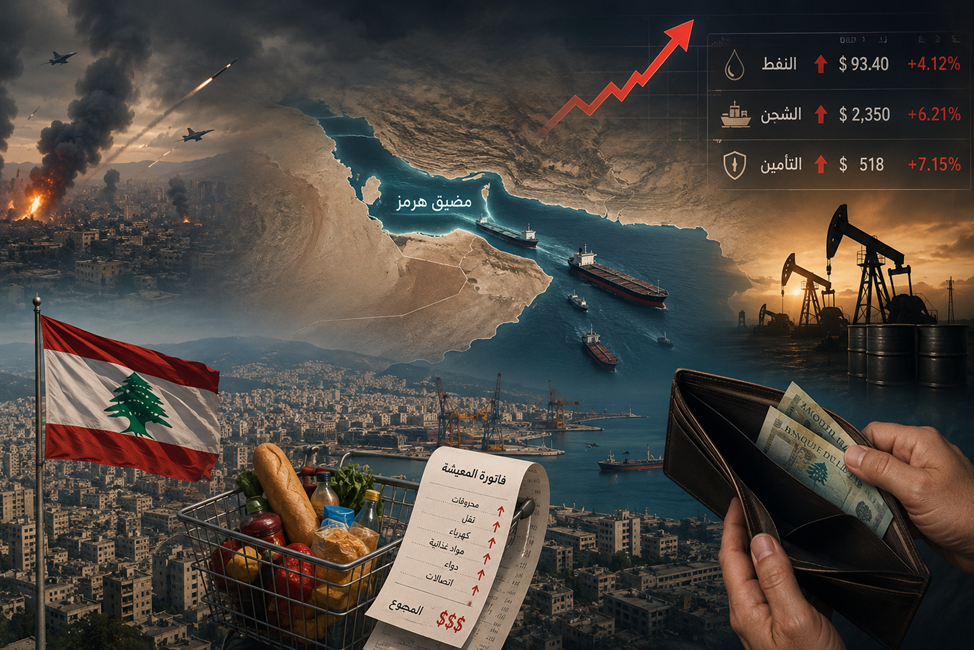
In an economy that depends on the outside to secure a large part of its needs for energy, food, and basic goods, regional wars do not remain events far removed from the daily life of the Lebanese. Military escalation in the Middle East can move quickly from oil markets and maritime passages to the prices of fuel, transport, and foodstuffs, turning from a geopolitical crisis into a cost-of-living burden that reaches Lebanese families.
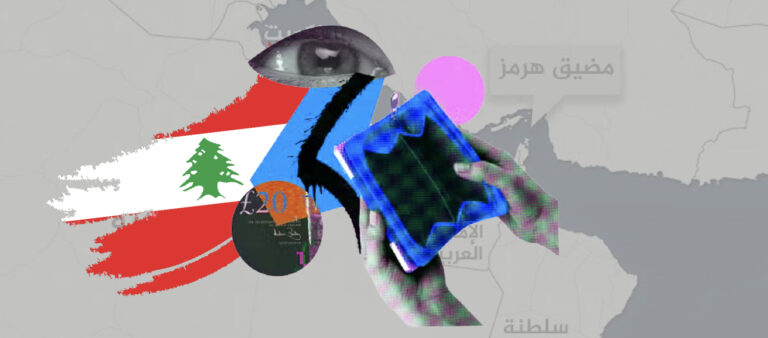
These fears increase when the escalation is linked to the Strait of Hormuz, one of the most important oil passages in the world. The U.S. Energy Information Administration points out that about 20 million barrels of oil and petroleum products passed through the strait daily during 2024 and the first quarter of 2025, equivalent to about a fifth of global oil consumption. More than a quarter of the world’s seaborne oil trade also passed through the strait, in addition to about a fifth of the global liquefied natural gas trade.
"About 20 million barrels of oil and petroleum products passed through the strait daily during 2024 and the first quarter of 2025"
But the impact of any crisis in Hormuz does not move directly to the consumer. The first stage begins in the financial markets and global energy markets, where expectations form and prices are determined.
For Lebanon, the matter is not only about distant markets, but about an economy that imports most of its needs for energy, food, and basic goods, which makes it sensitive to any disruption in international trade or oil prices.
Markets react to expectations before facts
Dr. Layal Mansour, a specialist in monetary economics, explains that the first to be affected by wars and political escalation are the financial markets. These markets do not wait for events to occur fully, but rather price in future expectations. So if indicators of de-escalation or a political agreement appear, the prices of stocks and financial assets rise as a result of the expectation of an improvement in economic conditions in the future. But if events head toward escalation, the markets respond quickly through a drop in stock prices and a rise in demand for safe assets.
Mansour points out that these reactions are often sharp and exaggerated at first, before the markets witness what is known as a process of “price correction,” that is, a return to more balanced levels after absorbing the news and assessing its actual repercussions.
But what happens in the financial markets is not reflected at the same speed on the real economy. The real economy includes growth, inflation, prices, interest, and the movement of investments and financial transfers. Here the impact of war becomes slower and more persistent. The shocks related to oil and energy do not disappear the moment military operations stop, but may leave inflationary effects that extend for many long months, especially when companies have raised their prices and commercial contracts have been concluded on the basis of a high cost for energy and shipping.
Mansour notes that the end of a war does not mean the immediate return of prices to their previous levels, because the markets need time to absorb the new changes, and investors do not regain their confidence the moment a ceasefire is announced, but rather wait to test the sustainability of political and security stability before making new investment decisions.
When markets become part of the war
But the rise in prices does not result only from the fear of an oil shortage or a disruption in trade. According to the researcher and academic in international relations Dr. Jamal El-Sayed Ahmad, markets during contemporary wars are no longer merely a mirror of risks, but have become part of the tools of the conflict itself.
El-Sayed Ahmad explains that there are two different levels for understanding what is happening. The first is represented in the natural response of the markets to the possibility of a crisis occurring or supplies being disrupted. As for the second, it is linked to the use of economic sanctions and financial and trade restrictions as means of political pressure within international power strategies.
Sanctions on banks, restrictions on financial transfers, the ban on insurance and shipping services, and preventing access to international payment systems, are all measures that do not only reflect market risks, but constitute deliberate pressure tools aimed at influencing the behavior of the targeted states and parties.
El-Sayed Ahmad likens this to what he calls the “reflexive memory” of the markets, that is, the accumulation of previous experiences that pushes investors to respond quickly to any indicators that resemble previous crises. After decades of oil crises and regional wars, the markets have come to react automatically to any indicator of escalation in a region sensitive to energy or international trade.
Lebanon at the heart of the storm despite remaining outside it
The problem for Lebanon lies in the fact that it is one of the region’s economies most exposed to the outside. Imports of goods and services reached about 73.7% of the gross domestic product in 2023, according to World Bank data. Fuel imports also constituted about 27.2% of Lebanon’s total goods imports in the same year.
This confirms that any global rise in the prices of oil, transport, or insurance is quickly reflected on the local economy. When fuel prices rise globally, the impact is not limited to the gasoline bill, but extends to the cost of transporting goods, operating private generators, and the prices of foodstuffs and consumer goods.
" Any global rise in the prices of oil, transport, or insurance is quickly reflected on the local economy "
Nor is the matter limited to energy. According to the Food and Agriculture Organization of the United Nations, Lebanon needs to import about 680,000 tons of wheat during the 2025-2026 season due to the decline in local production. This makes Lebanese food security directly linked to shipping and energy prices and the stability of international supply chains.
El-Sayed Ahmad affirms that Lebanon represents a clear model of the economies that are affected by global geopolitical shocks without being a direct party to them. When the cost of shipping, insurance, or oil rises globally, this increase is transmitted quickly to the Lebanese interior through the prices of fuel and the cost of transport and production, then it is reflected on the prices of goods and services and on families’ ability to spend.
The problem worsens when economic shocks are accompanied by financial and banking restrictions. The crisis is then no longer confined to a rise in prices, but may turn into difficulty in accessing financing, or making transfers, or securing imports themselves, which is what El-Sayed Ahmad describes as the crisis moving from “high prices” to “the inability to access.”
Remittances: a safety net under test
The impact of regional disturbances is not limited to prices and trade, but extends also to one of the most important sources of foreign currency in Lebanon: the remittances of expatriates. World Bank estimates indicate that Lebanon received about 5.8 billion dollars in remittances in 2024.
World Bank data also showed that personal remittances constituted more than 33% of Lebanon’s gross domestic product in recent years, which is among the highest rates in the world.
Mansour explains that any long-term economic downturn in the Gulf states may be reflected on the volume of these remittances, given that a broad segment of Lebanese working there depend on sectors linked to regional economic activity. However, the impact of short wars remains relatively limited, because companies do not usually resort to laying off employees or closing their businesses immediately, but rather after longer periods of decline and uncertainty.
A bill the Lebanese do not set yet pay the price of
The recurring regional tensions reveal the fragility of the Lebanese economy in the face of global variables. War affects not only through missiles and direct destruction, but also through the markets, energy and shipping prices, remittances, and financial sanctions. And while the markets price in future risks, fragile economies bear the cost of these expectations even if they are not a direct party to the conflict.
In a country that is already living through an extended economic and financial crisis, external shocks do not need a long time to turn into daily cost-of-living burdens. Oil prices and shipping costs are not economic indicators far removed from people’s lives, but elements that determine the cost of transport, food, medicine, and production. From the Strait of Hormuz to the fuel stations in Lebanon, war travels a long economic path before it reaches the pockets of citizens.