




“This project is implemented with the support of the Arab Fund for Arts and Culture (AFAC), in partnership with Oxfam, Eco Electric and Megaphone, and co-funded by the European Union.”
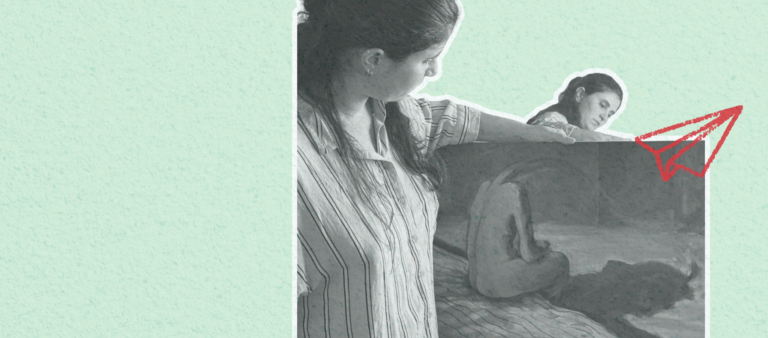
At a time when art is constantly expected to speak to major causes and to take loud political or social stances, Syrian visual artist Nada Al-Ajoze has chosen a different path, one that holds that art does not have to carry the weight of a cause or deliver direct slogans. Al-Ajoze turns instead to celebrating simple, everyday moments and the ordinary rituals we overlook amid the rush and the harsh changes around us. In this candid conversation, she talks about her early passion for drawing, the decision that led her to the Faculty of Fine Arts, and her artistic vision of reality, life and the body, far from art consumed only as a vehicle for a cause.
Beginnings and Passion: Free Expression Beyond Judgments and Slogans
Could you tell us generally about your artistic experiences, and how you discovered your passion for drawing?
Honestly, there is no specific story or defining turning point; I have been drawing for as far back as I can remember. At first, drawing wasn’t a planned academic or career choice for me. It was a daily practice, something like keeping a diary that I could return to whenever I felt nostalgic for the past.
"True success comes when a person works in the field they love."
How did you decide to enroll in the Faculty of Fine Arts?
The credit for convincing me goes to one of my relatives. He told me that true success comes when a person works in the field they love. I was persuaded by what he said, and on that basis I decided to enroll in the Faculty of Fine Arts.
How difficult do you think it is in our society today for young people to be advised to follow their passion, when most people push them toward fields that pay well?
It depends on who is giving the advice and on their own experience. My relative, for example, held a PhD from a prestigious university, yet he felt that his real passion and interest lay in literature and the Arabic language, and that what mattered to him was not his degree but his passion for that field. His advice came from that sincere place, and I took it.
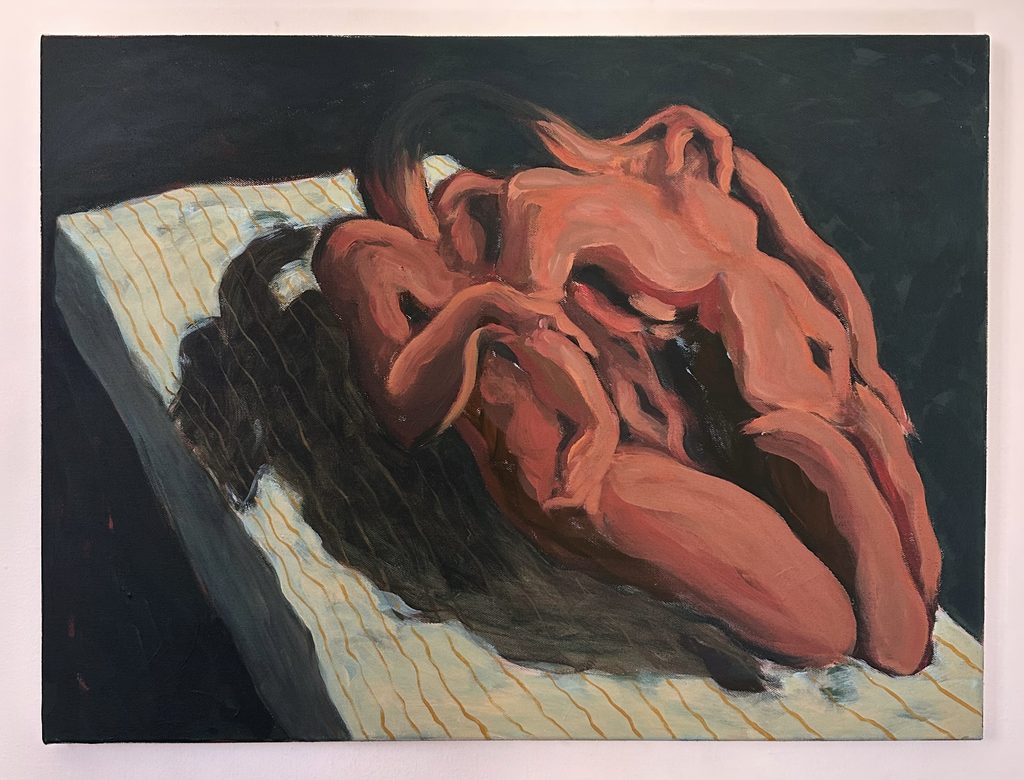
Searching for an Artistic Identity: Celebrating Details Without Imposing a Preconceived Idea
What about your first paintings? What were they expressing?
In the early days, while still studying, a student is in a constant state of experimentation, because no clear artistic identity has taken shape yet. I worked simply to experiment and discover different materials and techniques, not to express a fixed subject, and then I would try to project a theme onto the work once it was finished. After graduating, though, the real features of my style began to crystallize, and my direction and path became clearer and more mature.
What ideas did you start exploring in your work after graduation?
I found that my focus was mainly on “documenting everyday life.” I was very interested in this, and I relied on continuous experimentation in my studies for the work, without setting any preconceived idea of what the final painting would look like.
"The compositions of a work run deeper than the surface features of a face, which can be faked and neutralized."
I feel there is something missing in our young generation: an appreciation of, and attention to, everyday details and simple pleasures. I see us as a scattered generation, driven by all the harsh events unfolding around it; we were born and grew up in circumstances full of war and destruction. This forced adaptation has made us overlook beautiful details, like meeting friends and spending time with them, and the small rituals whose value we only realize once they are gone. So my attempt came down to recapturing these daily rituals and giving them their space.
From Faces to Body Movement: A Philosophy of Reduction and Expression
How did this take shape in your paintings? And what are your expressive tools, in terms of colors and figures?
At first, I focused heavily on painting faces and hands. But over time, I felt that faces were no longer necessary; the world today treats individuals as numbers, nothing more than numbers. I also found that facial features easily draw the eye and capture the viewer’s attention at the expense of the painting’s other elements.
I find myself drawn to the movement and gestures of the body. The compositions of a work and the movement of the hands, for example, run deeper than the surface features of a face, which can be faked and neutralized. Movement conveys the experience of living a moment and its nature, without getting absorbed in presenting direct emotions.
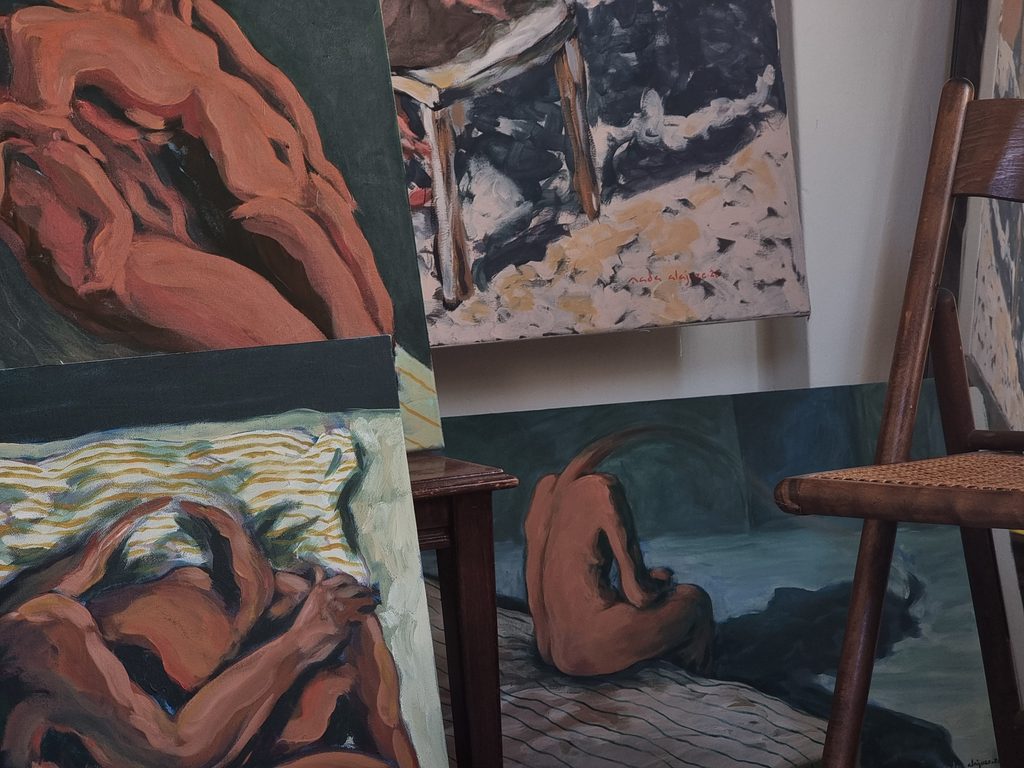
Art as a Right to Free Documentation: The Ordinariness of Life Instead of the Noise of Its Causes
Through her experience, Nada Al-Ajoze takes us to the importance of art’s complete freedom in choosing its subjects; not every painting must always carry a grand cause or tragic slogans. Al-Ajoze’s vision affirms that art need not be tied to a lofty humanitarian cause to gain its value. Rather, reviving a nostalgic vision of everyday life in its simplest details is in itself an act of resistance and a determination to hold on to life in times of crisis, far from the clamor of war and a painful reality.
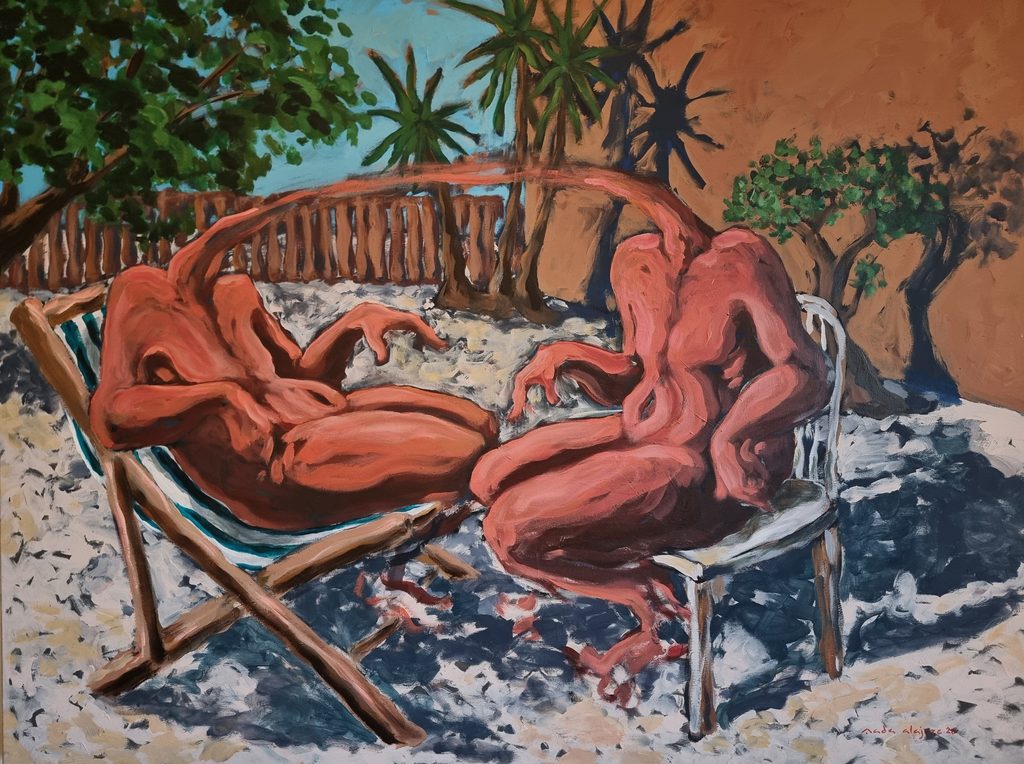
In light of this approach, artists today face a real challenge in the form of social pressure and constant demands to take loud political or social sides. Choosing to step away from art laden with heavy causes and to focus on ordinary everyday details is often met with a kind of blame or suspicion, as if freely documenting simple life must come with a sense of guilt, even though it is an artist’s fundamental right to express what they touch and feel, free from the burden of compulsory commitment.
“This report was produced with the financial support of the European Union. Its contents are the sole responsibility of Silat Wassel and can under no circumstances be regarded as reflecting the position of the European Union.”