





The climate crisis does not affect everyone equally. Women, especially those living in rural areas, bear the greatest burden of the repercussions of climate change, given their weaker capacity to adapt. As the world now suffers from biodiversity loss, desertification, pollution, and extreme weather events that destroy livelihoods and increase poverty rates, inequality has deepened. Women have become largely excluded from negotiation tables and climate decision-making, leading to policies that do not meet their needs and do not contribute to building more resilient and adaptive communities.
The Reality of Women in Lebanon
Lebanese women continue to bear the greatest burden of the crises Lebanon is going through, as they shoulder the responsibility of absorbing and dealing with the negative impacts resulting from the difficult conditions surrounding them. Despite repeated talk about their participation in public life, the reality remains completely different, as women in Lebanon record the lowest levels of participation compared to the region and the world.
Lebanon Ranks at the Bottom of the Global Gender Gap Index 2024
According to the report issued by the World Economic Forum on the Global Gender Gap 2024, Lebanon ranked 133rd worldwide out of 146 countries and 8th regionally in the Gender Gap Index, compared to 132nd place in the 2023 index.
It should be noted that the World Economic Forum’s report evaluates 146 countries annually according to gender differences across four main indicators: economic participation and opportunity, educational attainment, health and survival, and political empowerment. The following chart shows Lebanon’s evaluation based on these four sub-indicators:

According to the sub-indicators, Lebanon ranked 122nd globally in economic participation and opportunity, 111th in educational attainment, 67th in health and survival, and 142nd in political empowerment.
According to the index’s estimates, the participation rate of Lebanese women in the labor force is about 29.3% compared to 70.5% for men, indicating a gap exceeding 41%. In terms of holding leadership positions in the economic sector, the participation rate of women was 21% compared to 79% for men, reflecting a gap exceeding 57%. Thus, women in Lebanon record the lowest levels of participation in the labor force and entrepreneurship, depriving the Lebanese economy of the significant energies and potential that women possess.

Labor force participation rate of Lebanese women compared to men
Source:
Global Gender Gap 2024, Insight Report, June 2024
In terms of political empowerment, the participation rate of Lebanese women in parliament does not exceed 6.3% compared to 93.7% for men, reflecting a gap exceeding 87%. The parliament includes 8 women out of 128 seats, while the regional average (Middle East and North Africa) is 17.7% and the global average is about 26.5%, according to estimates by the Inter-Parliamentary Union for 2023. Lebanon also ranked 183rd out of 187 countries in terms of women’s participation in parliament, and 15th out of 17 Arab countries in the proportion of female MPs, according to a UN report. Women’s Political Participation in Local Governance in Lebanon: Towards an Alternative Approach to Politics “.

Women’s participation rate in parliament and ministerial positions
Source: Global Gender Gap 2024, Insight Report, June 2024
The report “Women’s Economic Participation in Lebanon” issued by ESCWA in 2022 also stated that women in Lebanon are exposed to unemployment at twice the rate of men, and when they do work, it is often under unfavorable conditions and with lower wages.
Data from the Gender Development Index (GDI) 2022 in Lebanon indicates a wide gender gap, as women’s Gross National Income amounts to about $6,546, compared to more than $18,000 for men. This reflects a significant disparity in purchasing power between genders, as illustrated in the figure below:

Source: Gender Development Index (GDI)
Reasons Behind the Low Participation of Lebanese Women in Public Life
Jouelle Abou Farhat, President of the Lebanese association Fifty-Fifty, explained in her interview with Sila Wasl platform the reasons Lebanon ranks at the bottom of the gender equality index and why women’s role has declined in political, economic, and environmental fields. She pointed to five main reasons:
1- The current state crisis in Lebanon caused by consecutive economic collapses, the Beirut Port explosion of August 2020, and the resulting political vacuum that obstructed efforts to enhance women’s role.
2- Successive governments’ neglect in setting up a full and comprehensive national plan to empower women across different fields.
3- The failure to implement a women’s quota system, which faces strong opposition from several parliamentary blocs.
4- Political parties’ reluctance to strengthen women’s role and ensure their participation in decision-making structures within the parties.
5- A patriarchal mindset, along with social traditions and inherited norms, which form major barriers to women’s empowerment and prevent their full engagement in public life as key actors.
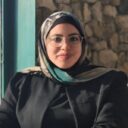
For her part, Dr. Najat Saliba, MP from the Forces of Change bloc in the Lebanese Parliament, told Sila Wasl that the main reason behind women’s reluctance to engage in politics in Lebanon and other third-world countries is the dominance of male-controlled regimes characterized by corruption and the absence of respect for opposing views. She added that this reality affects young women, who often hesitate to engage in public life due to the lack of female role models and mentors to inspire active participation.
A large percentage of women in Lebanon rely on livelihoods linked to the environment, working in sectors highly vulnerable to climate change impacts, foremost among them agriculture. Women constitute about 43% of the agricultural labor force, particularly in smallholder farms and family-based agriculture.
Visions to Strengthen Women’s Role from the Perspective of Lebanese Politicians
MP Najat Saliba stressed the importance of women’s associations encouraging women and girls to enter political life, and the need for unity and collective pressure to ensure effective women’s representation in political platforms.
Jouelle Abou Farhat also highlighted several key measures necessary to support the empowerment of Lebanese women, most notably:
1- Amending the electoral law to include a women’s quota ensuring female representation in parliament and municipal councils, especially since Lebanon has signed international agreements that support women’s access to leadership positions, such as the Beijing Platform for Action (1995) and CEDAW (1997).
In this regard, Abou Farhat explained that the Fifty-Fifty association submitted two draft laws on quota systems: one concerning parliamentary quotas and the other concerning municipal quotas.
2- Encouraging political parties to strengthen women’s participation and adopt strategies that allow women to reach decision-making positions within parties.
Abou Farhat added that the association, in cooperation with other organizations, succeeded in efforts to enhance women’s role within political parties. The Progressive Socialist Party implemented a 30% quota in all its elected and appointed councils, while the Kataeb Party raised its women’s quota in the political bureau from 20% to 25%.
Jouelle Abou Farhat: “After 12 years of struggle to empower Lebanese women, we have begun to see tangible changes on the ground. There is now significant acceptance of the quota system among Lebanese parliamentary blocs. While only 2 out of 7 blocs previously supported the quota, today 5 blocs are in favor compared to 2 opposed.”
She added: “After 12 years of struggle to empower Lebanese women, we have begun to see tangible changes on the ground. There is now significant acceptance of the quota system among Lebanese parliamentary blocs. While only 2 out of 7 blocs previously supported the quota, today 5 blocs are in favor compared to 2 opposed.”
3- Developing a comprehensive national plan to strengthen women’s role in politics.
4- Raising awareness among women, men, and youth about the importance of women’s role in Lebanon’s economic, political, and environmental recovery.
5- Highlighting women, their achievements, and expertise in the media, given the crucial role media plays in strengthening women’s participation across various fields.
In this context, Abou Farhat emphasized the importance of media coverage of women. She pointed out that before the 2022 parliamentary elections, 15 women were featured on an LBC program, with each episode dedicated to one female candidate. This initiative resulted in the election of two of them, Halima Kaakour and Najat Saliba.
MP Najat Saliba: “It is crucial for women’s associations to encourage women and girls to engage in politics, and for them to unite and exert pressure to ensure effective representation of women in political platforms.”
Reasons Why Lebanese Women Are Key Actors in Climate Action
The World Bank’s 2024 Country Climate and Development Report on Lebanon highlights that the country is among the least prepared Arab nations to face climate change, due to limited adaptive capacity, weak infrastructure, and fragile state institutions—especially after the 2019 economic collapse. The report projects that annual water availability will decline by 9% by 2040, and up to 50% during drought periods.
Furthermore, climate-related losses could reduce GDP by up to 2% annually, hinder service delivery—particularly in water and energy—and severely impact key growth sectors such as agriculture and tourism.
Greenpeace Research Labs’ report “On the Brink” (November 2022) also ranked Lebanon among the most climate-vulnerable countries in the Middle East and North Africa.
Given these indicators and the low participation of Lebanese women in political and economic life, it is essential to stress that women’s empowerment is central to addressing climate change. Studies have shown that women’s political representation leads to stricter climate policies, greater ratification of international environmental treaties, and more inclusive resilience-building. Moreover, women bear the greatest burden of climate change impacts, being 14 times more likely than men to die in disasters, according to a UNFPA report.
In a speech, UN High Commissioner for Human Rights Michelle Bachelet said: “When a woman enters politics, she changes. When many women enter politics, politics changes for the better.”
MP Najat Saliba further stressed that men alone cannot devise solutions for adapting to the “catastrophic” impacts of climate change. Since women are equally affected, they must be granted equal representation in shaping climate response strategies.
Environmental expert and head of Earth Association, Paul Abi Rached, added that women possess a stronger survival instinct than men, as well as a greater ability to manage affairs with integrity and less corruption. These qualities, he noted, are crucial in confronting climate challenges.
The reality is that no meaningful progress can be made in combating climate change without involving women in shaping environmental policies and decision-making—for the following reasons:
1. Employment in Climate-Vulnerable Sectors
A significant share of Lebanese women depend on environment-related livelihoods, working in sectors highly exposed to climate impacts, particularly agriculture. Women make up about 43% of the agricultural workforce, especially within smallholder farms and family agriculture. However, they face multiple constraints, including limited access to agricultural extension services, finance, and productive resources, as well as difficulties accessing markets and labor-saving technologies. More than 20% of households in the agricultural sector live in extreme poverty.
2- Additional Burdens and Heavy Responsibilities
Women carry a significant share of unpaid household and caregiving work. During climate-related disasters—such as floods, wildfires, droughts, and storms—these burdens increase substantially. Women often find themselves on the frontlines of response: rescuing children and the elderly, providing shelter and food, fetching clean water, offering primary healthcare, and helping communities recover and rebuild.
3- Power to Influence and Drive Change
Women have emerged as influential leaders in climate movements at both global and national levels. Driven by their unique experiences in facing environmental challenges and their awareness of the disproportionate impact of climate change on women and girls, women have significantly shaped sustainable transitions. Through their leadership in 70–80% of all consumer purchasing decisions, women have promoted the shift toward more sustainable lifestyles—adopting renewable energy, reducing waste, and choosing sustainable products.
This leadership role extends to community activists, policymakers, and entrepreneurs—women working at multiple levels to create a more just and sustainable world. According to a United Nations report, women can drive change across sectors by influencing behavioral shifts and shaping consumer attitudes.
It is worth noting that the United Nations in Lebanon celebrated the International Women’s Day by honoring the contributions of nine pioneering women in the climate field. These women are leading change through initiatives to combat, adapt to, mitigate, and respond to climate change impacts. They are working to build a more sustainable future for all across Lebanon: Ndeida Raad, Caroline Chabtini, Maya Nehme, Aida Ghadban, Myriam Ghsoub, Carole Ayat, Mona Fawaz, Nihad Aouad, and Najat Saliba.
Highlighting these nine pioneering women is a promising step, yet it represents only a fraction of the vast potential Lebanese women hold. Greater investment in their empowerment, along with stronger support for them to assume leadership roles in climate action, is urgently needed. Lebanese women have the power to lead the transformation required at this critical moment.