






In a single moment, war can redraw an entire life. It does not only destroy buildings or empty villages of their residents, but extends to something deeper: the dreams built over years, the career paths shaped with patience, and the simple sense of stability that feels natural until it is lost. In Lebanon, war is not told only through numbers of losses, but through the stories of individuals who suddenly find themselves facing a new reality-one that does not resemble what they planned or what they deserve. Within these stories, experiences of loss, confusion, and attempts to rise again intersect, revealing another face of war-one not seen in quick images, but lived in the details of everyday life.
A loss beyond profession
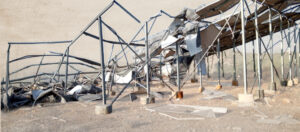
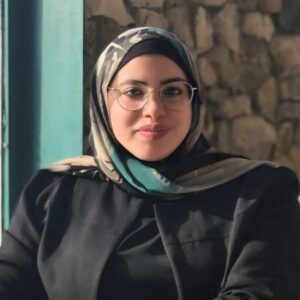
Samia Karneeb, from the border town of Maroun al-Ras, recalls a loss that cannot be reduced to a professional or material dimension alone. The pharmacy destroyed by an airstrike was not just a workplace, but the result of years of effort and an extension of a personal dream that began when she returned from her studies in Russia. There, she could have chosen an easier path in a larger city, but she preferred to return to her village, driven by a clear desire to serve her local community in an area suffering from a severe shortage of healthcare services.
She explains that her decision to remain in the south was not accidental, but a deliberate and conscious choice, into which she invested all her savings, believing that building a stable life close to family and land is part of belonging. However, the war came and completely dismantled this path, when the pharmacy was reduced to rubble in a single moment, costing her not only her source of income, but her entire life project.
Between collapse and the attempt to rise
Samia describes that moment as “a complete breakdown, where the loss was neither compensable nor even comprehensible, but a deep psychological shock that placed me in a state of temporary paralysis—torn between fear of repeating the experience and the inability to decide whether to leave or start again. I remained suspended in a gray space, belonging neither to a past that had ended nor to a future that could be clearly shaped.”
She adds that recovery attempts were not linear or easy, but fragmented and often returned her to square one. With every attempt to rise, the war would return to impose its reality and reshuffle everything again. Even when she finally decided to try something new, she found herself forced to relocate with her family to Sidon, starting again in a different environment but with a heavier psychological burden.
With every attempt to rise, the war would return to impose its reality
 and reshuffle everything once again
She notes that this phase was marked by a deep sense of disorientation, where days lost their meaning and time became a burden rather than an opportunity. There was no clear direction or ability to plan, only an attempt to continue. Then came an unexpected moment: she entered a pharmacy by chance, and a door opened that she had not anticipated, as she was offered temporary work, which she accepted without hesitation.
She notes that this phase was marked by a deep sense of disorientation, where days lost their meaning and time became a burden rather than an opportunity. There was no clear direction or ability to plan, only an attempt to continue. Then came an unexpected moment: she entered a pharmacy by chance, and a door opened that she had not anticipated, as she was offered temporary work, which she accepted without hesitation.
Education as a form of resistance
In a different trajectory, Zeinab Dagher recounts the experience of displacement from another perspective, equally difficult. After working at an institute in Bint Jbeil, she suddenly found herself in Beirut, where everything changed abruptly. There was no longer safety, stability, or even the daily rhythm she had been accustomed to.
She explains that this experience was not merely a geographical transition, but a real psychological shock that forced her to rethink everything. Nevertheless, she insists that she did not allow these circumstances to break her, choosing consciously to continue working. For her, education is not just a job, but an identity, a message, and a way to confront reality.
“I returned to giving private lessons, even if on a limited scale-not as a permanent alternative, but as a way to stay connected to my professional path and maintain a sense of continuity. Displacement may take many things from a person, from home to the details of daily life, but it should not take away our will.” She concludes confidently: “I am not starting over here-I am simply continuing… because I will return to Bint Jbeil, and there I will complete what I started.”
Livelihood despite displacement
Abu Hussein (Mohammad Qteish), a butcher shop owner from Houla, recounts how the war forced him to leave his town suddenly, leaving behind his home and only source of income in search of a place where he could continue. He explains that he had to relocate with his family to a new area in Baalchmay, where he began searching for an opportunity to reopen his business despite the difficulty of integrating into a different environment. “Any new area does not easily accept a stranger opening a business,” he says, pointing to the challenges he initially faced.
He adds that the decision to return to work was not an easy choice, but a necessity imposed by the responsibility of supporting his family. “We have children… and we must feed them,” he says, reflecting the reality of many displaced individuals who cannot afford to stop.
He notes that, after several attempts, he managed to connect with a local resident from the Al-Danaf family, who expressed willingness to cooperate, giving him the opportunity to open a new butcher shop under the same name but within a new partnership shaped by circumstances. He explains that this collaboration marked a turning point, allowing him to resume work and adapt to the new reality despite all challenges.
He points out that the surprising aspect was the outcome, as the new location began generating better income than in the south. “Income here has become higher,” he says, reflecting the complexities of the economic reality during war.
He adds that customer demand continued, enabling him to maintain his source of income and provide for his family despite the difficult circumstances.
The repercussions of war go beyond direct losses such as the closure of some businesses, declining sales, and near absence of tourism according to the Minister of Economy
Dr. Hossam El-Zein, an orthodontist, recounts his experience of displacement after being forced to leave his area at the beginning of the war. He owned a clinic in Arab Salim and a home in Kfour.
El-Zein explains that the outbreak of war forced him to close his clinic despite the high cost of equipping it. “A dental clinic is very expensive,” he says, noting that he relocated with his family to Talet El-Khayat and began searching for an alternative that would allow him to continue working.
He adds that, under these circumstances, he reached out to colleagues to find an opportunity to work, eventually collaborating with a dentist in Qmatiyeh, where he began working part-time. “I started working half-time at the clinic,” he says, noting that he focuses mainly on orthodontic cases due to the relative scarcity of this specialization in Lebanon.
Professional adaptation under exceptional circumstances
El-Zein notes that this step was not easy, but it represented an attempt to preserve his source of income and continue serving patients, especially as many of his patients had also been displaced. He explains that he found himself dealing with patients facing similar circumstances, which required a different approach based on considering people’s living conditions. As he put it: “Those who can afford it pay a small amount, and those who cannot—we help them.”
He adds that this experience led him, in cooperation with colleagues, to offer significant concessions, sometimes covering only the cost of materials without charging fees, in an effort to support patients during this difficult period. He explains that this initiative allowed him to maintain his profession and income while also providing assistance to displaced individuals, striking a delicate balance between personal need and humanitarian responsibility. He concludes by emphasizing that work under these conditions is no longer just a profession, but a means of resilience, as doctors strive to continue fulfilling their roles despite all challenges, even with limited resources.
An economy under pressure
Building on individual experiences, these stories reflect a more complex economic reality, where the consequences of war go beyond direct losses such as the closure of some businesses, declining sales, and a near absence of tourism. According to the Minister of Economy, initial estimates suggest that if the war continues for three months, losses could range between 5% and 7% of the gross domestic product—an amount that is far from insignificant and is estimated in the billions of dollars. As infrastructure is damaged, productive capacity declines, and the labor market is significantly affected, particularly due to the large-scale displacement from southern regions, leading to imbalances in the distribution of the workforce.
In this context, economic expert Samira Kiki explains that the deterioration of the national currency has added further pressure, directly affecting purchasing power and impacting the budgets of individuals and institutions amid a lack of financial stability.
She also points out that the investment environment has experienced a noticeable decline due to security risks, which has led to reduced investments and a drop in investor confidence, both locally and internationally—directly impacting the pace of economic growth.
Stagnation and accumulating challenges
Samira adds that these combined factors have led to economic stagnation, with declining business profits and reduced production levels under conditions that hinder planning and continuity. Public debt has also increased due to declining revenues and rising financial burdens, further exacerbating the fragility of the economic situation.
She also notes that the impact of displacement has extended beyond individuals to vital sectors such as tourism, industry, and agriculture, where revenues have declined, facilities have been damaged, and productivity has decreased, alongside labor shortages in some key sectors.
On the other hand, Samira believes that the current phase requires a comprehensive economic recovery approach focused on rebuilding infrastructure, strengthening investments in affected sectors, and creating local job opportunities to improve living conditions after the war.
She also emphasizes the importance of developing the industrial sector, encouraging public investments, and enhancing regional and international cooperation as a key factor in supporting and revitalizing the Lebanese economy. She notes that these measures, if implemented, could help create a more stable environment, strengthen local production, and improve living standards in the medium and long term.
Continuing as an act of resistance
Between Samia’s story of losing her life’s work in a single moment, Zeinab’s decision to continue despite displacement, Abu Hussein rebuilding his livelihood in a new environment, Dr. Hossam transforming his profession into a space of support, and an economy struggling under accumulated pressures, these narratives intersect to reveal one truth: war does not only destroy—it reshapes life entirely. Yet the desire to continue does not disappear; it emerges in different forms, sometimes through temporary work, and sometimes through small decisions that refuse to stop. In this context, resilience is no longer just a slogan, but a lived daily practice, where continuing itself becomes an act of resistance and a determination that what has been broken can, one day, be rebuilt.