



Every morning, the farmer Hanna Haidar used to go out to inspect his land in the town of Fih. He remembers how the olive trees stretched green across the hills, and how the people spoke of the town’s seasons as if they were part of its identity. Today, the man stands in almost the same place, but the scene has changed completely.
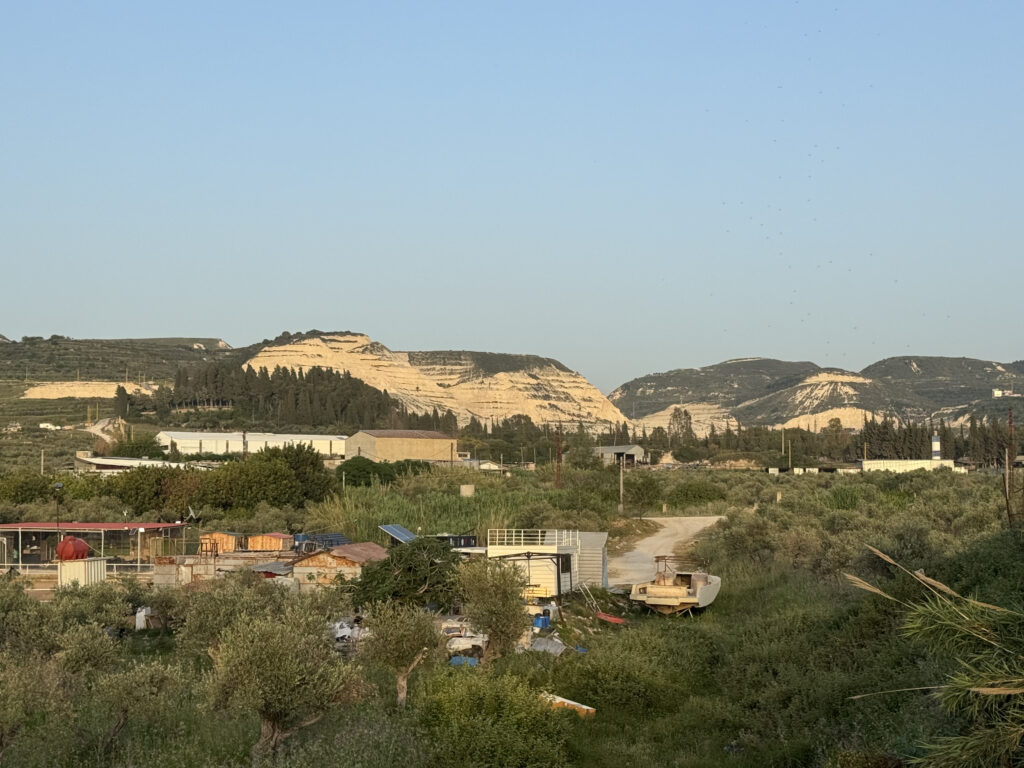
“When we were children, our parents told us that the lands of the town of Fih were the most productive and the highest in quality; today there is no longer any production or quality,” Haidar tells the Silat Wassel platform. As he speaks, he points to the layer of white dust that, for years, has covered the trees near the quarries and cement factories. For him, the change was not sudden; it began gradually, season after season, until the land that once gave olives and almonds turned into a space weighed down by dust.
Olives Under the Dust
Haidar says the almond trees have almost disappeared from the area, while olive production has dropped from around 50 to 60 “shanbal” per season to only between 10 and 15 shanbal. But what weighs most heavily on his words is not the loss of the seasons, but the loss of people from his family: he recounts that four family members died of cancer, and he links that to the air pollution caused by the factories near the town.
This account does not seem to be an exception in the Koura; from Fih to Kfarhazir and Badbhoun, almost the same testimonies recur: declining lands, perpetual dust, and quarries spreading little by little at the expense of nature and agriculture.
In a conversation with one of the area’s residents for the Silat Wassel platform, the man points to a quarry located above the course of the Jaradi River, one of the most important water sources in the Koura, and says that residents began to notice a change in the water flow as the digging works expanded — something that affected neighboring towns such as Badbhoun and Barghoun. Over time, the river became part of the residents’ daily discussion, especially with talk of industrial uses linked to coal in its surroundings.
"Residents began to notice a change in the water flow as the digging works expanded"
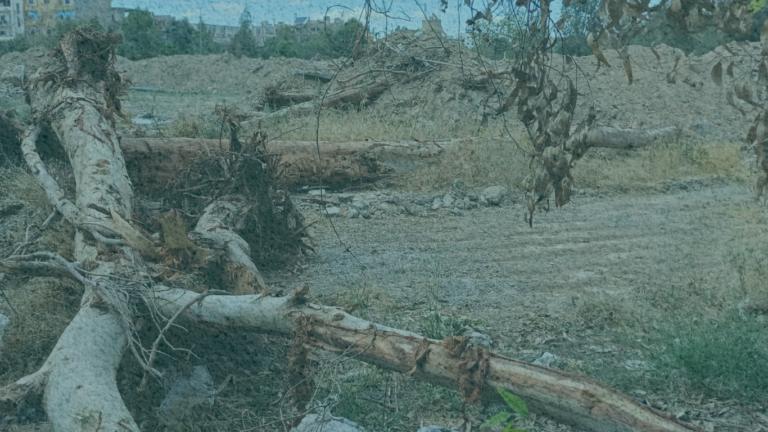
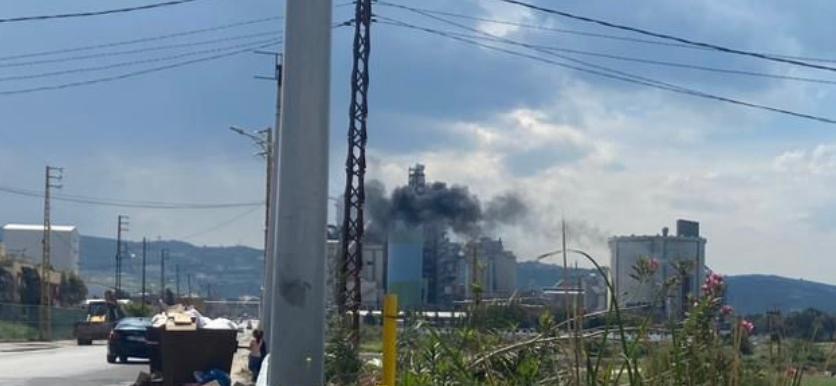
Across Chekka and the Koura, the cement-factory crisis does not appear to be merely a passing environmental issue, but part of a daily life the residents live amid dust, noise, and fear for their land, health, and water. The quarries that have expanded over the past years have gradually changed the shape of the area, until many feel that the old agricultural villages are slowly disappearing.
The Absence of Oversight
In the villages near the factories, residents speak of a constant feeling that no one is monitoring what is actually happening on the ground. For them, the issue is not only about dust or noise, but about the idea that industrial expansion is taking place without clear accountability or real oversight. Local residents accuse the cement companies of exceeding environmental standards in order to expand production, which raises a recurring question about the role of official bodies and the limits of their responsibility.
In an attempt to obtain answers, the relevant ministries were contacted; the Ministry of Environment did not issue any response up to the moment this investigation was prepared, while the Ministry of Industry merely referred to a previous statement considering that the licenses granted to cement companies fall within the framework of regulating and reclaiming the areas affected by the quarries.
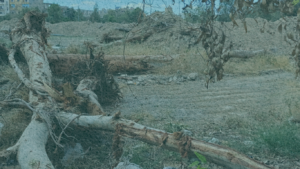
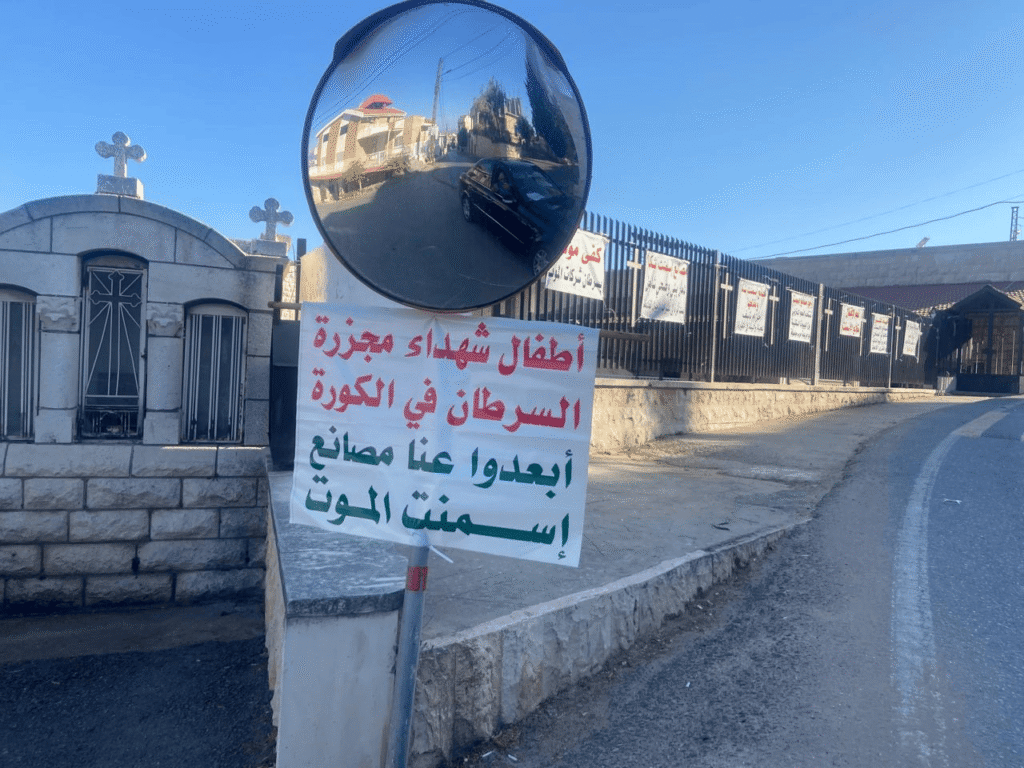
In return, the cement companies affirm that they operate according to national and international environmental standards and that they comply with the required safety measures, but this talk does not dispel the residents’ fears, especially in areas such as Kfarhazir, where one of the quarries is located near a children’s school, which leads parents to wonder daily about the effect of the dust and emissions on their children’s health. As the years have passed, the quarries’ effects are no longer confined to their immediate surroundings; the expansion has reached agricultural lands, olive forests, and some natural areas, while residents say they have begun to notice a decline in the presence of animals that were a natural part of the area’s environment, such as foxes and snakes.
Amid this scene, the same question recurs among the people: how did this reality become so normal?
Invisible Pollution
What residents see daily is only the visible part of the crisis; the dust that covers cars, rooftops, and trees can be easily noticed, but there is also what cannot be seen with the naked eye.
According to a study conducted by the University of Balamand in North Lebanon, very fine particles suspended in the air were detected, containing heavy metals such as lead, cadmium, chromium, nickel, copper, and zinc, in addition to the calcium dust produced by the quarries. Because of their small size, these particles are able to reach deep into the respiratory system, and may pass into the bloodstream with continuous exposure. The study indicates that industrial activity in the area leaves a clear mark on the composition of the air, especially with the blasting, crushing, and transport operations that recur daily, which makes pollution a continuous part of the residents’ daily life, even when it is not directly visible.
"The study indicates that industrial activity in the area leaves a clear mark on the composition of the air"
Chronic Health Risks
From a health standpoint, these pollutants are linked to an increased likelihood of respiratory diseases, such as asthma, bronchitis, and shortness of breath, especially among people who live near areas of industrial activity.
The thoracic and vascular surgery specialist Dr. Nazih Bou Chahine explains to the Silat Wassel platform that continuous exposure to industrial dust may lead to chronic diseases in the respiratory system, and may also raise the chances of cardiovascular disease as a result of the fine particles passing into the bloodstream. He adds that some heavy metals may leave long-term effects, especially in children and the elderly, who are considered the most sensitive to this type of pollution. He also notes that the burning of limestone in cement plants releases gases and emissions, among them carbon dioxide and nitrogen oxides, which makes the presence of effective filtration systems and strict monitoring essential.
At the level of individual testimonies, the educator Edwan Zakharia recounts to Silat Wassel the experience of his father, who worked at the “Holcim” plant for a period ranging between 25 and 30 years. He says his father spent long years inside the furnaces and in harsh conditions, before being stricken with cancer and dying less than a year after the diagnosis, adding that talk of the disease among the workers and residents near the factories is no longer a rare thing in the area.
Billions in the File
Beyond the environmental and health side, the file of the quarries and crushers is also linked to huge financial figures; according to estimates based on a study issued by the Ministry of Environment and the United Nations Development Programme, the bill of compensation owed to the state for the previous exploitation of natural resources may reach around 2.394 billion US dollars as a minimum — figures linked to the quantities extracted between 2007 and 2018.
Within this framework, the Kfarhazir Environmental Committee follows the file from a legal and administrative angle; the committee’s coordinator and head of the “Bladi Khadra” (My Green Country) association, George Constantine al-Aynati, tells the Silat Wassel platform that the committee filed a report with the Financial Public Prosecutor, which led to summoning a number of factory owners for investigation into suspicions related to encroachment on public property, springs, and valleys, and tax evasion.
Al-Aynati also draws attention to the issue of cement quality, considering that there are rates of adulteration that may exceed 25% as a result of using materials such as ground white earth and coal ash — accusations that remain a matter of debate, but which add further controversy to this file. He also points out that the damage does not stop at the soil and plants, but extends to local climate changes, such as a decline in rainfall rates as a result of the loss of green cover, in addition to fears related to the burial of polluting materials and their later reuse in agriculture.
In a broader context, a study issued by Harvard University points to a relationship between coal-fired power plants and an increased risk of lung cancer as a result of exposure to fine particles such as $PM_{2.5}$ and $PM_{10}$ — a study used to highlight the general risks of emission-intensive industrial activity.
Between Solutions and Reality
Despite all this, the picture does not appear to be entirely closed; Dr. Bou Chahine explains that installing filters in the chimneys can significantly reduce emissions, provided there is a genuine commitment to monitoring, and he notes that afforestation may help limit part of the environmental impact.
For his part, al-Aynati calls for rethinking the entire production model, including the option of importing cement instead of producing it locally, moving the quarries away from residential communities, and imposing fair environmental fees on the companies.
But for many of the area’s residents, the matter is not only about technical solutions or laws, but about a bigger question regarding the shape of the life they want in their villages; between the land that was once green, and the dust that covers it today, many feel that a part of the place’s identity is gradually disappearing.