






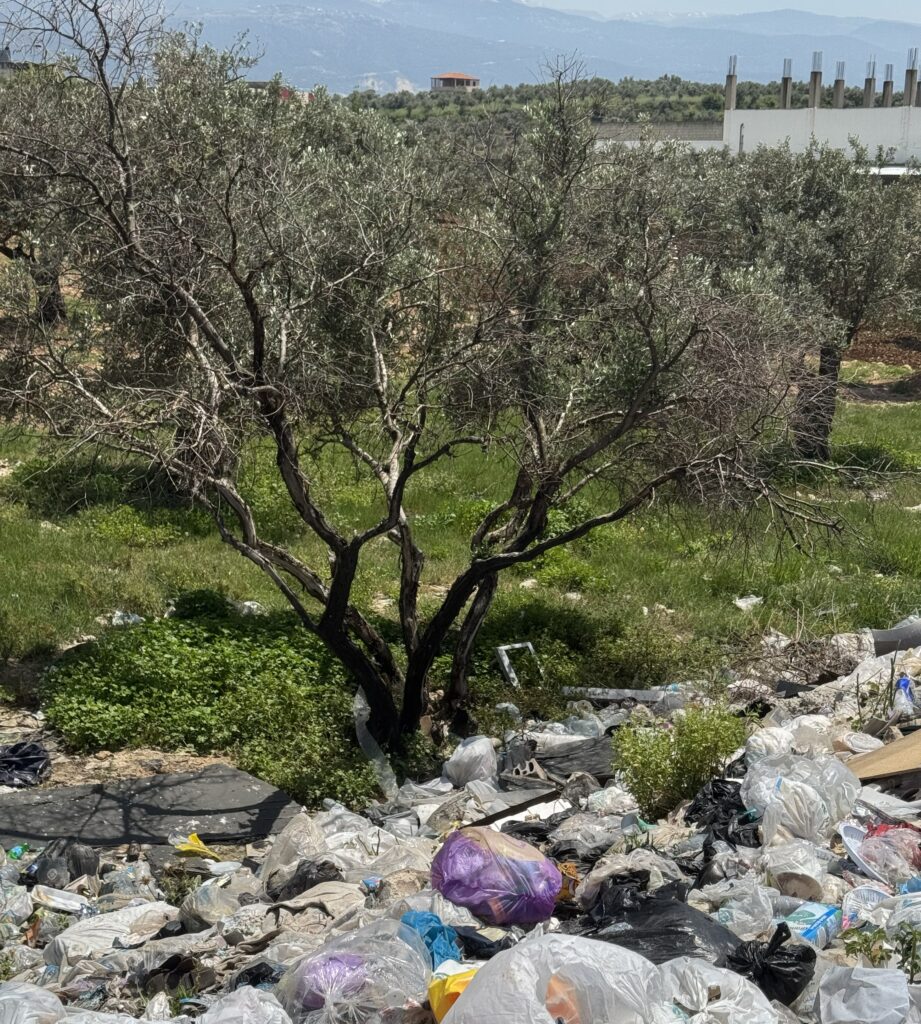
Perhaps nothing is more closely associated with northern Lebanon than its olive trees. In Tripoli, Minieh, Danniyeh, Koura, and Zgharta, olive groves flourish and endure. During harvest season, people celebrate and greet one another with the familiar phrase, “May every harvest season find you well.” The connection between people, the land, and olive trees is deeply rooted here. That is why questions arise when one passes through vast olive fields surrounded by piles of garbage dumped along the roadside, threatening the soil, groundwater, and crops through the toxic leachate they produce.
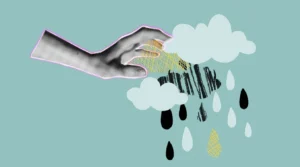
The problem is not only the visible waste. Waste leachate—a liquid loaded with hazardous pollutants—mixes with rainwater and seeps into groundwater and soil. Once it infiltrates underground layers, it contaminates well water, which serves as a vital source of both drinking water and irrigation.
As soon as waste leachate mixes with the soil, the inevitable result is poisoned land due to increased salinity.
As soon as waste leachate mixes with the soil, the inevitable result is poisoned land due to increased salinity. This suffocates olive tree roots and prevents them from absorbing essential nutrients. The excessive accumulation of leachate around trees also weakens their immunity, making them more vulnerable to fungal diseases and insect infestations that gradually spread throughout the contaminated area.
Groundwater contamination presents additional dangers. Waste leachate may contain fecal pollutants that can cause hepatitis, cholera, poisoning, and other health problems. Even more concerning, some effects may not appear immediately and can contribute to congenital disabilities and severe conditions such as “blue baby syndrome.”
How Did the Story Begin?
Majdlia is one of the gateways to the city of Zgharta and an important transit point because of its strategic location near Tripoli, only about six kilometers away. It is part of the Union of Municipalities of Coastal Zgharta District. Its name derives from the Syriac word “Majdal,” meaning a palace, fortress, or tower.
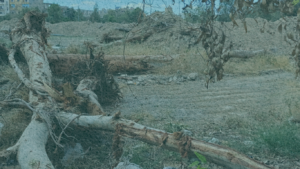
Along both sides of the main road leading into the town from the Airouniyeh area, waste is scattered heavily, accompanied by foul odors. Garbage bags, animal remains, and plastic waste litter the area. The road, once lined with olive trees, has become visibly scarred.
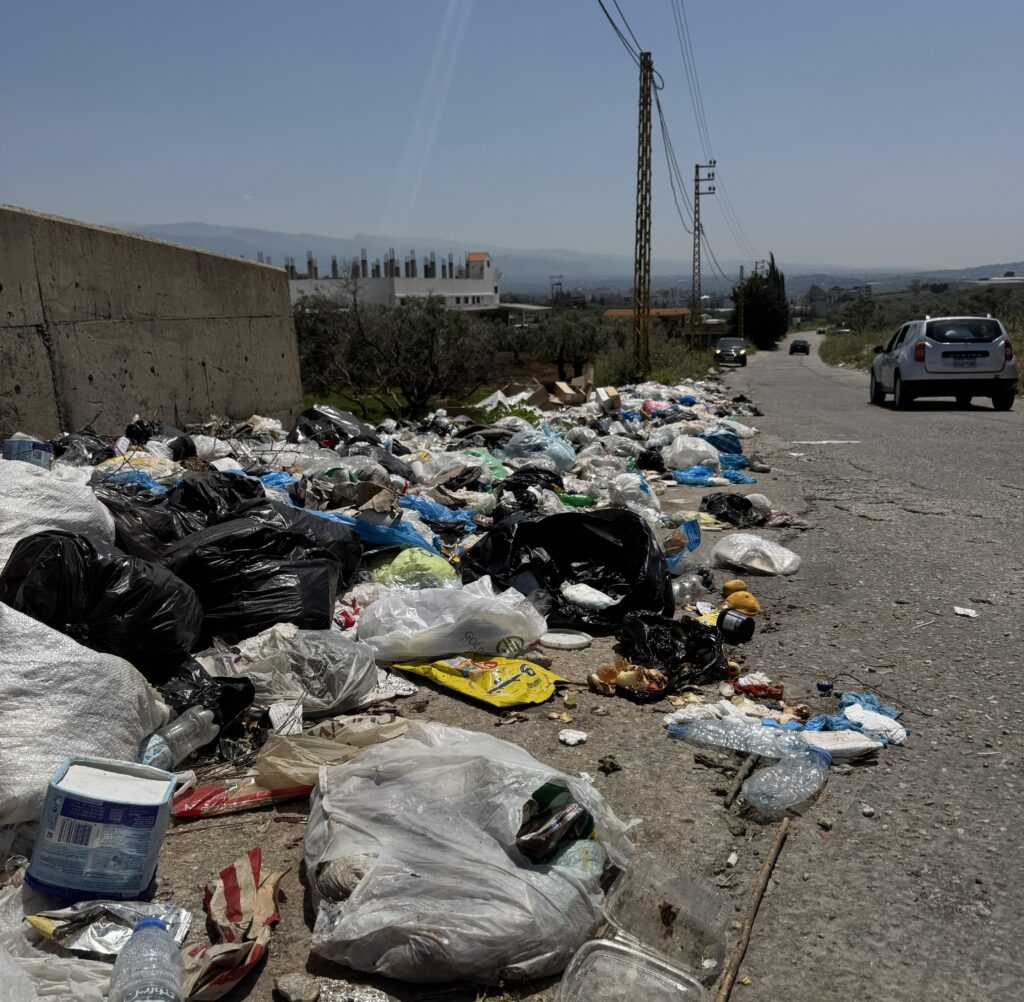
According to Majdlia Mayor Etienne Lichaa, the problem dates back to Lebanon’s economic crisis. Beginning in 2020, municipal budgets came under severe strain, and many waste collection contracts across districts and governorates were canceled. As a result, some people began disposing of waste in valleys, forests, and roadside areas. This is how the crisis on the Majdlia main road, also known as the “Brad Moawad Road,” began. Thousands of vehicles use this route every day because it connects four districts: Tripoli, Koura, Danniyeh, and Zgharta. Waste accumulates because some drivers simply throw garbage from their car windows, especially since the road is fast-moving and surrounded by no residential buildings.
The Law as Part of the Problem
Lichaa emphasizes that the municipality has repeatedly cleaned the road, only to see waste reappear shortly afterward. “We installed surveillance cameras and warning signs stating that the road is monitored and dumping waste is prohibited, but to no avail because of the existing legal framework,” he explains. When a camera records a vehicle dumping waste, the municipality must submit all information about the vehicle to the district commissioner, who then refers the violation to the competent court. The municipality itself has no authority to issue fines or collect penalties.
Majdlia Municipality has repeatedly removed the waste from this road, only to find it accumulating again shortly afterward.
The municipality has also encountered additional obstacles, including fake license plates and vehicles operating without plates altogether, making enforcement extremely difficult. Today, according to Lichaa, the municipality is exploring a plan to remove the accumulated waste, plant 300 pine trees along the roadside, and protect them with iron barriers against grazing animals. He notes that shepherds and livestock passing through the area contribute to the scattering of garbage and the spread of unpleasant odors.
Who Is Responsible?
Many residents of Majdlia have begun avoiding this road altogether. Speaking to Silat Wassel, Said, a local resident, said: “As far as we are concerned, this road is not really part of our town. You can walk through every neighborhood in Majdlia and find nothing but cleanliness in every corner. What happens on the highway has nothing to do with us.” His wife, while helping him organize items in their shop, agreed wholeheartedly: “Absolutely. What is happening on that road has nothing to do with us,” she said, adding, “These olive groves are our livelihood and our crops. How could we possibly pollute them and contribute to poisoning them?”
The waste dumped along the roadside poses a serious threat to the health of local residents due to its direct impact on agricultural land. It causes toxins to accumulate in plants, leading to declining agricultural productivity and the loss of soil fertility, thereby threatening both food security and public health.
According to Dr. Jalal Helouani, an international expert and Director of the Environmental and Water Sciences Laboratory at the Lebanese University, “Contaminated water kills the beneficial bacteria in the soil that are essential for converting organic matter into nutrients. Their absence results in poor soil that is no longer capable of supporting healthy plant growth. Polluted land produces crops of lower quality and in smaller quantities.”
Speaking to Silat Wassel, he added: “Plants irrigated with contaminated water absorb chemical substances such as heavy metals and pesticides, making fruits, vegetables, and olives—often regarded as the king of the Lebanese table-less nutritious and potentially harmful to human health. Consuming crops contaminated with heavy metals or pesticides can lead to chronic diseases.”
Regarding the mixing of groundwater with waste leachate, Helouani explains that “this is considered one of the most dangerous forms of environmental pollution because it directly threatens drinking water and irrigation sources. Leachate contains heavy metals such as lead and cadmium, decomposing organic matter, and toxic chemical compounds. Once these substances seep into the ground, they spread into groundwater layers, causing widespread contamination. Since groundwater systems are typically interconnected, pollution does not remain confined to one location but can spread over considerable distances.”
“Once leachate reaches groundwater, cleaning or treating it becomes nearly impossible because groundwater is not as easily accessible as rivers or lakes. If wells or water networks in the area depend on groundwater, the contamination will eventually reach drinking water supplies, potentially causing serious health conditions. Drinking water polluted by leachate may lead to kidney disease, nervous system disorders, liver problems, and even cancer due to the accumulation of heavy metals and toxic substances.”
As for agricultural crops, Helouani explains that when they are irrigated with groundwater contaminated by landfill leachate, they absorb toxic substances, rendering them unsuitable for human or animal consumption. He adds that “leachate increases soil salinity and destroys beneficial microorganisms, resulting in the loss of soil fertility.”
The Municipality and Civil Society Objections
Civil society groups in Zgharta have mobilized around this issue on several occasions, particularly because it was one of the key points in the newly elected municipal council’s program. Many citizens in the region have voiced frustration over the continued lack of progress. In this context, Shahid Nakad, a member of the Municipal Shadow Council, said that “extensive discussions are taking place with the mayor and with Bassam Haykal, President of the Union of Municipalities of Zgharta, to find a comprehensive solution to this issue.” He stressed that “the crisis is not the responsibility of Majdlia Municipality alone, but a shared responsibility with neighboring municipalities. Therefore, the solution must also be collective, with all parties contributing to its success in order to ensure a clean environment for everyone.”
Regarding potential solutions, Nakad insists that they should include coordination with the relevant ministries, particularly the Ministry of Environment and the Ministry of Interior, to impose penalties on violators. “It is unacceptable for a single area to bear the burden of the waste crisis alone and pay the price of neglect through the health of its residents and the quality of its agricultural products,” he said.
Majdlia’s experience is an example of broader issues concerning people’s right to live in a clean and safe environment. When waste is dumped indiscriminately along public roads, turning a town into what resembles a small landfill, local residents are the ones who pay the price: polluted air, unbearable odors, and a daily scene that reflects neglect and the absence of accountability.
What the people of Majdlia deserve is no different from what all residents of North Lebanon deserve: a clean and fair environment, where no single community bears a disproportionate share of the consequences of disorder, and where human dignity is protected just as nature is preserved.