







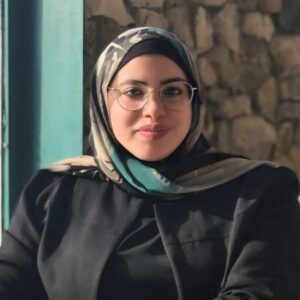
Tamam Ali, a farmer from the town of Aitaroun, relied entirely on her land to secure her annual income. Before the war, she cultivated between ten and twelve dunams in the areas of Al-Mahafir and Al-Shaqqa, both close to Jabal Al-Bat, one of the five occupied points. She specialized in growing tobacco alongside wheat and seasonal crops. These lands provided her with an annual income of approximately 10,000 dollars. Today, she can no longer access her land. With the loss of her primary source of livelihood, she has been forced to search for an alternative.
Tamam says:
“After many attempts and difficulties, I managed to secure only three dunams in the Naqaa area in the neighboring town of Aainata. The new area is less than a quarter of what I used to cultivate, and now I only grow tobacco. This reduction directly affects production and income and deprives me of the ability to diversify crops as I used to.”
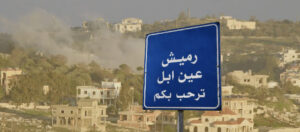
Before the war, she cultivated around ten dunams of land near the occupied area.
 اليوم، لم تعد قادرة على الوصول إلى تلك الأراضي.
For Tamam, agriculture was not an additional option but her only source of income. She does not work in any other field and has no alternative resources. Despite suffering from a chronic illness, she continues to work the land, as it remains her only way to secure her basic needs.
Kifah, another farmer from Aitaroun, faces a similar path. Before the war, she cultivated around ten dunams near the occupied area adjacent to Jabal Al-Bat, growing tobacco and field crops. Today, she can no longer access those lands. With difficulty, she managed to secure four dunams in the town of Aainata before the war reignited on March 2, 2026, when she was forced, along with her children, to flee from Aitaroun to a safer place. She spent her first four days on the road without shelter before managing to find a room in a school in Saida.
Sharp Rise in Production Costs
For both Tamam and Kifah, cultivating ten dunams meant more than just crops for sale. It provided the family’s annual food supply and allowed for a modest profit after covering costs and seasonal labor. However, this equation has drastically changed after the war, not only due to the loss of land but also because of the sharp increase in production costs.
For example, a bag of chemical fertilizer that used to cost around thirty thousand Lebanese pounds before the October war and the first displacement is now sold for about 55 dollars. The cost of plowing has also increased significantly. What once covered ten dunams now barely covers one, at a cost of around 35 dollars per dunam. With shrinking cultivated areas and rising costs, securing even a minimum income has become far more difficult, even when alternative land is available.
Agriculture Under Siege in Aitaroun
Agricultural lands make up about 35 percent of Aitaroun’s total area. However, around 80 percent of these lands are now inaccessible to their owners due to repeated Israeli attacks, according to Aitaroun’s mayor, agricultural engineer Salim Murad.
Most of the affected lands are concentrated in the agricultural plains surrounding Jabal Al-Bat, one of the five occupied points and among the most productive areas in the town for tobacco, wheat, beans, chickpeas, lentils, and other seasonal crops. Accessing these fields is no longer a normal daily activity, but a constant risk.
Agricultural lands make up about 35 percent of Aitaroun’s area,
yet nearly 80 percent of them are now inaccessible to their owners.
Securing land outside the town is not a long-term solution but a temporary measure to ensure limited income, according to agricultural expert Dr. Rami Zurayk. Reduced land means reduced production, and reduced production leads directly to lower living standards. The cost of leasing and working distant land, along with transportation and time, adds further burdens on farmers who rely entirely on their seasonal yields.
Agriculture Without Stability
Aitaroun’s mayor, agricultural engineer Salim Murad, explains that the problem is no longer limited to preventing farmers from cultivating their land. It has evolved into a more complex security reality that eliminates any possibility of agricultural planning. Farming requires a minimum level of safety and stability, which no longer exists today.
With the recent escalation, these areas have witnessed continuous field intensification, with daily ground clashes and repeated attempts by the Israeli army to advance and take control of these lands. The agricultural plains surrounding Jabal Al-Bat have become major zones of confrontation, making access completely impossible.
These restricted areas are among the most productive lands in Aitaroun, according to Murad. Agriculture in the town does not depend on a single crop, but primarily on tobacco, along with wheat, chickpeas, and seasonal crops.
Murad adds:
“Many farmers are facing the same struggle: losing access to their original land, difficulty finding alternatives, and the absence of stability needed to plan an entire season with confidence. We are talking about nearly a third of the town’s land.”
He explains that this reality affects not only individuals but also the overall economic activity of the town, from purchasing agricultural inputs to selling produce.
Agriculture as the Main Source of Livelihood
In Aitaroun, land is not just one option among many professions. It is the primary work and the main source of income for many families. With large portions of farmland becoming inaccessible, the direct livelihood of women who rely entirely on agriculture has been reduced. Leasing a few dunams in nearby towns, between two and five dunams, may ease the loss but does not replace the original land or restore the stability it once provided.
What is happening is not merely a shift in cultivated land distribution, but a forced reshaping of work and income. Today, the women of Aitaroun have been displaced from their villages for the second time due to war, leaving behind their secured land and livelihoods in search of shelter.
Between losing fields surrounding Jabal Al-Bat and searching for limited alternatives, Aitaroun’s women farmers continue to struggle to preserve their only source of income, even if on smaller lands and with reduced production, until the conditions governing access to their land change.