






“I live day by day on what God provides me from the sea… I fear that the war will pollute our sea and we will lose our livelihood.” With these words, fisherman Jad — who spends long hours off the shores of Al-Biyyal — sums up a worry that extends far beyond personal fear to a dread shared by hundreds of fishermen along the Lebanese coast. The sea, the source of livelihood for him, his family, and his child, could at any moment turn into a source of danger that robs him of the most basic means of living.
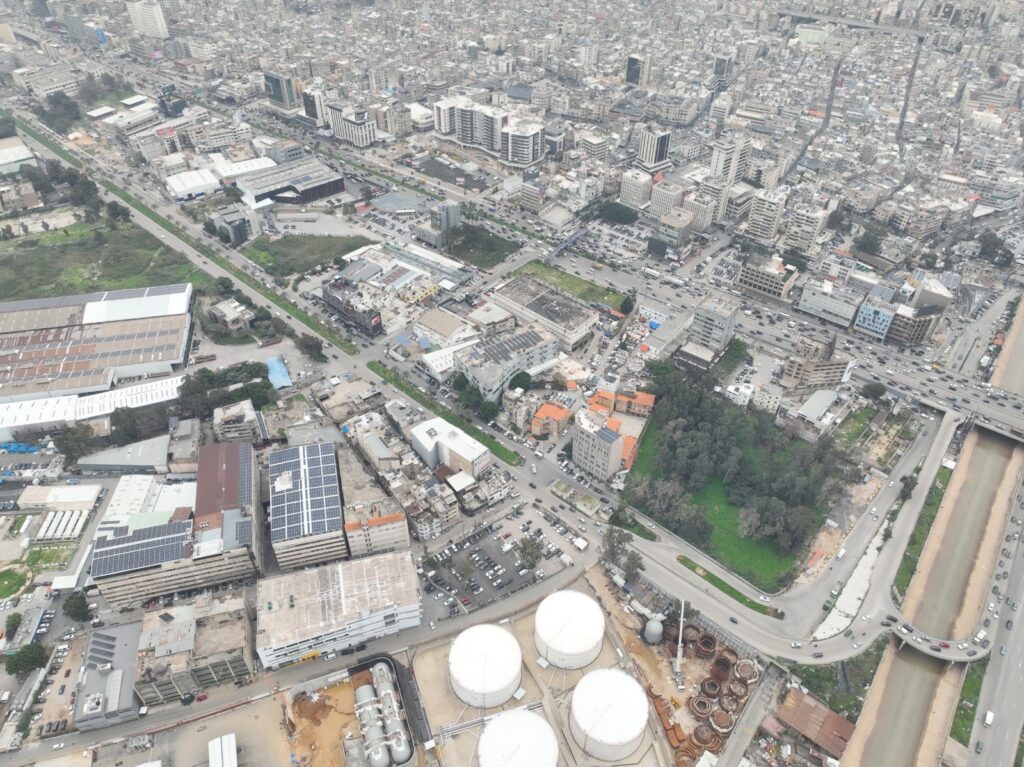
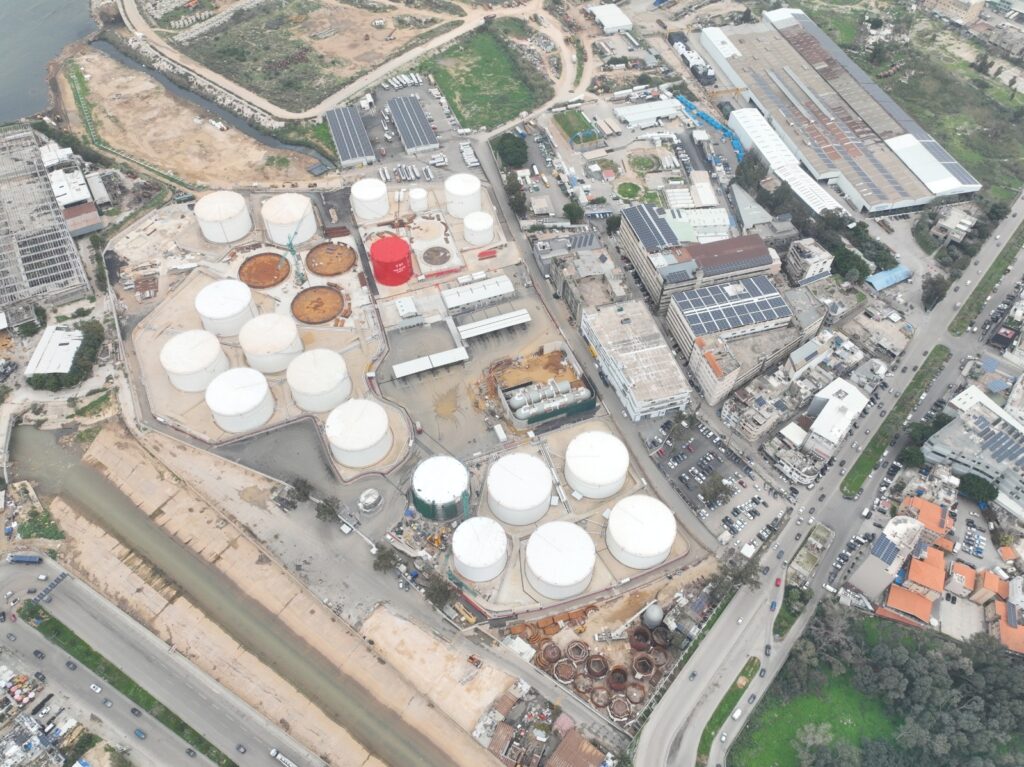
As the war continues and civilian infrastructure is targeted, concern is growing over a possible strike on the oil facilities stretching along the coast, particularly between Karantina and Dbayeh. Such a scenario would not only confront fishermen with a compounded livelihood crisis but would open the door to an environmental and health catastrophe affecting all Lebanese. What are the risks and possible scenarios if these facilities come under bombardment?
The Beirut Scenario: Multi-Dimensional Pollution
The impact would not be limited to the moment of the explosion; it would quickly turn into a wave of pollution spreading through air, water, and soil. In this context, Dr. Yasmine Jebli, a lecturer in the Department of Civil and Environmental Engineering at the University of Balamand, told Silat Wassel that residential neighborhoods could face the rapid spread of toxic air pollutants resulting from the emission of hazardous gases and fine particles that directly affect the respiratory system.
She explains that these pollutants could include carbon monoxide, sulfur dioxide, nitrogen oxides, and volatile organic compounds such as benzene and toluene, in addition to fine particles PM2.5 and PM10 capable of penetrating deep into the lungs and causing immediate health complications.
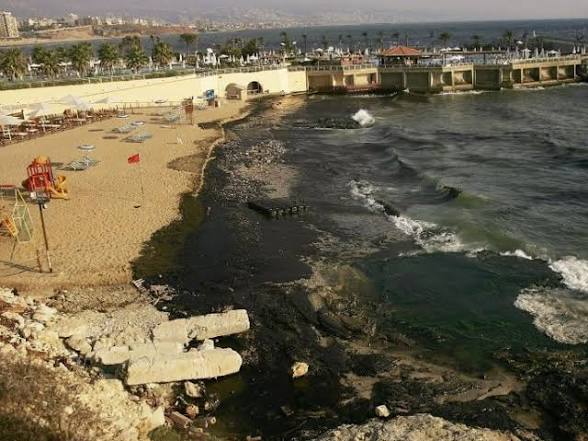
According to Jebli, incomplete combustion products could reach the water carrying toxic compounds such as polycyclic aromatic hydrocarbons and heavy metals that threaten fish stocks and travel through the food chain. The soil, meanwhile, could become a long-term repository for these toxins as they settle, affecting agricultural crops and threatening groundwater contamination, directly impacting food security.
The severity of the impacts depends on variable environmental factors, including the volume of emissions, wind direction and speed, and rainfall. In health terms, Jebli warns of suffocation cases and acute respiratory problems, particularly among children, the elderly, and those with asthma or heart conditions, with the possibility of an “acute pollution episode” in which cases surge in a short time, while effects may later develop into chronic diseases and disruption of natural resources and the food chain.
The Most Dangerous Form of Marine Pollution
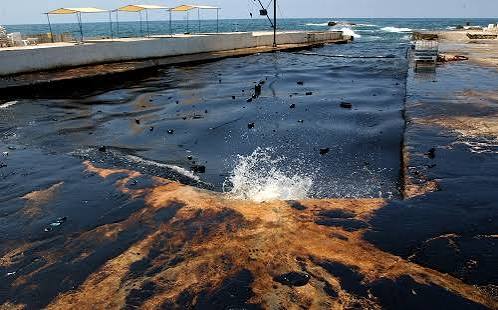
Environmental management specialist Samar Khalil explains that any oil spill into the sea, especially from heavy fuel oil, is among the most dangerous forms of marine pollution: “Oil spreads across the surface forming a layer that blocks light and oxygen, threatening phytoplankton and marine life including fish, mollusks, and crustaceans, and affecting seabirds as well.”
On the recovery period, she notes that it “depends on the size of the spill, the type of oil, the speed of response, and sea conditions. Rapid containment using floating barriers and suction operations reduces spread, but invisible pollutants can settle on the seabed and persist for years, especially in a semi-enclosed sea like the Mediterranean.”
"Oil spreads across the surface forming a layer that blocks light and oxygen"
The stretch of fuel tanks between Karantina and Dawra raises environmental risk levels due to the concentration of facilities along the coast. Any malfunction in the tanks, pipes, or pumping and maintenance systems could lead to spills — even small and recurring ones — that accumulate over time and cause chronic seabed contamination.
In terms of environmental justice, the gap is stark, according to Khalil: areas near the tanks and ports, particularly among fishermen, will be “the hardest hit, both in health and economic terms,” given their limited capacity to bear the cost of medical care or absorb the loss of their livelihoods. Coastal tourism activities would also decline, affecting those who work in the sector.
Captain Shaaban: “We Are Facing a Disaster in the Event of a Major Catastrophe”
Studies by the World Health Organization show that the environmental and health risk stems not only from the force of the explosion itself but from the toxic fine particles emitted, which spread through the air and settle in soil and water.
Assessing Lebanon’s state of readiness, Captain Haytham Shaaban — consultant and certified auditor from the International Maritime Organization — explains that “Lebanon had prepared a national plan to combat oil spills in 2016 through the Petroleum Administration Authority at the Ministry of Energy, but it has not been officially approved to this day.”
Shaaban says that “this plan aimed to enable rapid response to oil spills, protect marine and human life, limit damage to the tourism sector, and conduct periodic drills for maritime crisis management.”
The absence of official approval, according to Shaaban, means “the absence of the legal framework and necessary equipment, which limits Lebanon’s capacity for effective response.” He adds: “The Lebanese Army’s naval forces can handle a small or medium-sized spill, but in the event of a major catastrophe like 2006, we are facing a disaster and will need international assistance.” He notes that Lebanon lacks specialized vessels for treating oil pollution, further complicating any potential response.
A Risk That Goes Beyond the Shore
Shaaban also warns of additional repercussions if the Karantina tanks are targeted: shipping traffic in the Port of Beirut could be affected as vessel hulls become coated with oily materials, potentially impeding their entry and exit.
In terms of ocean currents, he explains that water movement along the Lebanese coast flows northward, driven by westerly winds, meaning any oil spill could spread rapidly to other areas — as occurred in 2006, when pollution reached the Syrian coast and extended partially toward Turkey.
Ultimately, talk of targeting Beirut’s fuel tanks reopens Lebanon’s environmental readiness file and exposes a clear gap between the potential risks and the available capacities.
The 2006 Response: Acting Under Pressure
On July 13 and 15, 2006, the targeting of fuel tanks at the Jiyye power plant caused the spillage of between 12,000 and 15,000 tonnes of heavy fuel oil into the sea, spreading across approximately 150 kilometers of the Lebanese coast.
The Ministry of Environment acted within limited capacities, issued a broad international appeal, and coordinated with the Regional Marine Pollution Emergency Response Centre for the Mediterranean Sea (REMPEC), with local associations participating in cleanup operations.
- Phase One (August 2006 – March 2007): Rapid intervention to clean approximately 70 affected sites along the coast.
- Phase Two (from April 2007): Comprehensive survey, detailed mapping, and field and underwater studies revealing oil deposits requiring long-term monitoring.
Despite the significance of this response, Lebanon relied primarily on international support to address the disaster.
The Plan Exists, But Implementation Is What Matters
The solution, then, lies not only in talking about pollution but in actually implementing Lebanon’s “National Oil Spill Response Plan,” launched alongside warnings about Lebanon’s entry into the oil and gas sector in 2017. Among the plan’s most prominent steps was the establishment of a national operations center.
Given all the potential repercussions outlined above, the need for a pre-prepared emergency plan and immediate response becomes a decisive matter. The plan starts from treating any oil spill as a serious threat to the marine and coastal environment, requiring rapid action to limit pollution spread and bring it under control in the shortest possible time.
At this point, it is worth outlining the key provisions of Lebanon’s National Oil Spill Response Plan, which is based on a tiered response principle across three levels:
- Level One: A limited spill managed using the port’s or facility’s own resources.
- Level Two: Requires support from governorates or state agencies.
- Level Three: A large-scale disaster requiring national — and possibly international — intervention.
In the event of a major spill, the Joint Maritime Operations Room and the National Disaster Management Room would be activated to coordinate communications, distribute tasks, and manage local and international support. The mechanism also calls for appointing a national on-scene commander for the oil spill incident, supported by specialized teams in planning, operations, logistics, safety, and communications, ensuring professional crisis management.
On the ground, procedures focus on containing the oil using floating barriers, deploying emergency boats and response equipment, maintaining continuous monitoring during offloading operations, and preparing oil-water separation tools to prevent oil from reaching the sea.
After containment, priority shifts to protecting the environment and beaches: cleaning sensitive areas, managing resulting oil waste, monitoring environmental damage, and documenting everything necessary to pursue compensation claims and maintain legal records.
Despite the provisions of this plan, the question remains: will it be ready to implement when the critical moment arrives?