




The Nakba of 1948 was not merely a passing military event; it was also a process of erasure of the Palestinian people and a forced reshaping of both geography and memory. Palestinian villages were not only destroyed, but their maps, records, and family archives were destroyed with them. It was not only the population that was uprooted, but the document itself. Since that moment, Palestinian memory has been moving within a partial archival void, filled by oral narratives and delayed attempts to recover whatever traces could be salvaged.
Today, amid the genocide in Gaza and the war on southern Lebanon, Beirut’s southern suburbs, and the Bekaa, the same question returns in a different form: “How can memory be protected in a time of genocide? And how does documentation shift from an act of preservation into a tool of resistance?”
Maps as a Reclamation of Existence
For historian and researcher of Palestinian cartography, founder and president of the Palestine Land Society in London, Dr. Salman Abu Sitta, maps have never been neutral tools. He explains that cartography has historically been used as an instrument of colonial power to reshape space according to the narrative of the victor.
Abu Sitta explains that in response to this use, his project “Atlas of Palestine 1917–1966” sought to reverse the equation by redrawing more than 1,300 Palestinian villages and documenting thousands of landmarks and names that the Nakba attempted to erase. He notes that “mapping Palestine is not merely a matter of geography; it is a matter of survival and a struggle against erasure.” For him, restoring the names of villages, fields, and springs is not an academic exercise, but an assertion of existence against the Israeli narrative that sought to entrench the myth of “a land without a people.”
Human rights cannot be compromised,
and the right of return remains a legal and historical right that time cannot erase
This vision, he argues, is not a static memory, but a tool for reclaiming rights, because “human rights cannot be compromised,” and the right of return remains a legal and historical right that neither time nor attempts at erasure can nullify. His work thus represents a “model of post-catastrophe archiving”—an attempt to rebuild what has already been erased. Here, we encounter another form of archiving imposed by the present moment: archiving that is constructed during the event, not after it.
Not Loss… but Erasure
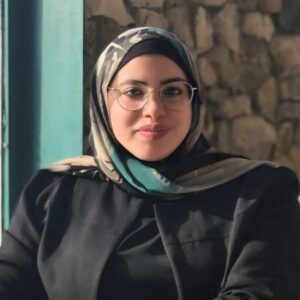
For her part, Ghada Damascus, an archivist and researcher in digital documentation with the “Fighting Erasure” project at the American University of Beirut, rejects the use of the term “loss” to describe what is happening to Palestinian archives today. Loss, she argues, implies that something still exists somewhere and can be retrieved. What is happening instead is “deliberate erasure of traces,” manifested in the deletion of evidence that forms the epistemic structure of the Palestinian narrative.
Damascus believes that the concept of erasure has not changed from 1948 to the genocide of 2023. The same policy persists, but on a larger scale. During the Nakba, destruction was physical-villages demolished and archives burned. Today, the same logic is reproduced through both physical destruction and digital deletion. The question, in her view, is not which is more dangerous, but how both converge toward the same objective: erasing traces, severing the connection between people and land, and removing the narrative from the public sphere.
She notes that digital archiving is now operating in a race against time, stating: “We may collect 300 posts out of 500, and we don’t know exactly what was lost along the way, but what we collect is better than nothing.”
Digital archiving today performs the same role in real time
She adds that open-source tools are limited, the internet is unstable, and the team is small. In many cases, journalists have been killed and their pages completely removed before their content could be archived—meaning the original material is lost forever.
Despite the development of more advanced tools for data recovery and metadata preservation, Damascus acknowledges that the struggle is unequal. Erasure cannot be fully stopped—some loss is inevitable. Yet, part of it can still be saved.
Thus, if Abu Sitta’s maps restored villages onto paper decades after their erasure, digital archiving today performs the same function in real time. Maps confronted geographical erasure after it occurred, while digital archiving confronts erasure as it happens.
Oral Archives as Epistemic Sovereignty
In southern Lebanon, archiving takes a different form. Amani Remal, co-founder of the “Wathaqiyya” project, views oral storytelling as an archival structure in its own right—provided it is subject to clear scientific standards. Oral archives, she explains, produce knowledge “from below” and redistribute narrative authority, granting social actors the right to represent themselves within collective memory.
She speaks of the Lebanese context, where the south has endured repeated assaults since 1948 up to the current war in 2026, noting that the everyday experiences of southern communities under occupation and repeated displacement have not been historically documented. She argues that institutional fragility, combined with the repeated destruction of homes and their contained family archives, has left memory vulnerable to recurring loss. In this context, documentation becomes a “sovereign practice”—an act of resistance against archival erasure and against the fragmentation of historical continuity.
Remal adds that collecting oral narratives contributes to building a “shared narrative structure” that reconnects the present with the past, especially for generations that did not experience occupation. Collective identity, in her view, is not a fixed given, but an ongoing negotiation over the meanings of resilience, loss, and survival.
Oral narratives also shift the experience from the level of major events to that of everyday life—details of checkpoints, patterns of labor under occupation, and local networks of solidarity. However, transforming storytelling into an archive requires rigorous methodology: contextual description, clear access policies, ethical protection of witnesses, and preservation structures that ensure sustainability. Without these conditions, narratives remain vulnerable to dispersion or selective use.
An Open Race
Between post-Nakba mapping, social media archiving in times of genocide, and oral storytelling in southern Lebanon, it becomes clear that the archive is no longer merely a repository of memory, but a field of confrontation. What changes is the medium; what remains is the logic of erasure. The fundamental difference between 1948 and 2026 is not the nature of the policy, but the speed of the struggle. In the past, erasure occurred through bulldozers and fire; today, it is compounded by algorithms of deletion and suppression. Yet, in parallel, the “counter-archive” has become more self-aware.
As cited by the “Fighting Erasure” project from archivist Fadi Asli, “the Palestinian is born an archivist by nature.” This phrase encapsulates a long trajectory of producing a counter-archive—one created in opposition to the dominant colonial archive, aimed at preserving narratives and experiences that have been marginalized or erased, and resisting attempts to control the narrative.
In response to the question, “Can the cycle of erasure be completely broken?”, Damascus points out that the balance of power is unequal. Yet the equation is not entirely zero-sum. Every restored map, every preserved post, every recorded testimony adds a new layer of epistemic resistance. In times of genocide, violence is not limited to the body or the land—it extends to the document, the name, and the narrative.
Violence is not limited to the body or the land,
but extends to the document, the name, and the narrative
Archiving, in this context, is not an academic luxury, but a defensive practice: a defense of the right to exist, to be represented, and to have one’s story told from within. Between paper, pixels, and voice, a different kind of battle is taking shape—one not decided solely by control over land, but by the ability to تثبيت its traces in memory.
Ultimately, the battle of archiving is not only about the past, but about the conditions of the present and the possibilities of the future. When place is targeted by bombardment and documents are targeted by burning or deletion, the struggle over narrative becomes an extension of the struggle over land.
What the experiences of Dr. Salman Abu Sitta’s mapping, Ghada Damascus’s digital archiving, and the oral storytelling of the “Wathaqiyya” project reveal is that erasure is not a passing event, but an ongoing policy whose tools evolve while its objective remains constant: dismantling the relationship between people and place and reshaping memory according to the narrative of the dominant power. Yet the counter-archive—whether a map that restores a village onto paper, a digital file rescued from deletion, or a testimony recorded before it is swallowed by forgetting—constitutes a counter-policy. It does not prevent loss entirely, but it mitigates it and does not fully halt erasure. In this sense, archiving becomes a practice of survival and a space for redistributing authority over memory.
In a time of genocide, where physical and digital destruction accelerate together, the question is no longer only how to preserve the archive, but how to preserve the capacity to narrate. A story that is not documented is reduced; a memory that is not archived is rewritten from outside itself. Therefore, reclaiming the narrative is not a symbolic act, but a condition for both historical justice and justice in the present.