




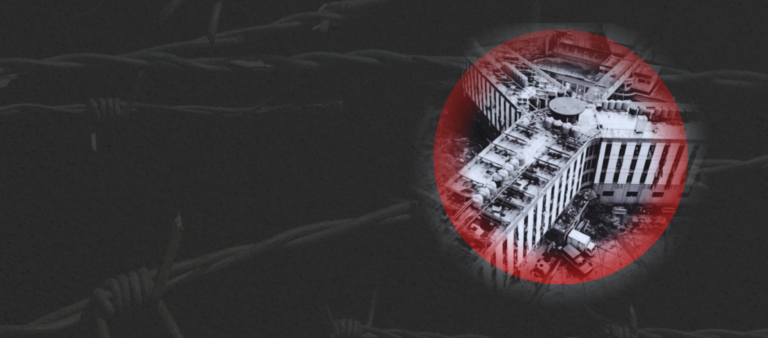






In late November 2025, a ceasefire agreement was reached between Lebanon and Israel. However, Israel maintained five military positions inside Lebanese territory under the pretext of monitoring the implementation of the ceasefire.
In reality, the situation appeared different. Israel had previously declared a project aimed at building Greater Israel stretching from the Euphrates to the Nile. To reach that objective, it would first establish what some describe as “Smaller Israel,” including southern Syria and southern Lebanon, following its declaration of annexing the West Bank and seizing its lands.
Israel began implementing its plan by destroying Lebanese towns located along the border with occupied Palestine and preventing residents from returning to their homes. Over the past year it followed a policy of assassinations, shelling, and preventing civilians from returning to their towns, steps that appear to move toward the creation of a new security belt in southern Lebanon.
This was accompanied by attempts to establish a security canton in the Syrian province of Suwayda linked to Israel, which would facilitate full control over the area south of the Litani River and influence its future. This approach has also been associated with plans to establish an economic zone in southern Lebanon in partnership with the United States.
Israel took advantage of the war against Iran, in partnership with the United States, to move forward with the implementation of the Smaller Israel plan.
Implementing such a plan required alignment with a broader American strategy aimed at fragmenting the region and weakening any regional power that might challenge Washington’s policies.
Israel seized the opportunity presented by the war with Iran, carried out in partnership with the United States, to advance its Smaller Israel project. Military operations during recent days aimed at displacing residents of southern towns under the pretext of eliminating Hezbollah, which itself entered the conflict by launching six missiles toward open areas in Israel. The underlying objective, however, appears to be consolidating control over the South, preventing residents from returning, and establishing military zones and positions that could eventually form the desired security belt. These moves also rely on deep political divisions within Lebanon and the willingness of some factions to normalize relations.
The South is experiencing large scale displacement and abandoned homes with little hope of return.
Today the South suffers from widespread displacement and the abandonment of homes without hope of returning to them. At the same time, the Lebanese state is facing institutional disintegration and lacks a defense strategy capable of returning residents and protecting the country’s borders.
What solutions are possible?
There are no solutions without a people who truly belong to this country called Lebanon and without building a democratic national state that allows its citizens to access their rights in all fields. Should we abandon our land? No, absolutely not. The real question is how to develop a unified plan for one people to reclaim their land.