

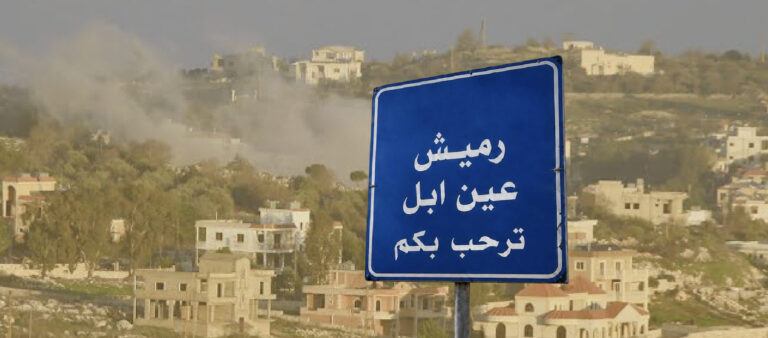



On the second day of the new displacement from the South toward the city of Sidon, Tuesday, March 3, 2026, the city’s main streets were still heavily congested with cars heading toward Beirut. Hundreds of families spent the night in their vehicles parked along the sides of the main roads in Sidon.
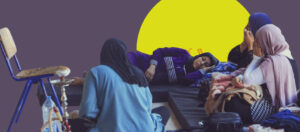
By the following morning, wherever one went, families could be seen sitting along sidewalks or on road medians, trying to pass as much time as possible in the hope that the disaster would pass.
A large number of families are searching for apartments to rent, but finding one is extremely difficult. Even when an apartment is available, the requested rent is unreasonable, even in a country with a so called free market economy based on supply and demand, ignoring any moral responsibility toward people struck by an aggressive catastrophe.
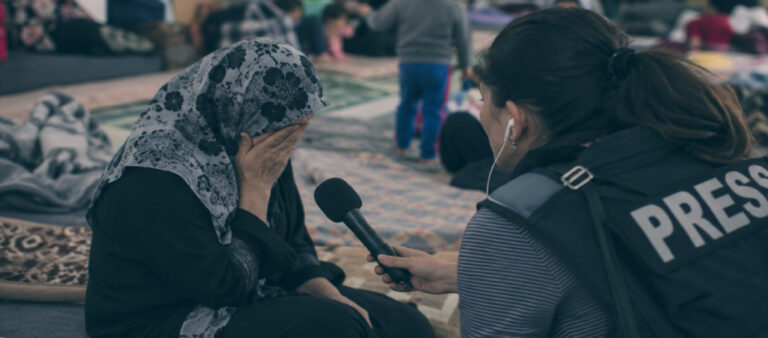
As for those who managed to reach shelters, most of which are public schools, an evening statement issued by the Crisis and Disaster Committee of the Municipality of Sidon reported that 24 shelters had been designated with a capacity of around 9,000 people. This number already exceeds available logistical capabilities. The committee stated that it continues to allocate shelter spaces and provide essential supplies for newcomers, including food meals, drinking water, mattresses, blankets, and pillows, as well as healthcare services in cooperation with medical organizations. However, the process is nearing its maximum capacity in terms of space and resources.
A large number of families are searching for apartments to rent, but finding one is extremely difficult.
 Even when an apartment is found, the requested rent is unacceptable.
Visits to several shelters revealed discrepancies between the figures provided by the Crisis Committee and those reported by shelter administrators. This may be due to families continuously entering or leaving the shelters.
Administrators of some shelters reported receiving mattresses that do not even cover half the number of displaced people, while blankets and pillows have not been delivered.
All shelters visited confirmed a shortage of water and the urgent need for diesel fuel to operate generators and supply electricity.
Most shelters also do not receive food meals regularly, and some have not received any at all. A few organizations managing two shelters provide breakfast and pre dawn meals during Ramadan, but they still require additional meals for children and elderly residents.
One volunteer at a shelter described the situation by saying: “In the absence of serious assistance, we have become little more than caretakers of the shelters. All we can do is explain this to the displaced families so we are not held responsible.”
On the health front, the Ministry of Health decided to prevent any medical organization from entering shelters to provide healthcare services, except for primary healthcare centers operating in the city. It should be noted that these centers are affiliated with local political groups. The real reasons behind the ministry’s decision to prevent clinics from serving the displaced remain unclear. Instead, the ministry should focus on regulating public healthcare institutions under its authority and addressing the widespread corruption within them, which prevents displaced people from accessing services, as happened during the previous war. A member of the Crisis Committee also indicated that no real assistance has reached the municipality.
The Ministry of Health decided to prohibit any medical organization from entering shelters and providing healthcare services except the primary healthcare centers operating in the city.
In the afternoon, Prime Minister Judge Nawaf Salam visited the city of Sidon and met with its mayor, Engineer Mustafa Hijazi. Hijazi briefed him on the enormous pressure facing the municipality, emergency teams, and civil society organizations assisting in relief efforts. He called on the government to provide the necessary funding and aid.
One cannot help but be surprised by what is happening, as if the displacement occurred suddenly, and as if the central and local authorities had not been monitoring developments over the past months and preparing for the possibility of such displacement.
Media outlets had been reporting repeated meetings among the relevant authorities, but it appears those meetings were merely discussions rather than efforts to secure the resources that shelters now struggle to provide for displaced families. In this context, it may be better not to speak of partnership with the local community, but rather of selective partnership. That is a subject for another discussion.
The displaced families need security, shelter, food, rest, and healthcare until they can return to their homes. This responsibility lies with the state and local authorities, in genuine partnership with local community actors, not as preparation for potential parliamentary elections.