







At the recent Global Investigative Journalism Network conference held in Kuala Lumpur, the opening speech by Filipino journalist Maria Ressa, the 2021 Nobel Peace Prize laureate, stood out as a powerful and inspiring moment. Her extraordinary media career, marked by impact and constant risk, has included legal prosecutions and organized online harassment campaigns led by groups loyal to former Philippine president Rodrigo Duterte. These attacks were fueled by various forms of digital smearing and gender based violence, some of which were beyond imagination. Yet Ressa concluded her story with a striking piece of advice that sounded like a decisive call to the more than 1,500 journalists listening closely: “It is time for radical collaboration.”
The four days that followed reinforced the significance of this call. Dozens of panels, workshops, and networking meetings took place, nearly all built on cross border partnerships. What stood out, particularly to participating Arab journalists, was how little the Arab region appeared on the map of these journalistic collaborations. The gap with cross border experiences in Europe and the United States is unsurprising, but the more striking comparison is with Latin America, which also does not enjoy ideal democratic environments. Yet cross border collaboration there continues to grow significantly in investigative journalism projects.
Cross border collaboration in journalism is not new, but it has become easier and more effective thanks to digital globalization and the development of communication and data sharing tools. In its modern form, it began to take shape in the 1990s with international investigative networks such as the International Consortium of Investigative Journalists. It accelerated strongly after 2010 with major digital leaks like the WikiLeaks documents, followed by the Pandora Papers in 2021, which became a rich source for hundreds of cross border investigations.
Despite this, the Arab experience in this field remains weak and fragmented, and it deserves deeper evaluation to understand the reasons behind its limited scale and how it can be activated.
Lack of Resources and Context
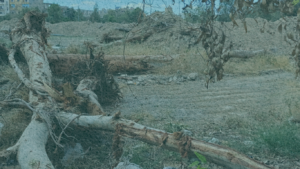
“It takes a network to fight a network.” With this quote from the Organized Crime and Corruption Reporting Project, Lebanese journalist and head of the investigative journalism unit at Daraj, Hala Nasr El Din, describes the value and impact of cross border collaborations. She recently participated in the environmental destruction investigation project published last January with Arab and international journalists and partners, which allowed her to clearly observe disparities within the collaboration itself.
Nasr El Din evaluates the imbalance in resources. “International platforms and networks allocate large teams of journalists and experts to work on a single file, while our newsrooms can barely dedicate one or two people. Their teams also enjoy easier travel and mobility, unlike the travel restrictions faced by journalists in our region.”
According to Iraqi journalist Kholoud Al Ameri from the Journalists for Climate network, limited resources place additional burdens on Arab editors involved in cross border projects. Differences in contexts between countries, and even dialects, require extra effort and time to complete a story.
International platforms and networks assign large teams of journalists and experts to work on a single investigation, while our newsrooms can rarely dedicate more than one or two people.
While global media organizations allocate specialized teams and experts for fact checking, this crucial stage becomes far more complicated and exhausting for Arab editors working on cross border investigations within the region. Most institutions still lack specialized staff and departments dedicated to this task.
Al Ameri explains: “As an editor from Iraq, I also have to verify information coming from other Arab countries. Many journalists treat the material as local coverage and write it in a purely local context without explaining the background of their countries. This lack of clarity leads to long exchanges and repeated questions, and the journalist often has to rewrite the material and add contextual information.”
A Shared Challenge: Access to Information
Mohamed Helal, managing editor of the Muwatin network, argues that the absence or obstruction of the right to access information is a common challenge faced by almost all journalists in Arab countries.
Drawing on the Lebanese experience, Hala Nasr El Din notes that although the right to access information exists legally, government administrations and institutions often fail to respond to requests, and there is little accountability for such neglect. She also observes that cross border collaborations outside the Arab region have often resulted in holding actors accountable and influencing public policy. In the Arab region, however, investigative collaborations rarely produce such outcomes, which negatively affects journalists’ morale and motivation.
Kholoud Al Ameri confirms this challenge, explaining that Arab countries face deep difficulties in obtaining information due to complex bureaucracy. Government agencies frequently withhold information from journalists or provide incomplete data. Open sources are limited, especially when requesting government reports that should be publicly available.
She gives an example from Iraq. “The country faces a clear desertification crisis, yet ministries provide almost no information. This pattern intensified after the turmoil of 2003. Even the information from the Ministries of Environment and Agriculture often relies on United Nations reports rather than primary sources.”
Accusations of Treason and Legal Violence
Al Ameri notes that Iraqi ministries often classify requested information under sensitive categories, placing journalists in positions of suspicion. “For example, the Ministry of Water Resources classifies water information as national security. When journalists cooperate with international or regional organizations, they may be accused of espionage or passing information to Western entities. Authorities justify withholding information by claiming they are protecting the country’s image.”
Mohamed Helal adds that what makes the situation even more complex compared to other regions is the deep suspicion many Arab governments hold toward journalism in general, and toward cooperation with foreign entities in particular. This suspicion can expose journalists to accusations unrelated to their actual work.
In some countries, non union journalists face difficulty protecting themselves
from accusations of impersonating a journalist.
Helal attributes the limited participation of journalists in cross border collaborations to several additional factors. These include restrictions on journalists’ movement in conflict zones, difficulties protecting non union journalists from accusations of impersonating journalists in certain countries, and other challenges depending on geographical contexts. In some Arab fields, there are also few journalists open to cooperation with independent or non governmental organizations.
For Kholoud Al Ameri, differences in democratic environments and legal frameworks across Arab countries also create challenges for editors. They must work with each participating journalist according to the level of freedom and legal restrictions in their country. She recalls a case in which information had to be removed after publication to protect a journalist and source. A farmer from Algeria had provided legal documents supporting her claims, but the journalist later requested their removal after facing legal and security risks.
Press Freedom: Who Faces the Most Repression?
Political systems and democratic climates across Arab countries strongly influence the ability to engage in cross border journalistic projects.
Hala Nasr El Din notes that Lebanon, despite increasing pressure on journalists, bloggers, and artists, declining press freedom rankings, and questionable summons from the Cybercrime Bureau rather than the Publications Court, still maintains a relatively higher level of press freedom compared to many neighboring countries.
She adds that Lebanon’s long tradition of journalism has equipped generations of journalists with experience that strengthens their ability to navigate systemic challenges and engage effectively in investigative and cross border projects.
On the other hand, Mohamed Helal believes that the Gulf region is among the most closed environments for journalists, particularly regarding cross border collaboration. This conclusion comes from the focus of the Muwatin network on covering issues in the Gulf.
Lebanon has a long tradition in journalism
that has enabled generations of journalists to develop experience that strengthens their ability to deal with systemic challenges.
Helal explains: “From my coverage of the Gulf region, I see it as one of the most difficult areas for journalists to operate in, especially for cross border collaboration. Independent journalism is almost absent there, which makes such cooperation extremely difficult.”
Similarly, Hala Nasr El Din observes that the Gulf region presents one of the greatest challenges for cross border collaboration, possibly rivaled by Libya.
She provides an example. In the environmental destruction project, the investigation documented environmental violations linked to the Emirati oil company ADNOC. This required collaboration with a journalist from the United Arab Emirates. However, it proved extremely difficult to find journalists willing or able to participate because the company is state owned. Even advanced safety protocols could not provide sufficient protection, forcing the project to proceed without Gulf based journalists.
Advice for Journalists: How to Strengthen Your Cross Border Reporting
To overcome these obstacles, several practical strategies have proven effective in cross border investigations conducted by the three editors, who now share their experiences with Arab journalists interested in similar projects.
Journalist Hala Nasr El Din advises:
Work with partners from Europe and the United States when dealing with companies and seeking information. Even though the questions were shared collectively, communication with global companies was handled by international partners because they are less likely to be ignored, and this strategy proved effective.
Take advantage of the legal protections and digital security measures provided by international journalist networks. These protections are often standardized across cross border projects, ensuring you are not left alone when facing threats or accusations.
Develop a strong team spirit by sharing information and resources. This is one of the most important advantages of cross border investigations. Speak openly about problems, gaps in information, or lack of expertise, and ask for help when needed.
Maintain a spirit of excellence and healthy competition within the team, but always prioritize the collective interest over personal ambition.
Remember that being part of a team means making shared editorial decisions, including cautious steps when security risks are involved. Ensure that no decision endangers any member of the team.
Journalist Kholoud Al Ameri recommends:
Form teams of at least three journalists. Larger teams increase the ability to confront challenges and diversify skills and expertise. Tasks can be distributed more effectively among team members responsible for information gathering, field interviews, writing, data analysis, and visual design.
Work with experts whenever possible. Many experts contribute to shadow reports produced by civil society organizations, which can provide valuable investigative leads. Some may work within government institutions and can share hidden information anonymously.
Journalist Mohamed Helal concludes with a fundamental piece of advice. “You will face many difficulties, but never give up. Eventually you will reach your goal. However, your personal safety is the most important thing. No story is worth risking your life.”