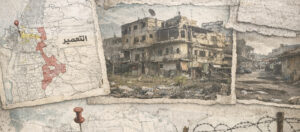

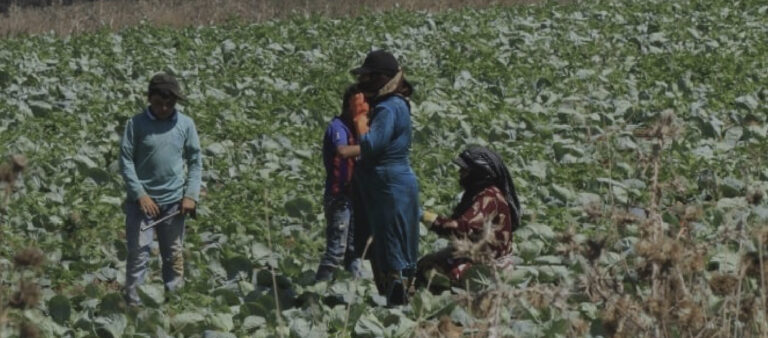


Crossing from one riverbank to another was not a casual trip, nor a move to secure necessities, nor even an attempt to purchase fuel illegally despite the urgent need for it. It was the hunting of a forced exile, a first estrangement, the loss of daily identity, the grinding of memory without a mortar, and a search for a harbor of peace. A chaotic extension filled with blood, bullets, terrifying faces, and unjustified chants, stretching from rural Tartous to the Nahr al Kabir River along the illegal road adjacent to the Arida border crossing.
This is how Mariam’s journey began on March 8, 2025, after the massacres that took place in central and western Syria. She left her village behind, leaving madness in its wake:
“I left without the luxury of crying or collapsing. I just wanted to reach the road that would take me to the other side. I just wanted to reach Lebanon.”
War trauma specialist Ranim Zarqan explains that the accumulation of trauma and events such as losing family members, forced displacement, and refuge makes these disorders more severe.
Zarqan clarifies that most cases develop Post Traumatic Stress Disorder, one of the most severe disorders women experience in wars. Traumatic events transform into nightmares, sleep disturbances, constant alertness, fear, tension, and sudden panic attacks triggered by any loud sound or any sound associated in any way with the original traumatic event.
On the Road of Fear, We Gather Psychological Trauma
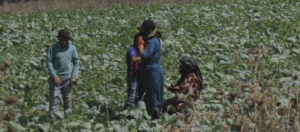
Mariam describes what she endured during a 48 hour journey through agricultural fields before reaching the crossing point into Lebanon, recalling the transition “from psychological stability to complete instability, suddenly and without warning.”
With trembling hands, Mariam continues, speaking of “nightmares, lack of concentration, constant anxiety. They diagnosed me with Post Traumatic Stress Disorder. That is who I am today.” Zarqan confirms that if women do not receive treatment for these disorders, they may become chronic and be accompanied by physiological symptoms such as chronic headaches, digestive problems, and unexplained physical pain.
Zarqan adds that if left untreated after escape, the condition may increase the risk of severe depression and suicidal thoughts due to the loss of coping mechanisms, loss of passion, feelings of guilt or worthlessness, and inability to care for themselves or their children.
One in five people, or 22 percent, who have experienced war or conflict in the past ten years suffer from depression or anxiety.
The psychologist further explains that even after relocating to a safe country, some women may develop anxiety disorders, overthinking, tension, and fear of the future, which can evolve into chronic panic attacks and difficulty integrating into society, leading to social phobia.
A United Nations report indicates that women and girls in conflict crises suffer severe psychological stress linked to violence, instability, and lack of social support, particularly when exposed to gender based violence or when living under constant threat.
The World Health Organization reports that one in five people who have experienced war or conflict in the past decade suffers from depression, anxiety, stress disorders, bipolar disorder, or schizophrenia.
The Headscarf Hides the Hair, But the Anxious Accent Remains
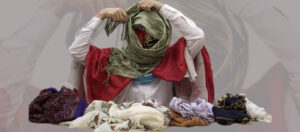
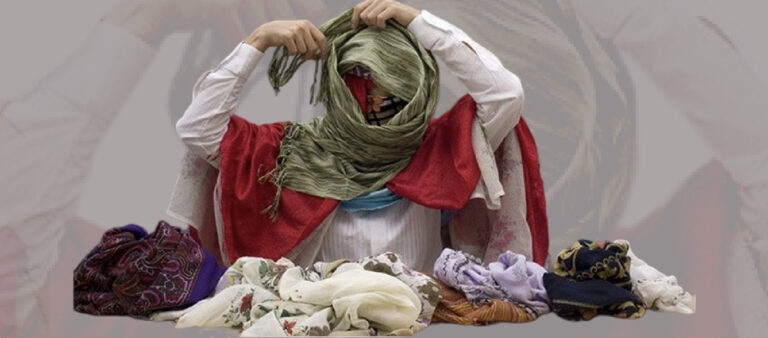
The massacres in Suwayda, Aleppo, the coastal region, and other areas placed all Syrians, especially marginalized groups such as women and children, before painful challenges and complex experiences. They were subjected to packaged accusations based on sectarian identity, labeled as unbelievers, apostates, separatists, remnants, and traitors. Many were forced to adopt new methods of concealment to escape the threat of enslavement, rape, and murder. Women resorted to wearing the niqab or headscarf, while men altered their appearance by shaving beards, growing beards while shaving mustaches, or even wearing wigs in attempts to secure protection.
Sawar, a young woman from Suwayda, was subjected to systematic sectarian incitement that escalated to threats of arrest, killing, defamation, and harm to her family after she criticized the attack on Suwayda in social media posts.
She recounts:
“I received many threats of killing and disappearance. One threat even said you deserve sexual violation, we would not waste a bullet on you.”
Because of these threats, Sawar decided to flee after shutting down her social media accounts. She explains:
“I agreed with a smuggler to take me through Wadi Khaled in Homs because there was heavy security on the Damascus route. He insisted that I wear a headscarf to pass the checkpoints.”
Sawar continues to suffer intense anxiety related to social media. She says:
“I do not want anything connected to social media anymore. Every time I remember what happened to me, where I was and where I ended up because of a post online, the world feels suffocating. I even developed an aversion to the applications themselves.”
The psychological impact of altering one’s visible identity creates what can be described as moral trauma and trauma to personal identity.
A Reuters report documented the kidnapping of at least 33 women from the Syrian coast, either for ransom or transport outside the country, with ages ranging between 16 and 39.
Sawar recounts her experience at a Syrian checkpoint:
“We reached the last checkpoint before crossing into Lebanese territory. This one decided to interrogate me. A masked man saw my ID and began questioning me. He asked, you are a Druze unbeliever, why are you wearing a headscarf?”
“He was testing my accent. He decided to remove me from the car to present me to a cleric, but the smuggler intervened and spoke with him privately. He returned and told me he wanted 500 dollars. Either I pay or I go to the cleric. I said of course I will pay, and we continued.”
Zarqan explains that altering one’s visible identity creates moral trauma and identity trauma because when women are forced to change clothing or accent to avoid danger, it produces internal conflict, a persistent sense of threat, and loss of control, accompanied by fear of exposure.
She describes this as moral trauma, a sense of value violation motivated by survival. After reaching safety, many women experience shame and guilt because survival came at the expense of deeply held values, leading to identity questioning and what can be classified as identity disorder.
Without adequate support, this can develop into distorted identity disorder, weakened self confidence, bodily insecurity, and identity related depression.
UN Women considers forcing women to alter their behavior due to intimidation or threats of physical harm as a form of gender based psychological violence.
Amnesty International holds responsible authorities accountable for failing to protect women during conflicts, rather than blaming women who are subjected to violence.
Between Exile and a Harbor of Peace
Most women who fled to Lebanon from areas in Syria that witnessed massacres over the past year are seeking ways to forget the violence they endured. They hope to find a harbor of peace after experiencing psychological weight, disorientation, and anxiety about the future.
Survivors wait to return safely to Syria to reorganize their lives and recover from what they endured, free from fear and uncertainty.
United Nations Security Council Resolution 1325, issued on October 31 under the title Women, Peace and Security, calls on all parties to adopt special measures to protect women and girls from gender based violence, especially in situations of armed conflict and its aftermath.
The World Health Organization emphasizes the provision of mental health and psychosocial support services as an essential component of humanitarian response, particularly for women affected by conflict and forced displacement. The United Nations High Commissioner for Refugees affirms the right to asylum and resettlement, considering resettlement a vital protection tool for women and girls facing serious risks whose safety cannot be guaranteed in host countries or upon return. UN Women stresses that the international community’s response to conflicts must place women at the center of protection, including security, mental health, livelihoods, and safe resettlement.