



On Dark Comedy Between Syria and South Lebanon
In the heart of great tragedies, laughter is sometimes born as a quiet act of resistance. Throughout history, dark comedy has never been just a joke in the face of sorrow-it has been humanity’s way of expressing loss when language falls short. After the two World Wars, Samuel Beckett and Eugène Ionesco wrote absurdist works that made people laugh while hiding the terror of collapse beneath the surface. In the Arab world, this form took shape after the 1967 defeat, when political satire and dark humor became a way to voice a collective wound that could only be told through bitter irony.
Dark comedy belongs to a moment where tragedy intersects with the need to survive. In psychology, it is understood as a complex defense mechanism-laughter here isn’t pleasure, but a fragile bridge between pain and the ability to withstand it. In sociology, it becomes a coded form of protest, reflecting the breakdown of trust between individuals and institutions, turning irony into a subtle political language.
Everywhere crises have lasted-whether in Latin America or the Middle East-this bitter laughter has emerged as an instinct for survival, as if a person standing on the edge can only maintain balance through irony.
Dark comedy belongs to a moment where tragedy intersects with the need to survive.
In Syria, these features existed quietly for decades, but they exploded with the war that dragged on for more than ten years. Suddenly, the bitter laugh became part of daily life; the joke turned into a collective commentary on tragedy; caricature and sarcastic posts became the only free space in a suffocating reality. Dark comedy was no longer just an artistic style-it became the language of an entire society trying to say: We’re still here, trying to make sense of life despite everything.
People learned to tell their pain with a sarcastic tongue-not because the suffering became lighter, but because laughter gave them a small distance between the wound and the awareness of it. Viktor Frankl, a survivor of the Nazi concentration camps, once said: “Laughter in the midst of catastrophe is not a luxury-it is a condition for mental survival.” Syrians grasped this truth instinctively: the bitter laugh became a short break in an endless marathon of pain, a momentary breath amid the rubble.
But laughter did not remain a personal experience; it evolved into a complete social discourse. Pierre Bourdieu-one of the most influential sociologists of the 20th century-argues that in troubled societies, jokes reveal the relationship between citizens and power more than official statements ever do. In Syria, this was unmistakable: every bread line, every power outage, every contradiction between authoritative rhetoric and lived poverty became fuel for satire. Humor stopped being entertainment and transformed into a living archive documenting a society exhausted by a state that had lost its meaning.
The Satirical Spirit in Syrian Theatre
This satirical spirit didn’t emerge only in the recent war; it is the product of a long history of crises and collective wounds. This humor is not casual joking-it is a mechanism for psychological and social adaptation in the face of relentless suffering. Theatre becomes here an analytical tool, allowing playwrights and audiences to interpret reality indirectly, where pain and laughter intersect to create space for expressing what words alone cannot fully hold.
Saadallah Wannous, in A Soirée for the Fifth of June, offers a textbook example of the fusion between humor and anguish. His characters laugh and chant slogans of victory while living, on the inside, total defeat. Laughter becomes a tool to expose the contrast between inner collapse and outward bravado. This form of dark comedy allows the audience to grasp the magnitude of the disaster symbolically, making collective pain tangible while easing despair through a painful joke or sarcastic remark.
In this play, there is a dialogue between two actors (as cited by Najm al-Din Samman):
Actor 1: Are we really the ones to blame?
Actor 2: We’ll place a huge mirror in front of us. We’ll look at it to bear responsibility. Shouldn’t we at least be present?
This dialogue reflects a sense of collective responsibility and the shame of defeat. The mirror is symbolic-inviting not only the characters but the audience to confront the truth instead of escaping it. This is an essential part of dark comedy: it’s not only about laughter, but about provoking deep awareness and intellectual accountability.
According to an analysis published in The Academic Journal (based on a referenced study), the play incorporates a “theatre-within-theatre” structure (inspired by Brechtian techniques). Wannous creates improvisational scenes where the wall between actor and audience is broken, turning the audience into participants. This technique strengthens dark comedy: instead of a linear narrative, the play becomes a collective act-the audience is invited to see themselves reflected on stage, laughing at the enormity of defeat! while recognizing the bitterness beneath the humor.
The audience is invited to see themselves in the stage’s mirror-sometimes laughing at the sheer magnitude of defeat!
Wannous himself said in an interview (quoted in theatre journalism): “When I wrote the play, I wanted to express the impossibility of writing and the emptiness of words. I sought a naked, condensed word—one that exposes reality and transforms it at the same time.”
This desire for the “naked word” shows that Wannous wasn’t writing merely to document events; he aimed to unmask the lie, the performance, the illusion. Humor in his plays is not decoration-it’s a tool to expose the painful truths behind official masks.
Mamdouh Adwan, in The State of Affairs, goes even further. He presents characters who are psychologically and physically exhausted, living under conditions so harsh that only constant joking and precise sarcasm make them bearable. His characters joke about hunger, poverty, daily storms of disappointment, and the shocks that keep repeating.
One of Adwan’s characters says: “We don’t want a better life-we just want a life we can endure.”
Laughter is not an escape, but a strategy for understanding and dissecting reality-revealing the depth of psychological exhaustion people carry. These characters embody how human beings carve out a brief space to breathe, even if only momentarily, amid relentless pressure. Through these theatrical texts, several layers unfold: the first is psychological, where bitter humor acts as a defense mechanism that helps both characters and audiences cope with repeated shocks.
The second layer is social and political satire: humor becomes a protest language that exposes the gap between authority and reality. The third is human: bitter laughter reflects the will to survive, the refusal to surrender to pain, and the search for a moment of joy even in the darkest hours.
Here, the connection between theatre and social reality becomes clear-dark comedy is not a luxury; it is a cognitive, psychological, and political tool for understanding society in times of war and crisis. It even lays the groundwork for the evolution of digital dark comedy on social platforms later on.
South Lebanon: When Satire Becomes a Way of Life
With the latest war, the theatre itself changed. It was no longer the sole space for dark comedy-social media became the new stage. Facebook and Twitter filled with sharp jokes, quick-witted posts, and short satirical flashes. Every phone became a small screen; every user became writer and actor at once. This digital comedy extends the spirit of Wannous and Adwan but speaks in the rapid-fire symbolic language of a generation living life through its screens.
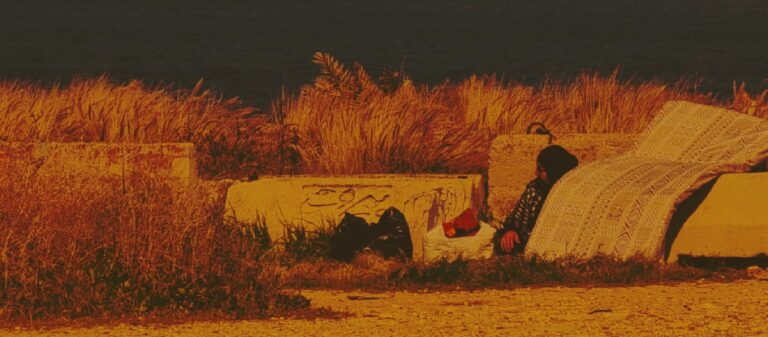
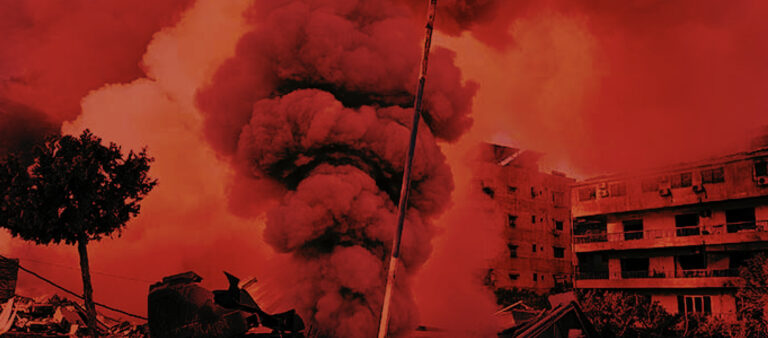
In Lebanon-especially in the south, where memory is burdened with wars, invasions, and recurring economic collapse-dark comedy emerged as a form of collective breathing. In villages living in constant proximity to danger, humor became a way to tame fear and ease the weight of waiting. “Laughter is resistance” is no longer a slogan; it is a lived philosophy.
In villages that live on the edge of danger,
the joke becomes a tool to dispel fear.
Even without precise documentation of “laughter as resistance,” anyone observing social media closely can see how Lebanese users lean on humor to cope with endless fuel and power crises-through sarcastic comments, memes, and satirical posts that express frustration and despair wrapped in wit.
These digital practices-though small in scale-show how people try to lighten daily anxiety through humor, much like Syrians do in their long queues or their daily struggle amid war.
Both Syrian and Lebanese societies have learned that bitter laughter is not a withdrawal from reality-but a way to endure it. This parallel reveals that dark humor has become a shared language across the Levant, transcending political borders to describe the suffering of ordinary people. From Damascus to Tyre and Nabatieh, from Homs to Bint Jbeil, the same scene repeats: laughter defying pain, sarcasm that carries the weight of a political statement. In that paradox lies the secret to surviving in a region that has never stopped being tested by tragedy.
Thus, Syrian laughter-and with it Lebanese and Arab laughter—remains a blend of the desire to live and an honest acknowledgment of catastrophe. As sociologist Zygmunt Bauman wrote, “Laughter in the midst of disaster is proof that society has not died yet.” Their bitter smiles affirm this truth every day. Laughter is not the end of the story-it is the will to keep writing it.
In the end, dark comedy in our region has not only shaped collective psychology-it has left a clear mark on the arts. In theatre, literature, and visual arts, bitter laughter has become an aesthetic and analytical tool, used to dissect reality, portray weary characters, and deliver social and political critique through symbolism.
In Syrian theatre in particular, characters use irony and satire to expose daily cruelty, turning individual and collective pain into an artistic language the audience can grasp-just as Adwan did, where monodrama became not a recounting of suffering but a means to peel back the layers of psychological and social oppression.
Studies show that Adwan constructed his texts to strip contradictions bare, using a tone close to dark comedy-not mere jokes, but dramatic analysis of reality. In digital art and political cartoons, satire has become a tool for documenting daily shocks-laughter that is bitter, yet painfully truthful.
Thus, dark comedy has turned art into a mirror of society-revealing both human fragility and strength, giving artists and audiences alike a way to think, react, and endure pain through a form that is both aesthetic and analytical.