
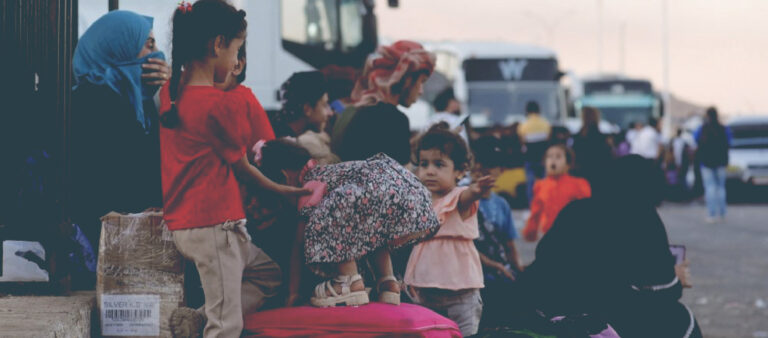



Children in the South continue their schooling amidst the rubble of their schools.
“I want to learn, even if the circumstances are against us,” says Youssef, an eighth-grade student at a public school in Southern Lebanon.
Youssef, 13, has always had ambitions bigger than the conditions around him. He used to start his school day with a smile, sitting in his favorite front-row seat so he could clearly hear his teacher.
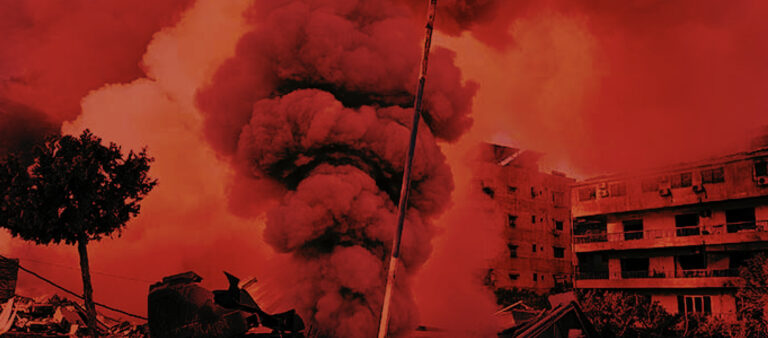
But everything changed when war erupted in southern Lebanon in October 2024 between Israel and Hezbollah, after a series of heavy Israeli strikes on the group that wiped out its first- and second-tier leadership.
After the war ended in late November and schools reopened, it became essential for Youssef to adapt to a challenging learning environment, where cold air entered through broken windows and the noise from reconstruction work mixed with the sounds of teachers.
Despite all this, the boy insists on moving forward, adding with determination: “My school may be destroyed, but my dreams are still alive.”
Youssef’s determination to continue his studies doesn’t hide his sadness over the state of his school: “My school was my second home, but after the war, it became just a destroyed building.
The classroom windows are shattered, and the walls have cracks,” he adds. “The sound of bulldozers and heavy machinery is working around me all day.”
As for Sahar, who is two years older than Youssef, she is more optimistic than he is. She says, “I was counting the days to go back to school. What I missed most were my friends and my school desk.” Sahar describes her feelings upon entering the school for the first time after the war: “I felt great joy, but with it a pang of sadness.
It’s not easy to see that everything has changed.” Sahar dreams of her life returning to how it was before the war, and she sees the school as the closest place to make that happen.
She adds: “The place may have changed, but my dreams remain the same, and perhaps they are stronger.”
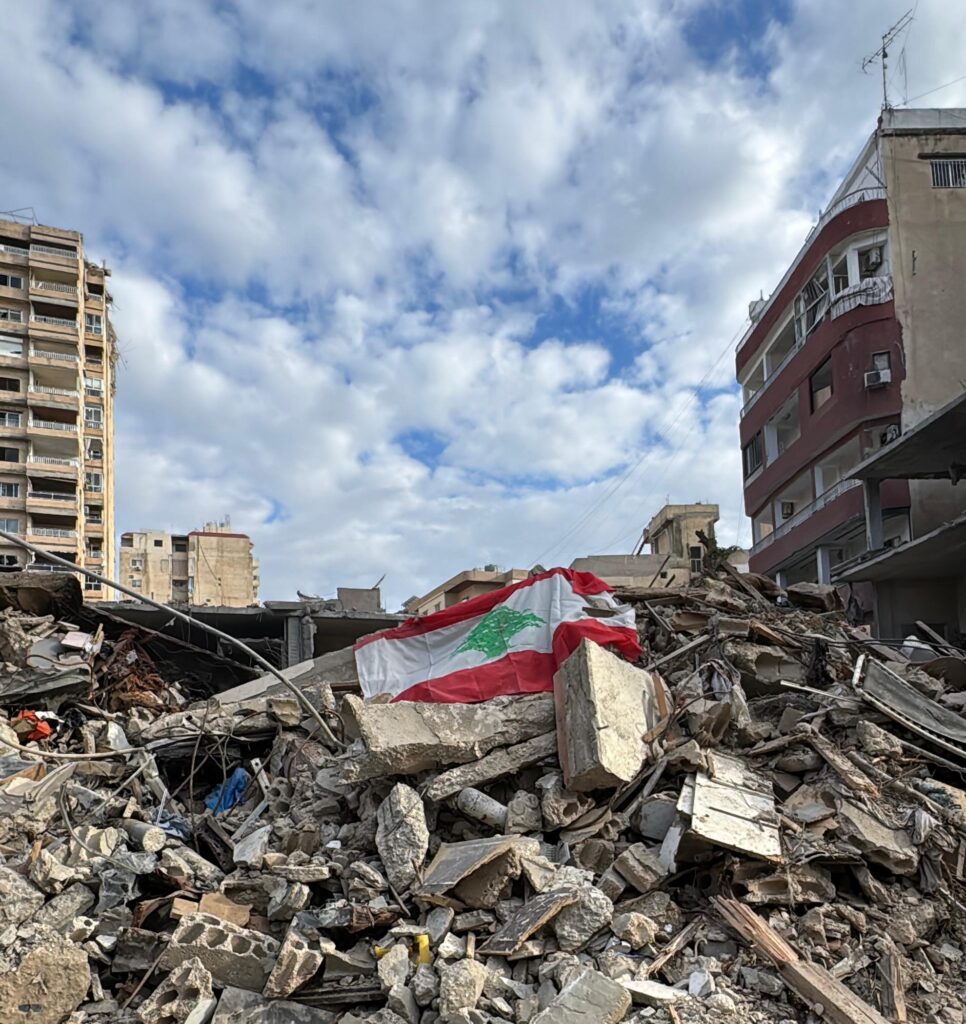
The war in Southern Lebanon has left no sector untouched by its damage, and the education sector was among the most affected, including both public and private schools, as a result of the Israeli aggression on Southern Lebanon.
According to the Weekly Report Emergency Education Sector Response Bulletin covering November 30 to December 9, 2024, out of about 1,200 public schools in the south, around 33 suffered severe damage making them unusable, while roughly 349 public schools were partially damaged and unfit for teaching. Meanwhile, 14 schools are still being used as shelters.
The number of students enrolled in public schools exceeds a quarter of a million, while the number of public school teachers for the 2024–2025 academic year is over 35,000.
The report also noted that at the start of 2025, public schools would return to the standard weekly schedule of 28 hours, ending the temporary program of 21 hours per week.
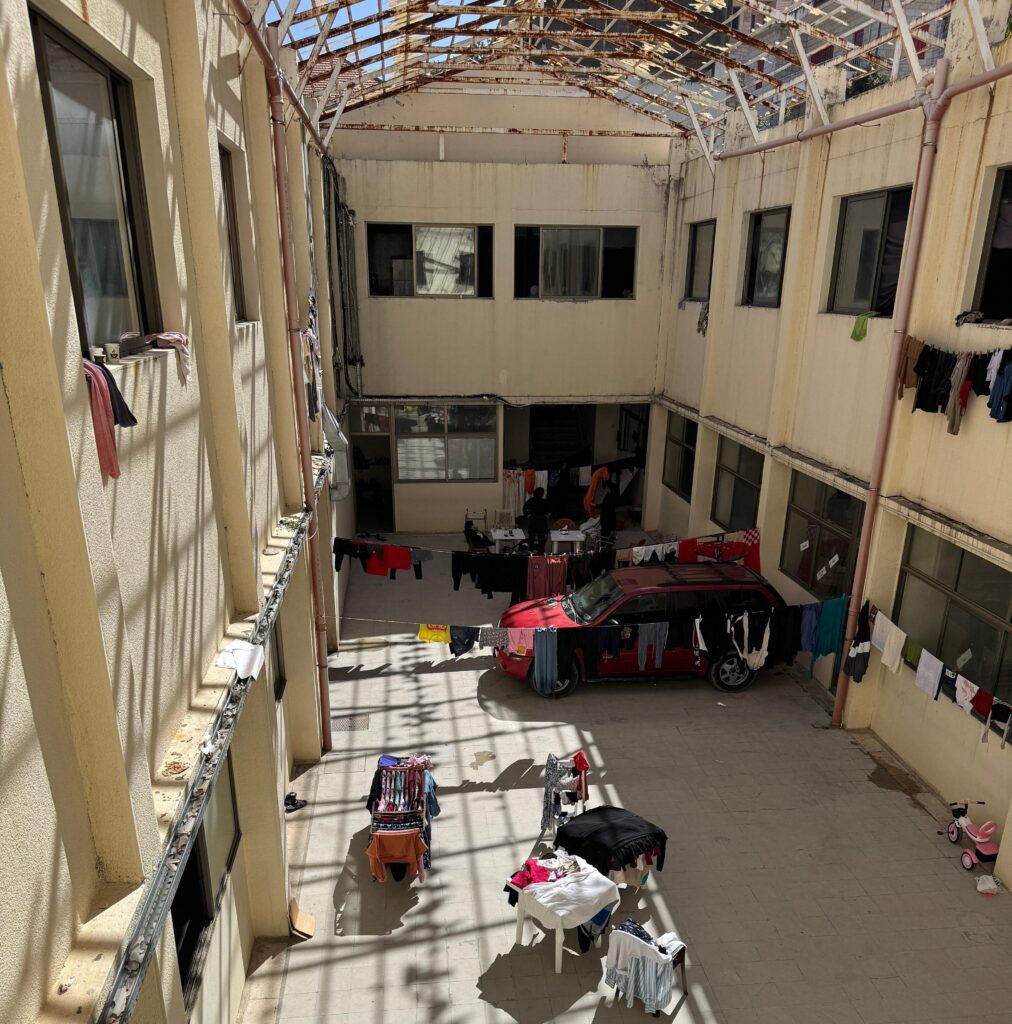
Ali Hashem, the principal of a public elementary school in Southern Lebanon, says: “We are striving to restore what we can of normalcy in our school after all we have been through.” Hashem sees a glimmer of hope in the classrooms filled with students despite the obstacles.
“The challenges we face are immense; from broken glass and cracked walls to the significant psychological impact on students and teachers.”
Ali Hashem, the principal of a public elementary school in Southern Lebanon, focuses primarily on providing a safe and attractive environment for his students as quickly as possible.
“This includes repairing windows and securing school desks, but there is also a need to rebuild trust and motivate students to return to their desks.”
Hashim’s school, like other schools in the South, is currently cooperating with the Ministry of Education and supporting bodies, such as international organizations, to secure the necessary resources and compensate students for lost class time.
“The school team is working tirelessly to integrate students into psychological and social support programs, and we are using technology to make up for lost lessons through the new digital platform,” Hashim explained. According to him, teachers are using the Microsoft Teams platform to give some virtual lessons.
Sometimes I catch him writing his small dreams in his notebook,
dreams that go beyond the rubble surrounding us.
Hashem says: “I know the road is long, but we believe that education is the key to rebuilding what the war has destroyed, and we will work with all our energy to achieve this goal.”
According to a previous report from the Lebanese Ministry of Education, the Israeli aggression since September has directly affected more than 500,000 students and over 34,000 teachers in both public and private schools. The crisis has impacted many educational institutions—both in affected areas and in others that were repurposed as shelters for displaced people.
For parents, the main concern is their children’s continued education. Layla Ibrahim, Youssef’s mother “…that her son completes his education and fulfills his academic dreams,” she says: “The war stole a lot from us, but I believe that education is the most powerful weapon we can give our children to face these circumstances.
Seeing Youssef insist on going to school every day, even amid the rubble and the sound of bulldozers, gives me hope.”
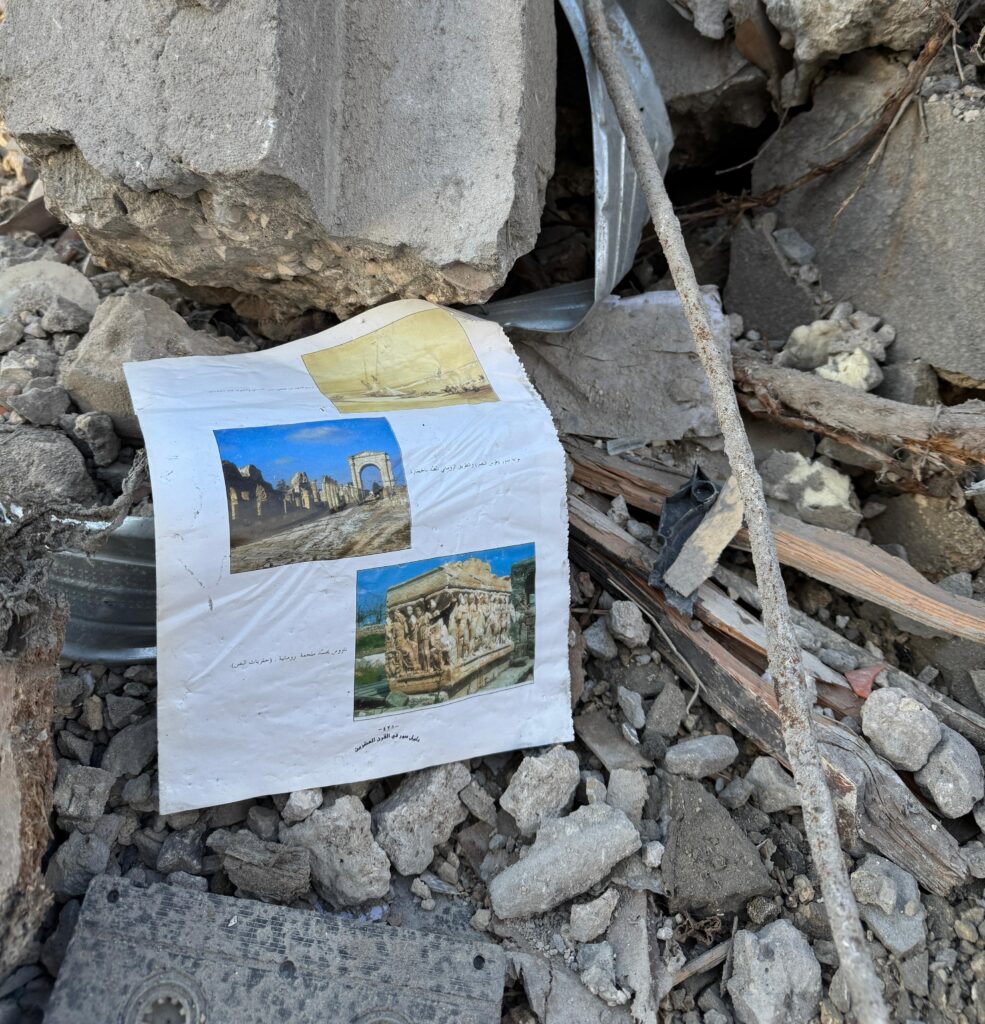
Leila knows the challenges are great, but she always tells her son that every step toward school is a step toward a better future.
She adds: “Sometimes I catch him writing his small dreams in his notebook, dreams that go beyond the rubble surrounding us. With his little fingers and some drawings, he writes about his ambition to become a doctor. His scribbled drawings show his love for helping others.
What he went through in this war made him want to change this bitter reality in any way he can, making it one of his future ambitions. As a mother, my heart breaks when I see my child fight with such courage, but he also gives me strength.”
The United Nations global fund for education in emergencies and protracted crises, “Education Cannot Wait” (ECW), announced an additional $1.5 million in funding to Lebanon’s Ministry of Education to support equitable access to quality education for girls and boys affected by the war.
Unisef stated that it will expand the cost of the first emergency response grant to the education sector in Lebanon, within the “Education Cannot Wait” fund’s investment portfolio of $25.8 million, to include 1.2 million children in Lebanon.
In the organization’s report, “Emergency Response in Lebanon Following the Ceasefire,” UNICEF is working with the Ministry of Education and Higher Education to resume education for all children and implement the ministry’s Learning Continuity Response Plan.
It became essential for Youssef to adapt to a challenging learning environment.
where the cold enters through broken windows.
In addition, the “My Digital School” platform was launched to enable children to continue their education through blended and distance learning.
UNICEF also provided the Ministry of Education and Higher Education with over 450,000 user accounts for students and teachers to access the platform.
Amid all these initiatives and international support, the human reality remains strongly present in the details of the educational crisis. Behind every number in these reports is the story of a child dreaming of a stable school desk, a clean notebook to write their dreams in, and a teacher carrying hope for future generations despite exhaustion and pressure.
On the ground, some children walk long distances through the rubble of homes to reach their temporary schools, while mothers send their children off with hearts heavy with fear and hope. These children carry not only their schoolbags but also the dreams of their families, who believe education is the only way out of the cycle of poverty and conflict.
In one classroom, you might find a child like Youssef, looking out through a broken window but seeing the future he aspires to—or a girl like Sahar, clutching her book tightly as if holding on to her entire life.
Sustaining education is not merely an immediate necessity,
it represents the cornerstone for confronting the repercussions of conflict.
Lebanon and the United Nations had launched an urgent appeal on October 1, 2024, to secure $425.7 million to provide immediate assistance to one million people affected by the conflict from October to December 2024.
Of this amount, $15.4 million is allocated to the education sector to address the barriers to continued learning by providing models for in-person or blended education using both traditional and digital resources, as well as creating child-friendly spaces and equipping educational institutions with the necessary materials.
The education sector continues its efforts to persevere in protecting an entire generation from losing its right to education. The continuity of learning is not merely an immediate necessity; it represents a cornerstone in confronting the consequences of conflict and working to mitigate the long-term damage that could threaten the future of society as a whole.