




Silence Louder Than Shells: Masculinity Confronting Trauma After the 2024 Bombing of Beirut’s Southern Suburbs and South Lebanon
In a cramped room rented by a displaced family from Beirut’s southern suburbs, Mohammad (a pseudonym), a man in his late forties, sits clutching his prayer beads with trembling hands.
After a long silence, he says: “I didn’t cry in front of anyone. I stood in front of my destroyed home like a rock. But when my children fell asleep… I felt my legs could no longer carry me.”
He spoke as if the words were being pulled out of him, fleeing the idea of being seen as broken in front of his wife and children—despite admitting that he has slept no more than two hours a night since the bombing.
Hassan (a pseudonym), a man in his early thirties displaced from southern Lebanon, sits across from us, nervously interlocking his fingers. In a low voice, he says: “I still hear the explosions in my head… even when there’s nothing outside. I wake up startled, thinking there’s another strike-but there isn’t. I don’t want to see a therapist. I’m afraid people will say I can’t handle it.”
He spoke more about his fear of what people might say than about the bombing itself-as if the deepest wound wasn’t the war, but the image he feels compelled to preserve as a man.
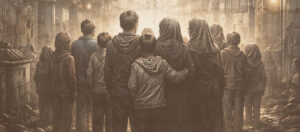
These testimonies are not exceptions. They reflect a recurring pattern in the stories of many men during the recent weeks of bombardment in Beirut’s southern suburbs and South Lebanon—men collapsing inwardly while being expected to stand firm on the outside.
Beyond the Rubble… Trauma That Doesn’t Appear in Photos
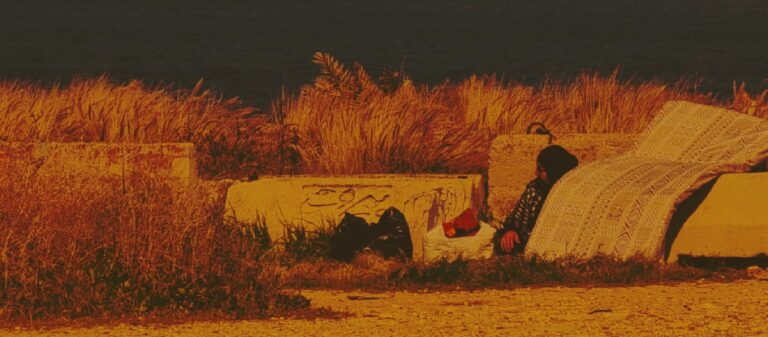
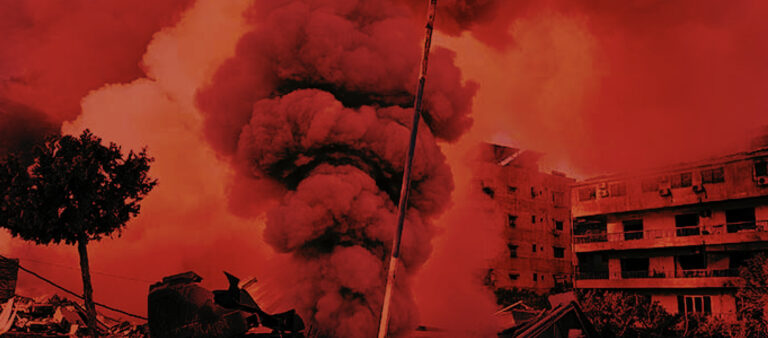
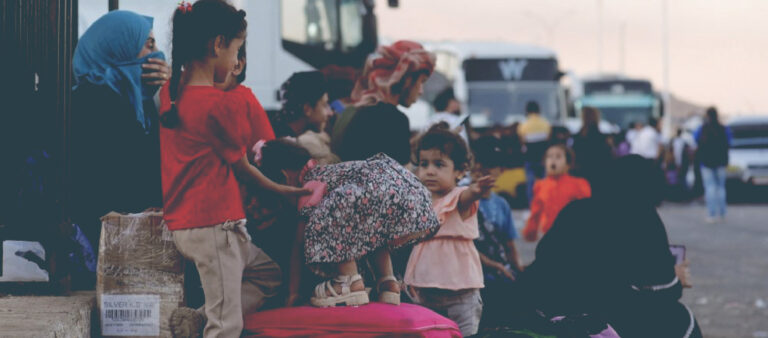
During the autumn of 2024, Beirut’s southern suburbs and South Lebanon endured relentless airstrikes, mass displacement, and hospitals operating far beyond capacity.
Reuters quoted a United Nations coordinator describing the humanitarian and psychological situation as “catastrophic,” noting that residents were “living under levels of fear unseen for years.”
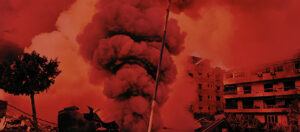
But numbers never tell the full story. Behind images of rubble and smoke lie silent wounds the camera cannot capture-fear lodged deep in men’s chests, unspoken and unseen.
Invisible Wounds: When Emotions Are Suppressed in the Name of “Manhood”
In many Arab societies, boys are raised to believe that crying is weakness and that grief is “unbefitting of men.”
In times of war, this belief shifts from a social expectation into a suffocating constraint.
A 2025 Human Rights Watch report indicates that thousands of civilians-men and women alike-have suffered psychological trauma due to attacks on schools, hospitals, and civilian infrastructure.
Yet men, in particular, tend to suppress their pain because of the social roles imposed upon them.
 Thousands of civilians-men and women-have experienced psychological trauma.
 But men, specifically, are more likely to repress their pain due to rigid social expectations.
Field reports from international agencies have documented scenes of men walking through rubble, gripping their children’s hands with excessive force-as if trying to reassure themselves before reassuring their children.
They turn their faces away to hide their trembling, swallowing tears so they are not interpreted as weakness.
But outward resilience does not mean the absence of collapse-it means mastering how to conceal it.
Silent Anger: When Trauma Finds Another Language
When men are forbidden from crying, emotions search for another outlet.
This may surface as constant tension, sudden bursts of anger, or complete withdrawal from life.
In this context, says Dr. Shahrazad Nabouh, a cognitive behavioral therapist:
“In Arab societies, men are raised to view expressions of sadness or fear as weakness. With recent violent events, this belief becomes a multiplier of harm.
A man who is not allowed to cry often converts pain into anger, anxiety, or withdrawal.”
She adds: “Suppression does not protect men-it weakens their ability to cope. Emotional release, including crying, reduces the risk of developing post-traumatic stress disorder. Strength lies not in silence, but in confronting pain.”
Psychologists also emphasize: grief that is not mourned turns into anger whose impact lingers.
The Impact of Trauma on Family and Community
Psychological repression does not remain confined to the individual-it spreads like a heavy shadow throughout the household.
Tension, irritability, withdrawal, and sleep disturbances often transfer from fathers to spouses and children.
United Nations reports confirm that the deterioration of essential services has heightened the overall sense of insecurity, raising anxiety levels within families.
As long as men are expected to be “the strongest pillar,” many live a bitter conflict between what they feel and what is demanded of them.
Men are expected to be “the strongest pillar,”
yet many endure a painful struggle between emotion and expectation.
Rebuilding does not begin with cement.
Dr. Nabouh explains: “Seeking psychological support is not a sign of weakness-it is an essential step toward healing, just as seeing a doctor is necessary for any physical injury.”
This renewed understanding of masculinity-based on acknowledgment rather than repression-is the first step toward breaking the vicious cycle of trauma.
Behind shattered facades, men struggle to survive wounds that cannot be seen.
If external destruction is visible, internal devastation is no less severe.
As long as society equates masculinity with silence, pain will continue to multiply in the shadows.
It is time to challenge the stereotype: crying is not weakness-it is the beginning of healing.
And the men who allow their tears to fall are the first to begin rebuilding what has collapsed-within themselves, before the outside world.