




The family of 30-year-old Omar Rafi from Saida does everything it can to meet his many needs, which are difficult to understand since Omar has limited speech abilities. His case is not unique; there are many like him, with causes ranging from genetic to acquired, all falling under the category of “persons with disabilities.” As Dr. May Maroun, a specialist in educational sociology, points out, even this label is a “softer” alternative compared to previous, more stigmatizing terms once used.
Unclear laws… and crises shaping the reality of people with disabilities
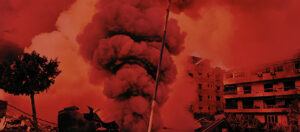
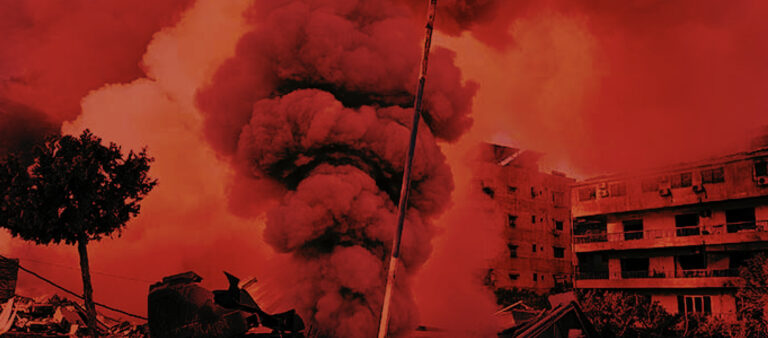
Since 1973, Lebanese legislation concerning disability rights has been inconsistent. Law 220/2000, for example, affirms the right of persons with special needs to access healthcare and rehabilitation, aiming to achieve “full inclusion.” Yet, in practice, inclusion has wavered between presence and absence in a country battered by successive crises: economic collapse, the Beirut Port explosion, and now the ongoing war largely concentrated in the Bekaa, the southern suburbs, and the South. These crises have strained institutions caring for people with disabilities, reduced mobility and social integration, and reinforced narrow societal perceptions.
According to the Ministry of Social Affairs, around 120,000 people with disabilities had received personal disability cards by early 2023. Many others remain undocumented. The National Plan for the Rights and Inclusion of Persons with Disabilities (2023–2030) announced only one major step forward: a strategic partnership linking the ILO and UNICEF with eight Lebanese disability organizations. It is the first time UN agencies have partnered directly with disability-led groups in Lebanon—raising questions about how to translate such partnerships into tangible solutions for those affected.
Silat Wassel reached out to the Ministry of Social Affairs for details on the plan and its promised benefits, but officials requested to delay any discussion until after the plan’s official launch at the Grand Serail, expected in December 2024.
Total paralysis… and displacement
Hassan Jarbo, now 25, has lived with severe paralysis and chronic seizures since infancy after a devastating car accident. Years of physiotherapy have burdened his family with costs of about $25 per session—expenses made even heavier by the current war and mass displacement from Israeli strikes in the South.
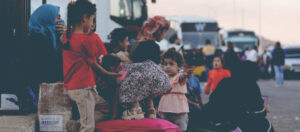
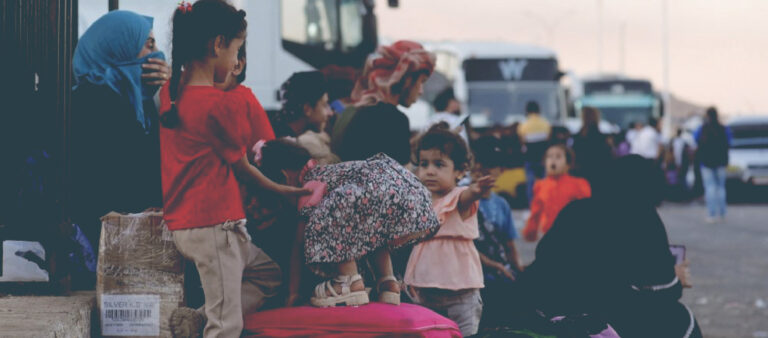
Forced displacement has compounded the crisis of people with disabilities, adding new financial, social, and legal challenges and exposing them to even greater vulnerability.
At the Masan Center for People with Disabilities in Tyre, Executive Director Najat Sukmani described the daily reality:
“The center has been operating since 1993, working with children and youth with diverse needs in specialized classrooms—from Down syndrome and varying degrees of intellectual disability to cerebral palsy and autism. We provide a range of therapies. Financial difficulties were always there, but they have gone from bad to worse, threatening our ability to continue offering care for this already marginalized group.”
She added:
“The deterioration is now evident in critical areas such as transportation, energy, salaries, and reduced services. Its impact spans multiple layers of society. We urgently need financial contributions, otherwise we will soon be unable to care for our students.”
Sukmani explained that lack of funding threatens the survival of such centers:
“We currently serve around 175 students. The Ministry of Social Affairs covers 116 of them, but like other centers we have not received payments in over two years. Banks are withholding our funds, preventing us from accessing transfers from the Ministry of Finance, which itself has failed to release payments for more than two years—without adjusting for the currency collapse. Parents can no longer afford basic costs, especially transportation, which has become a major obstacle. The security situation in the South has further disrupted attendance, as seen during the strikes on Monday morning, September 23, 2024.”
The impact of the Israeli war
“The circle of danger has now widened to threaten the security of Lebanese regions. The security situation has created immense difficulties for displaced persons with disabilities, whose suffering has been compounded by the war. In my view, as someone responsible for this group, I see the war as harsher on people with disabilities than on anyone else—especially in the South, where no plan addresses their needs amid displacement,” said Sukmani.
She stressed the unique challenges:
“For cases like children with cerebral palsy, simply moving or getting into a vehicle is a major ordeal. These individuals require a tailored lifestyle, including specialized equipment, medicines, and daily care—none of which are available.”
Sukmani reiterated:
“The circle of danger has now widened to threaten the security of Lebanese regions. The security situation has created immense difficulties for displaced persons with disabilities, whose suffering has been compounded by the war. In my view, as someone responsible for this group, I see the war as harsher on people with disabilities than on anyone else—especially in the South, where no plan addresses their needs amid displacement.”
Receiving displaced students amid the war
At the Masan Center in Tyre, displaced students have been arriving with their families. Executive Director Najat Sukmani explained:
“Since the beginning of the war, we welcomed groups of students and their parents from towns such as Kfara, Sdiqin, Aita al-Shaab, and Naqoura. We provided basic needs—clothing, medicine, food, and other supplies—and worked with families to support each case individually. It is essential that children with disabilities remain with their parents, because in such circumstances they are often lost and in need of parental affection.”
She also noted the war’s psychological toll. One mother called from a shelter to plead for help for her daughter with autism, who had been crying and screaming uncontrollably due to lack of access to her medication.
Social challenges
The difficulties extend far beyond displacement, financial strain, and the rising costs families can no longer bear. A central obstacle remains integration—and the way society views people with disabilities.
Dr. May Maroun, former professor at the Lebanese University’s Faculty of Media, told Silat Wassel:
“People with disabilities have hearing, visual, motor, or psychological challenges, just like others. They require extra care, time, and attention, particularly in education and rehabilitation.”
“The challenges have not been limited to displacement and the financial and economic strain on associations and families, but also extend to integration—one of the most significant barriers—along with the way society views people with disabilities.”
Maroun elaborated:
“The earliest institutions serving persons with disabilities were founded by religious orders, often when families had children with such cases. These later grew into specialized centers, but they were costly. Integration in regular classrooms is extremely difficult in Lebanon, requiring trained specialists. Often, multiple disabilities are grouped together in the same setting simply because financial resources are lacking.”
She added that, historically, society’s view of people with disabilities was largely religious, with many kept at home by their families and excluded from public life.
Responsibility for protection—and the weakness of the law
Brigadier General Dr. Adel Mashmoushi, a jurist specialized in criminal law, stressed that protecting people with disabilities is a human—not just a health—duty:
“We must stand by one another, especially when a disability is caused by factors beyond a person’s control, such as an accident. Responsibility then becomes collective. The state, having assumed responsibility for protection, must ensure not only financial support but also foster solidarity and cooperation within society.”
Mashmoushi added that the state organizes public life through a system of laws, starting with the Constitution, which guarantees equality and justice and enshrines rights to life, freedom, and work—rights that apply equally to persons with disabilities.
He emphasized the right to rehabilitation as key to enabling social integration:
“The problem lies not in the texts themselves, which may be modern, but in the lack of updates and proper enforcement. Administrative and executive decrees need reform to harmonize with existing laws. Public awareness is also essential, since anyone could one day become a person with disabilities.”
Toward practical solutions
Mashmoushi argued:
“Integrating people with disabilities into the workforce allows them to be productive citizens. Work is a matter of dignity, and the state must harness their abilities in areas where they can contribute, tailoring measures to each case.”
He called on the state to:
– Facilitate accessibility in public spaces, streets, parks, and heritage sites, with specialized staff to assist.
– Expand opportunities for remote learning, particularly for those unable to attend school, and guarantee access to official exams.
– Establish specialized hospitals, clinics, and social centers for both medical treatment and psychological support.
Brigadier General Mashmoushi added: “It is essential to establish specialized hospitals and medical centers dedicated to clinical treatment, as well as social clinics for psychological follow-up. All of these facilities must be adequately equipped on the scientific, social, and financial levels.”
Mashmoushi highlighted the crucial role of municipalities in facilitating the lives of people with disabilities. He emphasized the need to secure employment quotas, establish reliable databases and nationwide statistics, and ultimately develop a comprehensive national strategy.