





It seems that the experience of the Union of Municipalities of the Jezzine region and its Disaster Management Unit in receiving displaced people from the South and caring for them constitutes a success story. This success points to the required mechanism of work in terms of planning and distribution of tasks. It also requires executive management despite the limited resources available to the Union.
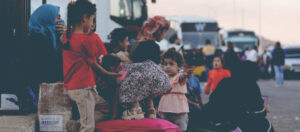
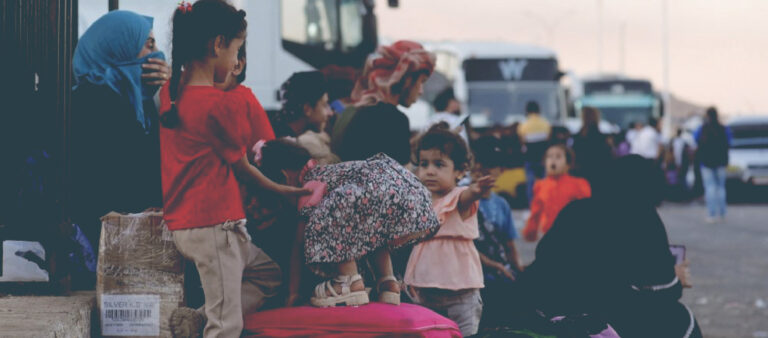
As of the evening of Monday, September 30, 2024, the towns of the Jezzine Union had received 2,038 displaced persons, representing 538 families, in 19 shelters, according to the Municipality of Jezzine and the shelters.
In the town of Jezzine, four shelters received 178 families comprising 645 people; three shelters in Bkassine received 28 families comprising 104 people; three shelters in al-Majdal received 82 families comprising 371 people; and two shelters in Roum received 62 families comprising 234 people.
One shelter in Lebaa received 41 families comprising 157 people; one shelter in Bnawti received 5 families comprising 22 people; one shelter in Ain Majdalain received 45 families comprising 132 people; one shelter in Safariyeh received 50 families comprising 164 people; one shelter in Haitoura received 5 families comprising 25 people; one shelter in al-Maharbiyeh received 27 families comprising 120 people; and one shelter in Reimat received 25 families comprising 64 people. In addition, there are about 4,000 displaced persons living in houses—half of them in Jezzine town and the rest in other towns of the district. These numbers change daily depending on the arrival of new displaced families or the relocation of some to other areas.
As of the evening of Monday, September 30, 2024, the towns of the Jezzine Union had received 2,038 displaced persons, representing 538 families, in 19 shelters.
Regarding this experience, MP Dr. Charbel Massaad told Silat Wassel: “At every challenge or aggression that the homeland faces and that harms our people, the people of Jezzine unite to serve our people suffering from the Israeli enemy. That is why we took the initiative and cooperated with all the actors in the region to organize the work to serve the displaced.”
He added: “The shelters in al-Majdal were the first to open their doors and receive our displaced people. Currently, we have three shelters in the town with 371 displaced persons. I do not deny that we witnessed shortcomings in the first days, but now the work is organized, and there is coordination between the government, NGOs, and international organizations, and the work is ongoing according to the emergency plan set a year ago.” Massaad also pointed to the importance of a medical team that works daily to raise awareness among the displaced about prevention, fearing the spread of contagious diseases in these difficult circumstances.
The President of the Union of Municipalities of the Jezzine region and Mayor of Jezzine, Khalil Harfoush, said: “At the end of last year, after the clashes broke out, we called for a general meeting at Jezzine Municipality and developed an emergency plan to face any disaster that might occur. Committees of expertise were formed, each preparing a detailed plan. Last week, after the battles erupted, we called for a general meeting, roles were divided, responsibilities distributed, and each committee formed its own sub-committee. The Jezzine spirit of solidarity was evident. Everyone turned into a beehive of activity: three schools were opened within half an hour, in cooperation with all actors, associations, the Red Cross, school directors, and political and social forces. As you can see, we became a beehive. All we hope is to be able to provide assistance to our displaced people until they return safely to their homes.”
What is notable in Jezzine’s experience is the cooperation of all political parties, regardless of their political differences, in order to secure the necessary needs and provide them to everyone.
Former MP Ibrahim Azar commented on the experience: “It is a remarkable experience. All parties cooperated to provide what could be secured to serve our displaced people from the South. What we did to meet some of their needs is our duty toward our homeland and our people.”
What is notable in Jezzine’s experience is the cooperation of all political parties, regardless of their political differences, in order to secure the necessary needs and provide them to everyone.
On the other hand, former MP Dr. Salim Khoury pointed to the difficulty of absorbing the shock of displacement, as preparations had not been in place: “But the municipality took the initiative, and we must highlight the distinguished role played by the Union President, Khalil Harfoush, who quickly organized shelter and aid in cooperation with everyone. When I say everyone, I mean individuals, parties, and associations. The most important thing at this stage is organization and unifying efforts and initiatives through the municipality, which succeeded in managing needs and distribution to cover the requirements. It is a humanitarian effort owed to no one in particular. What happened confirms that in times of crisis, Jezzine rallies together across all political orientations.”
The Mayor of Lebaa, Fadi Romanos, told Silat Wassel: “From our official and personal position, we are working to secure everything necessary for our displaced people residing in the school and those living in scattered homes in Lebaa. This is the least we can do in such difficult circumstances.”
Jezzine activist George Ghanem commented on the experience: “It is a successful and exemplary experience because it managed to bring together all political currents and social and religious institutions. We can only say: God bless you and your work, which can only be described as clear and transparent.”
Upon entering the Jezzine Municipality building, you find a team of volunteers following up on relief work, securing needs, and transferring them to the shelters. You also find Deputy Mayor of Jezzine, Samer Aoun, following up on the details of the required work. When asked about the follow-up process, he explained:
“After the events in Gaza, the crisis unit in the Union of Municipalities, Jezzine Municipality, civil associations, school directors, the Lebanese Red Cross, Civil Defense, the government hospital, the mukhtars, and priests held a meeting. Emergency and quick response plans were prepared. Last week, we held a quick meeting, and we had mattresses, blankets, and some supplies that were used on the first day. We continued the work according to the existing plan, implementing it in cooperation with shelter managers, who have the data shared with the municipality and with the previously formed committees, in addition to information about the displaced in homes.”
Upon entering the Jezzine Municipality building, you find a team of volunteers following up on relief work, securing needs, and transferring them to the shelters.
Aoun added: “On the first night, we received about 2,000 displaced people after opening the schools, emptying the rooms, and providing a number of mattresses. I would like to point out that there are about 4,000 displaced residing in homes, about half of them in homes in Jezzine. In our work, the priority was to secure shelters and logistical supplies, and we can say today that about 90% is secured, including for homes. We also secured enough food and cleaning supplies for a week. A committee of displaced residents was formed to manage the shelter where they live and determine the needs, in cooperation and coordination with the school or center manager.”
Regarding international aid, Aoun said: “Despite the importance of what international organizations provide, it is not sufficient so far. It should be noted that some of the town’s figures, through their connections, managed to secure food and medicines for the displaced. But the main problem facing the municipality remains the financial liquidity needed for ongoing expenses.”
Aoun: “On the first night, we received about 2,000 displaced people after opening the schools, emptying the rooms, and providing a number of mattresses. There are also about 4,000 displaced residing in homes, about half of them in homes in Jezzine.”
During a tour of five shelters in the Jezzine area, we met members of residents’ committees coordinating and cooperating with the Union of Municipalities. They agreed on the precise organization and cooperation shown by municipal administrations and various social forces, and that those concerned are quick to provide the requested needs according to available resources. They pointed out a shortage in bathrooms, which one international organization will handle according to a municipal source, and a shortage in medicines, which the health committee is following up on, with several Jezzine figures working to secure them.
It is a successful experience characterized by good planning and implementation, where everyone rose above differences to serve the people of our one nation. Everyone cooperated, especially with the participation of the Minister of Social Affairs and the ministry’s centers in this national hosting effort, in addition to associations and organizations such as DPNA, NRC, ACF, Intersos, Caritas, the Red Cross, First Aid, and the Council of the South.