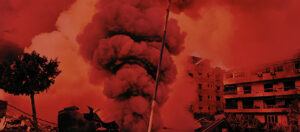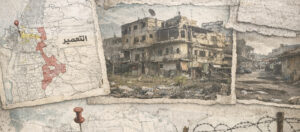

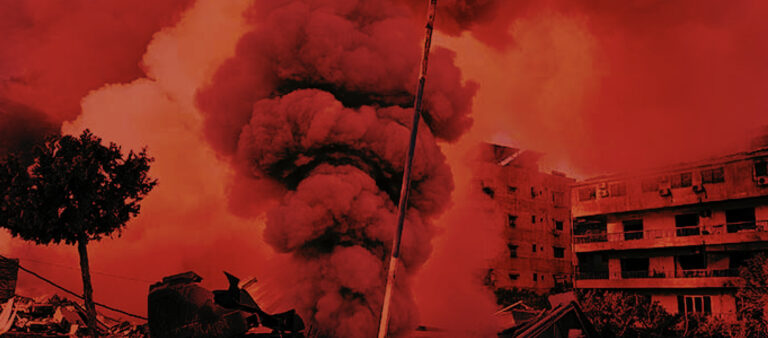
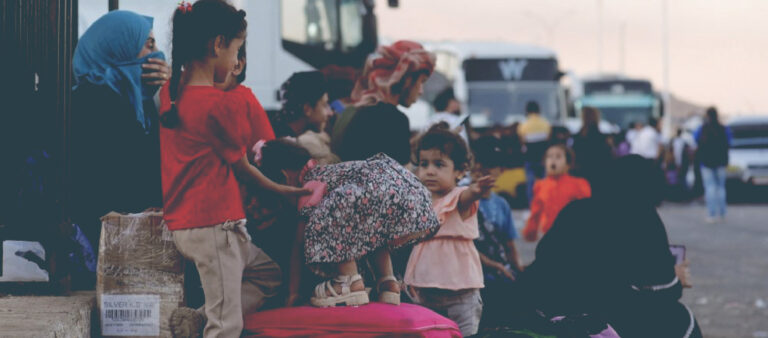



Since September 23, 2024, the South has witnessed a large displacement of its residents due to Israeli attacks. Thousands of Lebanese families found refuge in shelters that opened their doors to Lebanese displaced, while many others managed to reach other homes through hosting or renting. However, decisions by Lebanese authorities at various levels prevented shelter administrations from receiving displaced Syrian families. This forced them to sleep in public squares, on sidewalks, and in public gardens.
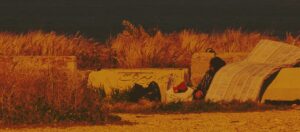
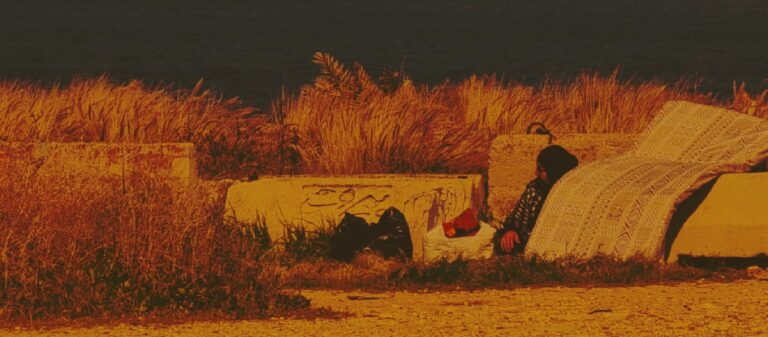
In Saida, South Lebanon, after shelters refused to receive Syrian families, these families were forced to sleep in Martyrs’ Square, the municipal yard, and near the Zaatari Mosque, without receiving any official assistance.
One person following up on the displaced said: “We called the UNHCR, which had published phone numbers for contact and for securing shelters for Syrians, but no one answered the callers.”
When consulting one of those concerned with the issue, he clarified: “I learned from one of the UNHCR officials, from the Qandil family, that the Commission’s work is part of the work of the Central Disaster Management Unit, and that it is concerned with all the displaced, not only Syrians, and that it provides assistance to everyone.”
That is to say, no one gave a clear answer about the families sleeping in the streets.

Syrian displaced spreading on the ground in Saida due to the continuous Israeli attacks on Lebanon.
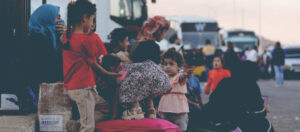
In the town of Jezzine, when displaced families arrived from different southern areas, the displaced Syrian families were transported to the Bekaa region. In Saida, families were removed from their sleeping places and gathered in the Zidan parking lot near Nejmeh Square—an open lot lacking any type of services, merely a wide space where the displaced families spread out.
One person following up on the displaced said: “We called the UNHCR, which had published phone numbers for contact and for securing shelters for Syrians, but no one answered the callers.”
On October 3, 2024, ten days after the displacement, UNHCR sent a truck full of sponge mattresses to distribute to the families in the parking lot, while one international organization distributed food aid.
One Syrian displaced said: “Around 100 families sleep in this place without any services. There are no bathrooms, we don’t get any special needs, the place is open, and there is no privacy for families. We don’t know how we can continue our lives. Today, for the first time, we received assistance from official bodies. Before that, some individuals and groups gave us food aid that was not enough, but thanks to them.”

UNHCR sent a truck full of sponge mattresses to distribute to the families present.
One displaced woman approached and said: “Even healthcare is missing. Yesterday one family had to take their daughter to the hospital and had to pay $80 for admission and treatment. We don’t know what to do tomorrow.” Most of the members of these families used to work in the agricultural sector in the South, living either in farmhouses or in village houses where they worked.

Zidan Parking Lot near Nejmeh Square.
In one of the shelters, when its doors first opened to receive displaced families, several Syrian families entered. After the administration was informed not to host displaced Syrian families, it found itself embarrassed on a humanitarian level: how could they expel families with children from the shelter? This led the administration to keep the families in the playground area of the shelter, without registering them in the rooms, and to consider them as “not present.”
One volunteer at the shelter said: “I called someone from UNHCR hoping they could find a solution for the Syrian families, but the answer was clear: remove them from the shelter and leave them in the street.”
In one of the shelters, when its doors first opened to receive displaced families, several Syrian families entered. After the administration was informed not to host displaced Syrian families, it found itself embarrassed on a humanitarian level: how could they expel families with children from the shelter? This led the administration to keep the families in the playground area of the shelter, without registering them in the rooms, and to consider them as “not present.”
One volunteer at the shelter said: “I called someone from UNHCR hoping they could find a solution for the Syrian families, but the answer was clear: remove them from the shelter and leave them in the street.”
One Syrian displaced person said: “Around 100 families sleep in this place without any services. There are no bathrooms, we don’t get any special needs, the place is open, there is no privacy for families, and we don’t know how we can continue our lives.”
No one denies that there are hundreds of displaced Lebanese families also living in the streets without shelters provided by the authorities. But that does not justify the inhumane treatment toward the displaced Syrian families.