




In a country overflowing with contradictions-where sects intersect with politics, and law with custom-the debate over freedom of opinion and belief is no longer confined to constitutional texts or courtrooms. Today, this debate lives at the heart of the digital sphere, where the same social tensions spill onto phone screens and computer monitors. In a context marked by increasing religious and security scrutiny of cultural production and online platforms, a pressing question emerges: How do religious and civil institutions handle these freedoms, and how does this affect citizens’ digital safety?
Freedom of Expression Between Constitutional Text and Shifting Reality
Article 13 of the Lebanese Constitution guarantees freedom of opinion and expression “within the limits of the law,” while its preamble affirms that Lebanon “respects public freedoms, first and foremost freedom of opinion and belief.”
But reality is far removed from the clarity of this text. Between personal status laws that restrict belief, and broad standards of “blasphemy,” “insulting the divine,” or “offending religion,” citizens face a complex network of constraints that allow religious and political authorities to wield the law to restrict freedoms-especially when opinions clash with entrenched collective beliefs.
This contradiction deepens in the digital age, where every word, photo, or post becomes a potential trigger for prosecution or targeting.
Civil Institutions… Freedom With No Ceiling Except Hate Speech
Most civil society organizations-such as Legal Agenda, Samir Kassir Foundation, MARCH, Adyan, and the Forum for Development, Culture and Dialogue—adopt an advanced definition of freedom aligned with international conventions. They consider freedom of expression and belief as fundamental rights that must not be restricted, with very narrow limits centered solely on direct hate speech.
They argue that criticizing religious beliefs or symbols is part of democratic practice and must not be classified as incitement or “offending sacred values,” because such framing opens the door to arbitrary censorship.
Religious Institutions… Freedom Conditional on “Not Offending Sacred Values”
In contrast, the three religious institutions covered in the report-the Catholic Center for Information, Dar al-Fatwa, and the Higher Shiite Council-view freedom from another angle:
Freedom is a right, but it is bound by spiritual and moral responsibility and by the need to respect what they consider “religious constants.”
Representatives of these institutions assert that attacking religious symbols or “provoking the majority” is a blatant violation-even if part of cultural or artistic critique.
Civil and religious institutions both claim to protect freedoms, but they differ fundamentally on where the “red line” lies.
Civil institutions restrict it to direct hate speech, while religious institutions believe that criticism or “mockery” of religious beliefs can constitute a collective offense requiring prohibition—or even punishment.
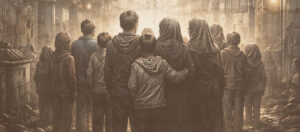
Caught in this gray zone are journalists, artists, and ordinary users.
A simple post may be interpreted differently, leading to a security summons, public shaming campaign, or legal prosecution.
In Lebanon, digital and artistic censorship is carried out through close cooperation between the General Security Directorate and religious institutions, where artistic works are reviewed by religious committees to determine whether they “violate doctrine.”
These assessments are used to impose bans, as seen in multiple cases involving books, films, and online posts.
Censorship is no longer the exclusive domain of institutions.
Today, groups of users actively report content that contradicts their beliefs, resulting in its removal or in the prosecution of its creators.
This “digital alignment” creates a highly sensitive environment where censorship is sometimes imposed before official authorities even step in.
Digital Safety: From a Safe Space to a Fragile One
With the rise of religious and security surveillance online, digital safety becomes a necessity-not a choice.
Users-especially journalists and activists-must protect their data and digital identities to avoid targeting, hacking, or threats.
Civil institutions warn that tightening restrictions in the virtual world creates an atmosphere of fear that stifles public debate and suffocates critical spaces.
Religious institutions argue that preemptive censorship is necessary to preserve “civil peace” and prevent what they consider “religious confusion.”
They place responsibility on security agencies to intervene, while limiting their own role to declaring religious and moral positions.
Civil institutions, meanwhile, work to:
- Train journalists on digital security and freedom of expression
- Publish advocacy reports
- Provide model legal defenses
- Propose new legislation
- Support artists and cultural institutions confronting censorship
They believe the core problem lies in the absence of a civil personal status law and in allowing religious authorities to govern the public sphere.
غياب الحوار… جدار صامت بين الطرفين
Except for limited bridges built by the Adyan Foundation, there is almost no effective communication between civil and religious institutions.
Civil society sees religious censorship as a barrier to freedoms.
Religious institutions see civil actors as too lenient toward what they consider “sacred.”
The result is a deep divide preventing a shared vision for protecting freedoms in the country.
The relationship between these institutions reveals that Lebanon lives in perpetual tension over the core meaning of freedom. And as this tension expands into the digital space, freedom of expression becomes even more fragile—and digital safety becomes users’ first line of defense.
Ultimately, there is no fundamental contradiction between freedom of belief and freedom of expression as long as expression does not incite direct hatred.
But vague laws, loose interpretations of “insulting religion,” and the use of religion as a tool of pressure make the digital sphere a hazardous landscape.
Until Lebanon adopts a civil personal status law, ends pre-publication censorship, and sets clear standards for hate speech, Lebanese citizens will continue writing online with caution…
guarding their opinions as they guard their devices: with encryption, vigilance, and hope.**