



“We were rebuilding life from scratch, but the media was searching for an official spokesperson, not for those managing reality.”
With this sentence, Leila (a pseudonym), a community coordinator in the town of Adaisseh in the Tyre district, sums up her experience during the displacement wave that accompanied the military escalation in southern Lebanon in late 2023. Between securing sleeping spaces, organizing food distribution, and coordinating with local initiatives, Leila and other women played central roles in managing the daily lives of dozens of families.
Yet none of them were invited to speak on political programs or news bulletins, neither as sources, witnesses, nor crisis management experts. This absence does not reflect a lack of women’s presence, but rather a structural flaw in how war is represented in the media, where it is framed as a military political event analyzed and narrated through male voices, while women’s experiences are relegated to so called human interest details.
Who Has the Right to Speak in Times of War?
In war reporting, the question is not only “who suffers?” but also “who is allowed to interpret what is happening?” According to an analysis by the Global Media Monitoring Project in its 2023 report on women’s representation in the news, women constitute only 24 percent of news sources worldwide during times of crises and conflicts. This percentage drops sharply in political and analytical programs related to security and war.
In the Lebanese context, this imbalance is also clearly reflected in statistics related to women’s appearance in media coverage overall. Media monitoring reports in Lebanon show that women make up only about 26 percent of news subjects and sources in Lebanese media, while men dominate news and analytical coverage. These figures point to a clear gap, not only in visibility, but in defining who is granted the authority to speak and analyze the news, especially in politics, security, and conflict, fields dominated by male voices.
Women represent only about 26 percent of news topics and sources in Lebanese media
This low representation is not merely a numerical disparity, but a reflection of editorial dominance that treats security and politics as inherently male domains. Male analysts and official male spokespersons are prioritized in political and analytical programs, while women’s contributions are reduced to human interest roles, even when women like Leila and Sarah are at the center of managing the daily consequences of war.
News Coverage and the Erasure of Invisible Labor
The exclusion of women is not only due to their absence from formal decision making positions, but also to a narrow definition of what counts as news.
The work women perform during conflicts, including care work, organization, psychosocial support, and management of scarce resources, is often classified as what British feminist scholar Cynthia Enloe describes in her book Feminist Reflections on International Politics as “invisible politics,” practices that keep societies functioning but are not recognized as political or strategic actions.
In times of war, these activities become a primary line of defense, yet they remain outside the media lens. Enloe attributes this to the dominance of a military political narrative that views conflict through maps, statistics, and official statements, excluding the everyday practices that sustain communities.
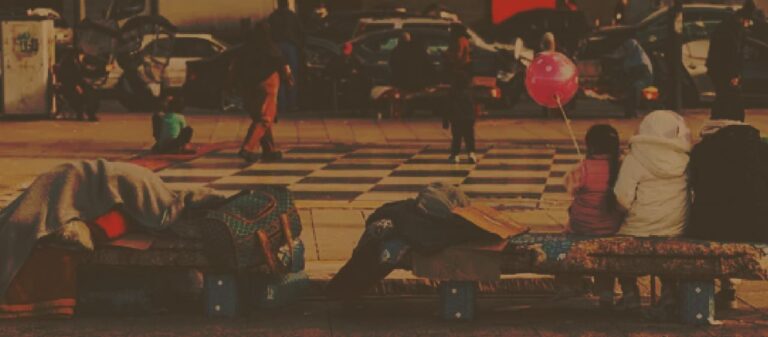
A clear example occurred during the military escalation in southern Lebanon in late 2023, when women in the town of Adaisseh organized shelters for displaced people, secured food and medicine, and coordinated psychological support for children and families. Despite the critical importance of these efforts to sustaining daily life, none of these women were invited to speak in the media, whether as sources, experts, or witnesses to on the ground realities. Their work remained outside media coverage, as if their role did not count as part of the war’s major events.
Women Between the Image of the Victim and the Absence of Agency
When women do appear in media coverage, they are often framed within a single visual narrative: a crying woman, a mother holding a child, or a displaced woman waiting for aid. This representation, despite its apparent empathy, reinforces the image of women as subjects of events rather than as actors shaping them.
A study titled Perceptions of Media Coverage of the War in Ukraine, published by the Reuters Institute for the Study of Journalism in 2022, indicates that media coverage during conflicts tends to strip women of agency by focusing on their humanitarian suffering without linking it to their leadership and organizational roles in crisis management.
Sarah (a pseudonym), a young volunteer in medical and humanitarian support from the town of Marjayoun in the Tyre district, recounts that she was responsible for coordinating medical support for patients with chronic illnesses in a shelter hosting more than 50 families. Despite the vital importance of this role in managing the daily crisis and protecting lives, her testimony and expertise were not considered suitable for media coverage. Sarah explains: “I was not invited or used as a source or news contributor in news or analytical programs because I believe my role does not fit within the dominant political or military discourse that controls coverage during conflicts.”
Media as a Reflection of Broader Male Dominance
This media pattern cannot be separated from a broader structure that dominates newsrooms themselves. According to a 2021 report by the International Women’s Media Foundation, senior editorial positions in media institutions, especially in politics and security departments, remain male dominated, which directly affects the selection of guests, angles, and narratives.
Even when women are the most engaged with the real impacts of war on the ground, such as coordinating humanitarian aid or managing resources in conflict zones, their voices are often marginalized in media analysis. This exclusion reflects an editorial mindset that views security and politics as male affairs, prioritizing official male spokespersons and analysts while reducing women’s contributions to secondary roles, despite their centrality to managing daily life during conflicts.
Field based women actors, such as volunteers or local coordinators, are not viewed as sources of expertise.

 Instead, when their testimonies do appear, they are reclassified under the category of human interest stories.
Another example of this exclusion appears within some newsrooms themselves. UNESCO’s gender sensitive media indicators show that decisions regarding source and guest selection in news coverage, particularly in politics, security, and conflict, tend to favor official spokespersons and experts affiliated with military or political institutions, who are predominantly men (UNESCO, 2020).
Within this framework, field based women actors are not considered analytical or expert sources. If their voices are included, they are framed as human interest stories. This editorial pattern reinforces a dominant military political discourse at the expense of a broader understanding of women’s active roles in managing daily crises during conflicts.
Representation Is Not Just a Numbers Issue
The problem, therefore, is not only the percentage of women’s appearances, but the nature of the roles assigned to them. Media representation, as scholar Liesbet van Zoonen argues in her work on gender and media, is not a neutral reflection of reality, but a symbolic practice that reproduces power relations within society.
When women are excluded from analysis, an alternative understanding of war is also excluded, one that focuses on survival, care, and the reproduction of life rather than solely on military power balances, as van Zoonen explains.
Toward a More Just Narrative
What is needed today is not merely adding women to screens as a form of diversity, but redefining who is considered an expert, what constitutes an event, and who holds the legitimacy to speak. This requires editorial standards that transform the logic of media production itself, recognizing that managing life during war is a deeply political act and that women’s voices on the ground carry the same weight as male experts.
International initiatives specializing in gender balance in media offer practical recommendations to support this shift, including increasing the number of women experts used as sources, moving beyond portraying women solely as victims or humanitarian cases, updating source databases to include women experts in politics, security, and humanitarian fields, and training newsrooms in gender sensitive reporting to avoid stereotypes and hidden biases in storytelling.
Through these measures, the media can convey the voice of the south from within, rather than only through official intermediaries, and enable women to occupy spaces of speech and analysis that reflect their realities in wars and conflicts, instead of limiting coverage to isolated images or human interest stories. War is not fought with weapons alone; it is managed daily in the spaces where women protect what remains of society, voices that deserve to be clearly heard in the media landscape.