



Forty-four years since the Sabra and Shatila massacre (16–19 September 1982)
Good morning and good evening to everyone,
Good morning and good evening to the homeland,
Good morning and good evening to hope,
Good morning and good evening to the captives, the wounded, and the martyrs.
Today I begin my journey with cancer treatment.
Today is the first day I receive a dose of chemotherapy.
And at the same time comes the anniversary of the Sabra and Shatila massacre — the massacre I survived, but from which I did not come out the way I went in. The massacre left something of itself inside me, and its details remained engraved in my memory, in my fear, and in my ability to hold on to life.
This morning I sit in a room inside the hospital, receiving treatment and medicine, while my memory carries me back to that day on which a massacre began that shook my being and the being of the world: Sabra and Shatila. Today I sit on a comfortable chair. I know that fatigue and exhaustion will come after hours, and that weakness may creep into my body, as if a jailer were standing over my head, tapping with his hammer, saying:
“You will not survive.”
But I insist that I will survive..
In spite of the disease.
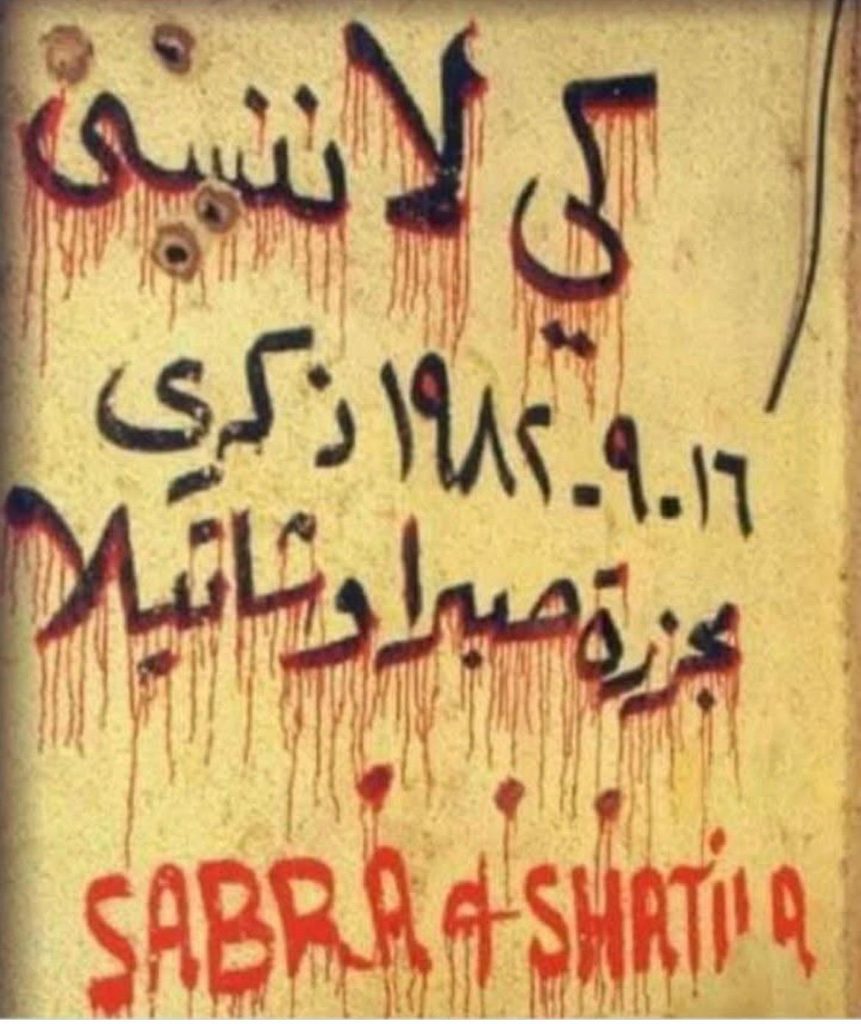
On 16 September 1982 the massacre began, and it continued for bloody days that extended until 19 September, leaving behind thousands of victims and a wound that has not healed in the memory of the survivors.
When the shelling of the camp began, it was violent and continuous. The shells poured down on our homes, and death drew near us from every side, and yet we clung to what remained to us of hope. And today the chemotherapy enters my body. I sit and wait for the dose to end, and I know that I may leave the hospital physically weaker, but I will leave more attached to life. At that time, the flares filled the sky of the camp, and here, the lights of the hospital fill the room.
On 16 September 1982 the massacre began, and it continued for bloody days that extended until 19 September, leaving behind thousands of victims and a wound that has not healed in the memory of the survivors
In those moments, light meant that the bombs were searching for their victims, and here, light means that there is someone trying to save me.
On the night of the massacre, the Israeli soldiers began entering the outskirts of the camp, and with them entered the isolationist forces, the Lebanese Phalange. They would enter the houses carrying axes, which became one of the killing tools that reaped the lives of many victims. Israeli officers were directing them and overseeing their movement, as they moved from one house to another, killing whoever they found before them — even the animals were not spared from them. They would enter the houses in which people had taken shelter, the houses that were supposed to be a safe haven, and which in those hours turned into places of death.
As for today, I am in the hospital, sitting on a comfortable bed, holding my phone and calmly browsing the news. No fear here. The nurses explain to me what is happening, and tell me the next steps during the treatment journey.
In Sabra and Shatila, we hid with our neighbors in a room inside our house, on the ground floor, out of fear of the shells that were pouring down on us like rain.
The room was dark.
We did not even dare to light a candle, for fear that someone would know we were there.
We were afraid of the light.
Today, I am surrounded by light.
The nurses wear white, and everyone is busy preparing medicines and caring for the patients. But in the alleys and the houses, we sat in the darkness with silence hanging over us; we heard the voices of the neighbors and their screaming, the boom of bullets and the sounds of feet running, and then silence would fall again.
And we understood the meaning of that silence.. it meant that someone had been killed.
Today, in the hospital, I hear nothing but the voices of the nurses reassuring me that I will leave safely at the end of the day. But in those days, my father would sit in front of the door of the house holding a pistol and a small hand grenade, waiting for whoever might break in on us.
As for me, I was cradling my nephew, who was no more than fifteen days old, and whenever he cried I would put the bottle of milk in his mouth to try to silence his voice, for fear that someone would hear us. I was carrying a child while death lay in wait behind the door.
Today, as I sit on the treatment chair, I feel a different pain that brings back to me the aches of that time. I feel a pain that I imagine Uncle “Abu Diab” felt when he was executed in the alley leading to his house; the pain strikes my head as if it were the bullet the killer aimed at his head.
Sometimes I feel that my body is retrieving the memory of that place, and the bubble of pain in my head awakens inside me the images of the bullets, the images of those who fell, and the doors that were opened onto death. But the difference is that I sit here today to resist the pain, not to surrender to it; in those days the bullets meant the end, whereas today the pain is part of the road to recovery.
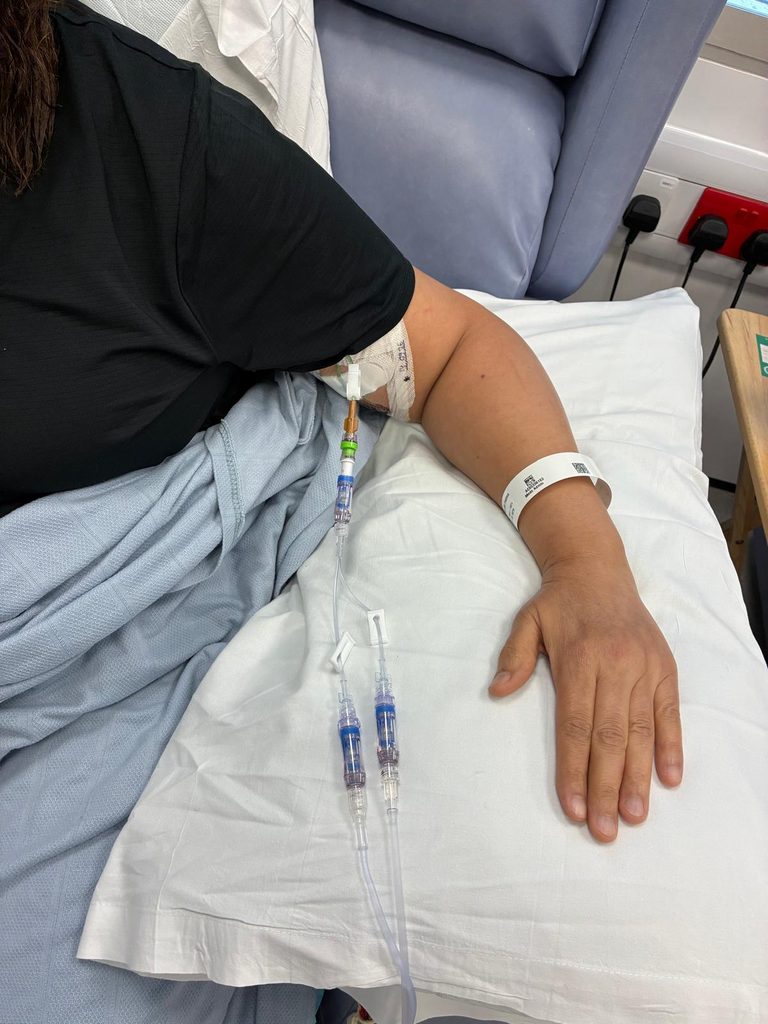
The nurse smiles at me and asks:
“Would you like to drink something?”
I ask her for a cup of tea with milk.
A very small detail.
But it means a lot to me.
In Shatila, I was trying to silence a child so that death would not hear us, and today, I ask for a cup of tea, and I wait for the medicine to end so I can return to my home. In Shatila, we were waiting for a chance to leave the house safely, and we did not know whether we would succeed, or whether we would meet the same fate our relatives and neighbors had met.
The camps of Sabra and Shatila were tightly encircled, and the sniper positioned in the area of the Sports City overlooking them would reap everyone who moved. We did not know whether we would come out alive, and we lived every minute as if it were the last. During the four days of the massacre, thousands of martyrs, wounded, and missing fell, and Sabra and Shatila remained an open wound in our memory and the memory of the world.
The camps of Sabra and Shatila were tightly encircled, and the sniper positioned in the area of the Sports City overlooking them would reap everyone who moved
Forty-four years later, the memory is still present, and the faces that vanished are present, the voices of those who departed dwell in the memory, and the survivors still carry their testimony, because memory does not die.
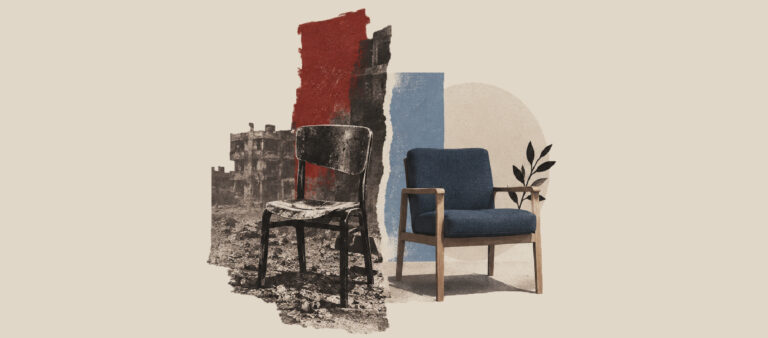
After all those years, I find myself once again facing a battle, but the enemy is different this time. I sit on the treatment chair and remember the chair of the massacre on which I once sat while cradling a child no more than fifteen days old, waiting to know whether I would come out alive.
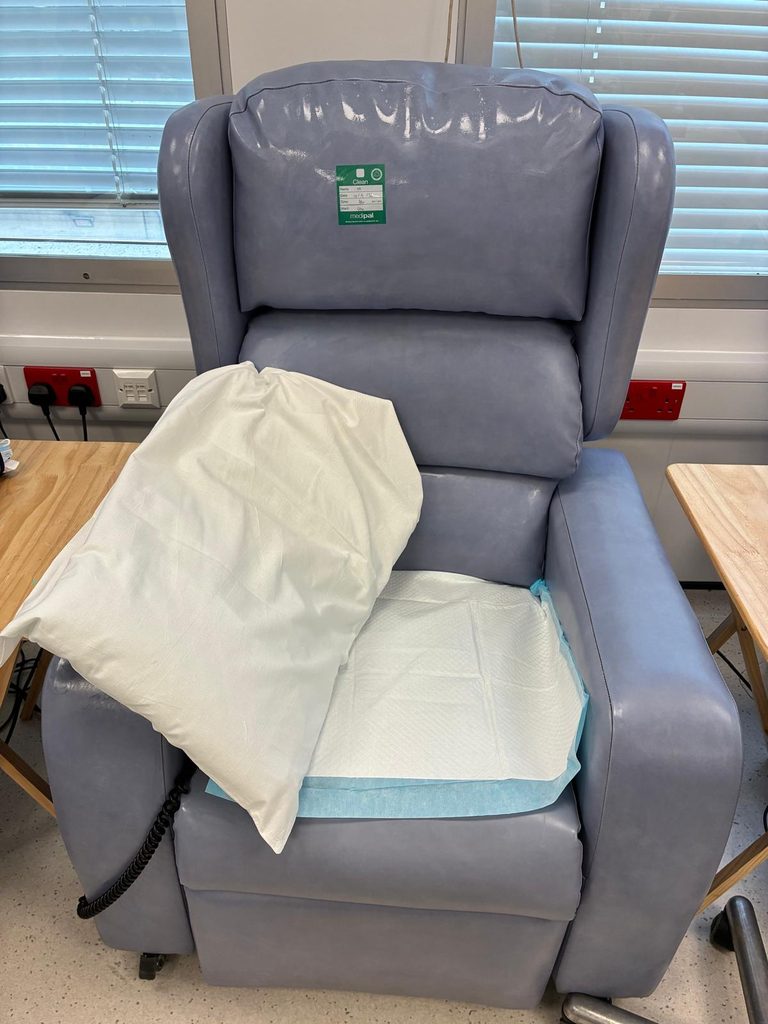
I survived Sabra and Shatila, and I will survive cancer too.
I learned since my childhood that death may besiege a person from all directions, but hope can always find a way out — perhaps for this reason I am not afraid today; I have seen death before.
And I came to know what it looks like when it stands behind the door. When the medicine enters my body, I know that this is not a battle against life, but a battle for it. Today I am not beginning a journey toward death; I am beginning a new journey toward life.
From the chair of the massacre to the chair of treatment, from a little girl who was hiding in the darkness to a woman who sits today under the light and faces her illness with all the strength she has.
I will keep saying: good morning and good evening to every human being who is still resisting in order to stay alive. And as the poet Mahmoud Darwish said: “On this earth there is what deserves life… it used to be called Palestine, it has come to be called Palestine.”