






Investigation – Part Two
Despite billions of dollars in aid, grants, and loans poured into Lebanon over more than three decades—funds that could have turned the country into the “Switzerland of the East” and the first eco-friendly state on the Mediterranean—the wastewater sector is facing a real disaster. Most treatment plants across the country have come to an almost complete halt, turning beaches into open sewers and making them among the most polluted in the region. Tyre’s beach stands out as a stark example of this environmental catastrophe.
This situation raises fundamental questions about the fate of the vast funds allocated for the construction of the Tyre wastewater treatment plant, the reasons behind its shutdown, and the disastrous consequences that followed. Officials, environmental experts, and activists weigh in to clarify the facts before the public.
Municipal Official in Tyre: “The wastewater sector has declined from a pioneering position to a catastrophic state.”
In statements to Silat Wasel platform, an official source from Tyre Municipality affirmed that Lebanon in the 1960s was a pioneer in wastewater treatment, with plants such as Hammana and Marjayoun serving as models of the Lebanese experience in this field—surpassing even European countries at the time. However, these plants stopped operating due to the outbreak of the civil war in the 1970s and the subsequent collapse of the state.
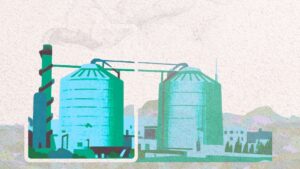
The official explained that the Tyre wastewater treatment plant, located on Al-Baqbouq beach in the Abbasiyeh area north of Tyre and based on secondary treatment, was funded with €45 million from the European Investment Bank (EIB), along with additional financing from the French Development Agency under the Cultural Heritage Project in Tyre. The French agency funded works within the old quarters and heritage sites, while the Cultural Heritage Project oversaw the sewer lines inside these areas leading to the plant. The EIB financed construction works outside these zones to avoid duplication. According to the official, there was coordination between the two entities to prevent waste of funds.
He added that the cost of building the network was included in the total amount allocated for the treatment plant, along with the operating costs for about five years. However, this did not cover the costs of pumping, lifting, or network maintenance, which fall under the responsibility of the Ministry of Water and Energy.
The municipal official noted that the plant was built to serve Tyre and its surrounding areas. The project was originally planned in two phases, but only the first phase (half the project) was completed, leaving much of the district uncovered. Phase one included municipalities from Al-Burgheliyeh (after the Litani River north of the plant), Abbasiyeh, Burj Rahal, the coastal area, southeastern Tyre, and Al-Housh (a suburb not under Tyre Municipality), as well as Jal al-Bahr at Tyre’s entrance—excluding Qadmus, a northern suburb, which was not connected to the network.
He explained that the Tyre treatment plant, like any fully integrated facility, consists of three stages: the first involves the sewer networks and lift stations that collect and pump wastewater to the plant; the second concerns the treatment center itself; while the third consists of outfall pipes that carry the secondary-treated water either to agricultural land for irrigation or to the sea if not used for farming.
The official went on to explain that the Tyre wastewater treatment project includes Lift Stations, since—given the area’s topography—the sewage needs to be elevated to a higher level in order to continue flowing by gravity toward the treatment plant. It also includes Pump Stations for the treated water. However, both types of stations are out of service due to the electricity crisis caused by the country’s deteriorating economic situation. As a result, sewage accumulates in volumes that exceed the plant’s treatment capacity, causing overflows and forcing wastewater to bypass the treatment basins entirely, discharging directly into the nearest watercourse—whether the sea or a seasonal stream—ultimately ending up in the Mediterranean.
He noted that the plant includes a sludge-to-energy unit, which generates part of the electricity needed to run the treatment facility itself. However, this unit does not supply power to the pumping stations that remain completely out of service—such as the main pumping station in Tyre and another located south of the city near the Rashidieh refugee camp.
Landfilling at Al-Jamal Beach
Regarding the Al-Jamal area, the source explained that it consists of seven huts suffering from problems with toilets, sewage, and septic tanks that discharge directly into the sea because of the area’s low elevation. With no option to connect to the main network, severe pollution has resulted. A project is underway to reorganize these huts and rebuild them in an eco-friendly way, raising the ground level to install underground plastic tanks with pumping stations. He denied any claims of landfilling at this site, stressing that it is classified as an archaeological area, with the adjacent site recognized as a UNESCO World Heritage location.
Engineer and environmental activist Bilal Shaaban: “Corruption has turned the sewage crisis into a profit for the privileged.”
Bilal Shaaban, an engineer and environmental activist, said that Lebanon’s environmental crisis is rooted in widespread corruption, which has turned the sewage disaster into a source of profit for the well-connected. He explained that most wastewater treatment plants in Lebanon—from Naqoura on the border with occupied Palestine to the Nahr al-Kabir on the Syrian border—are either malfunctioning or nearly completely shut down. Even the few that operate do so at no more than 20% capacity, leading untreated sewage to flow straight into the sea, despite international agencies funding Lebanon’s Ministry of Energy and Water for plant maintenance.
He further explained that the problem has been worsened by the presence of Syrian refugees around rivers, where dumping of waste has turned waterways into breeding grounds for insects. Over seven years, the refugee population surged to nearly two million, placing massive pressure on already fragile infrastructure, particularly sewage systems. With the economic collapse, the state has been unable to expand or modernize these networks. As a result, tanker trucks are often used to drain wastewater from pits and ponds, especially in villages where waste is still dumped into trenches next to homes.
Key reasons behind the breakdown of wastewater treatment plants
Shaaban highlighted three main reasons for the shutdown of treatment plants. The first is chronic power outages: pumping stations operated by the Ministry of Energy and Water require continuous electricity, but the collapse of power supply has crippled operations. He added that in the past two years, alternative solutions such as solar panels have been proposed, but none have been installed yet.
The second reason is the sharp decline in maintenance, particularly after the 2019 economic crisis, as the plants require constant servicing and replacement of parts. The third reason is the absence of sufficient staff and technicians to keep the plants running.
Climate change has worsened the sewage crisis
Shaaban also pointed to the problem of stormwater mixing with sewage in Tyre, Beirut, Sidon, and other Lebanese cities. He explained that Lebanon’s winters now bring heavy flooding, and with the coast lying so close to the mountains, rainfall pours down in large volumes that storm drains cannot handle. This leads to water spilling into sewage networks and mixing with untreated wastewater—an issue made worse in recent years by climate change, which has reduced snowfall while increasing rainfall.
Bilal Shaaban: “Private pools have replaced Lebanon’s polluted beaches.”
He added that for a country like Lebanon, the sea is a vital lifeline, especially since its economy depends heavily on tourism. With widespread water pollution, Lebanon’s 220 kilometers of beaches are no longer a safe haven, driving people instead to private swimming pools. Tests conducted on seawater in several locations confirmed the extent of pollution near treatment plants, which has also dealt a severe blow to the country’s fish stocks.
Bilal Shaaban calls for connecting wastewater treatment plants to dedicated electricity lines.
Finally, Shaaban urged authorities to restart the plants and connect them to the special power lines provided by Électricité du Liban, which deliver 18 hours of electricity daily to ministries and drinking water pumping stations. This, he stressed, would allow wastewater plants to operate at full capacity and reduce the environmental damage caused by their shutdown.
Environmental activist: “The European Union funds charity projects in developing countries as a way to launder money and evade taxes.”
An environmental activist, who asked to remain anonymous, revealed that a massive corruption case is tied to Lebanon’s sewage crisis, implicating the ruling authorities. He explained that the government has no interest in finding real solutions to these escalating environmental problems, because solving them would cut off the continuous flow of foreign funding—and, with it, the profits. He accused the European Union of complicity with Lebanon’s political leaders, arguing that it makes no sense to inject huge sums of money into the state without proper monitoring and evaluation of these projects.
The activist further alleged that the EU channels funds into “charitable projects” in developing countries not to achieve environmental goals, but rather to launder money and avoid taxation. As for international aid linked to the refugee issue, he clarified that such funds are directed mainly toward the Ministry of Education, not the sewage sector.
He also pointed out that Lebanon’s waste crisis has made the sewage problem worse, as liquid waste from garbage dumps seeps into rivers and the sea. According to him, the crisis could be solved through small user fees collected from residents of Tyre and other cities in exchange for wastewater treatment services. He suggested installing solar panels to power treatment plants, as well as building tanks to enable anaerobic digestion of organic matter in sewage. This process would produce methane gas to generate electricity for treatment plants, while also creating organic fertilizer that could reduce reliance on chemical fertilizers and improve agricultural yields.
Dr. Milad Fakhri: “The shutdown of Tyre’s sewage treatment plant has led to a surge in skin and intestinal diseases.”
Dr. Milad Fakhri, director of the National Center for Marine Sciences, said that the shutdown of Tyre’s treatment plant has severely compromised water quality, increasing fecal bacteria levels and triggering outbreaks of skin and intestinal diseases. He advised fishermen to avoid fishing in polluted areas for at least 100 meters offshore, stressing that properly treating sewage reduces the risks of waterborne diseases and protects public health and community well-being.
Dr. Milad Fakhri: “I advise fishermen to avoid fishing in polluted waters for at least 100 meters.”
It appears that the project announced on June 5, 2023, to operate 11 major wastewater treatment plants across Lebanon—with funding from the European Union, implemented by UNICEF in partnership with the Ministries of Energy, Water, and Environment—has ended up like thousands of other projects: nothing more than ink on paper, empty promises, and media campaigns to polish the image of Lebanon’s officials.
In the end, pressing questions remain: How long will Lebanon’s wastewater treatment plants stay out of service? What will become of the Tyre facility? How much longer must residents endure these hardships? Was the €45 million investment not enough to guarantee electricity supply for the plant? And will Lebanon’s leaders ever respond to the cries of Tyre’s residents, or will this frightening environmental disaster remain unresolved?