





Amid the ongoing search for temporary or permanent solutions to the public waste crisis, there seems to be little exceptional attention given to medical waste, whose danger is doubly significant for both the environment and public health. Its negative impacts continue to threaten the environmental situation in various aspects.
However, over the past decade, its treatment in the city of Tyre has not been without some positive aspects.
Medical waste is divided into two categories: non-hazardous waste, which makes up 70% and is similar to household waste generated by health institutions; and hazardous waste, which is further divided into several types, including bacterially contaminated and infectious waste, chemical waste from laboratories and health institutions, expired medications, as well as waste produced by radiological activities.
Source: SEPCO Environment
According to engineer Mohammad Derbaj, director of the Medical Waste Treatment Center of the Abbassieh Municipality, the plant, previously run by Mirage Company, was in a deplorable state before being taken over by the municipality a year and a half ago. “Since then, we have been able to reduce pollution from treatment by 90%,” he said.
The plant has a processing capacity of 900 to 1,100 kilograms every eight hours, depending on the type of waste.
Derbaj noted that the volume of waste exceeds the plant’s capacity, forcing its administration to store part of the waste for two or three days in order to prevent accumulation in hospitals.
Some accumulation also occurs due to frequent breakdowns at the plant. He added: “We are in the process of receiving an autoclave machine from UNDP, which we hope will help solve the problem.”
The Abbassieh Center is contracted with nine hospitals, five laboratories, the Lebanon Diagnostic Center, the Lebanon One Entity Dispensary, the Imam Sadr Foundation, Amel Association in the South, and three pharmacies that only supply syringes.
The center has also contracted with two doctors’ clinics, three dental clinics, and one veterinary clinic.
Derbaj pointed out that the waste from the remaining clinics—approximately 350—ends up with ordinary household waste.
He confirmed that the municipality recently sent a letter to the Union of Tyre Municipalities, requesting that they instruct local municipalities to inform all clinics of the need to collect waste through the municipality or contact the treatment plant for proper disposal. However, the effort was met with no response from the concerned parties.
He added: “We informed the Ministry of Health through a judicial request, urging it to take responsibility and find a solution for the negligent clinics, given the pollution they cause.”
The center processes medical waste after it is placed in yellow bags—classified as hazardous and infectious. Once sterilized, the waste is placed in black bags—considered non-hazardous and treated like regular household waste. After sterilization, it is safe and disposed of in a designated area of a landfill operated by the Abbassieh Municipality.
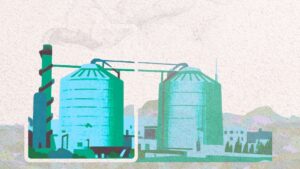
The process begins by weighing the waste and placing it in the autoclave machine, which sterilizes waste with steam. The procedure involves shredding, heating, and sterilizing at a temperature between 120°C and 140°C under 4 bars of pressure, followed by cooling, steam extraction, and discharge, after which the waste is placed into black bags.
The center suffers from problems related to the high cost of maintaining the machine and frequent breakdowns due to its old age, as well as a lack of sufficient refrigeration rooms for storage. The growing quantities of waste, especially after the COVID-19 pandemic, have worsened the situation, since the existing refrigeration unit was only enough for a small amount of hospital waste back in 2010.
Operating costs are high compared to the compensation the center receives for processing each kilogram of waste. The operating cost is $0.55 per kilogram, while the processing fee is only 2,000 LBP per kilogram.
Added to this is the rising cost of nylon bags, spare parts, and all materials used in the sterilization process, as their prices are calculated in US dollars—which has skyrocketed against the Lebanese pound.
There are also the costs of maintaining the waste transport truck, fuel for the boiler and power generator, and the frequent long electricity outages.
The ministry monitors the proper functioning of the center and ensures the sterilization process is carried out according to required health standards, through regular visits and follow-up.
Estimated Quantities in Lebanon
According to the head of the Syndicate of Hospital Owners, Suleiman Haroun, the amount of contaminated and infectious waste reaches about 4,500 tons annually, not including waste from laboratories, dental clinics, radiology centers, dispensaries, and others.
Haroun stated that the syndicate was the first to take the initiative in handling infectious waste after the decree was issued in 2003. He added that continuous training has been provided to health sector workers on how to properly sort waste inside hospitals and to store infectious waste in refrigerated storage until it is transported for treatment.
On the other hand, Haroun believes that the main problem does not lie in hospitals failing to deliver all of their infectious waste—which could be addressed with stricter monitoring to prevent sorting and packaging violations inside hospitals—but rather outside hospitals. He pointed to the lack of treatment for infectious waste generated by medical laboratories, blood banks, radiology centers, and dental clinics, which are widely spread across Lebanon.
From a legal perspective, environmental protection laws were issued in 1988, 1994, and 2002. Decree 13389 of 2004 defines the types of waste generated by health institutions, their proper sorting, and ways to reduce their production. It also sets guidelines for the collection, storage, treatment, and disposal of medical waste.
The mechanism for managing medical waste is based on reducing production, collection, transport, storage, and treatment. However, oversight and monitoring by the Ministry of Health (inside hospitals) and the Ministry of Environment (outside hospitals) seem to have been outsourced to a private company responsible for waste collection and treatment in exchange for fees—without either ministry maintaining a permanent mechanism to verify the expected outcomes.
In an interview with an environmental expert—who requested anonymity due to his position—he stressed the need to start from the premise that there is no environmental policy addressing different types of waste. He explained that enormous amounts of contaminated and infectious waste are being disposed of improperly.
He added: “From my experience, I know that hazardous waste is often disposed of by mixing it with regular waste. This happens because hospitals do not carry out proper waste sorting.”
He also noted that some hospitals burn their waste in dangerous ways that harm the environment—such as open-air burning, with ashes scattered into nature and gases released into the air.
As a result, the growing challenges and obstacles faced by the Medical Waste Treatment Center in Abbassieh call for serious attention to this issue, which involves significant risks and deserves exceptional concern, in order to develop a clear strategy for handling it and to seek urgent and immediate solutions.